
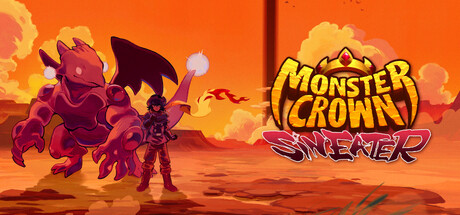
Developer: Studio Aurum
Publisher: Studio Aurum, Red Art Games
Genre: Creature Collector, RPG,
Price: $24.99
Release Date: Apr 30, 2026,
Where to buy: Steam, Switch
The monster-taming subgenre has long been dominated by cheerful, family-friendly titles centered around lighthearted adventures and heroic journeys. However, Studio Aurum’s Monster Crown: Sin Eater deliberately shatters this template, presenting a mature, mechanically complex RPG that strips away the genre’s traditional hand-holding. Serving as a direct sequel to the original Monster Crown, the game evolves its predecessor’s core ideas into a darker, more ambitious experience. By combining a high-stakes narrative with non-linear exploration, dynamic monster fusion, and an elevated tactical combat system, Monster Crown: Sin Eater establishes itself as a distinct and uncompromising entry in retro-style RPGs.
At the heart of Sin Eater is a narrative that exchanges wholesome tropes for gritty socio-political realism. Players take on the role of Asur, a young farm boy thrust into action when his family faces financial ruin and existential threats under the oppressive weight of the land’s overlords. The setting of Crown Nation is devoid of Saturday-morning optimism; human life is fragile, monsters are genuinely dangerous predators, and local authorities are often corrupt or self-serving. Rather than forcing players down a rigid, linear path, the narrative features branching decisions and trust dynamics with key factions, directly influencing the plot. This mature thematic foundation establishes high narrative stakes where survival and moral compromise replace simple championship trophies.
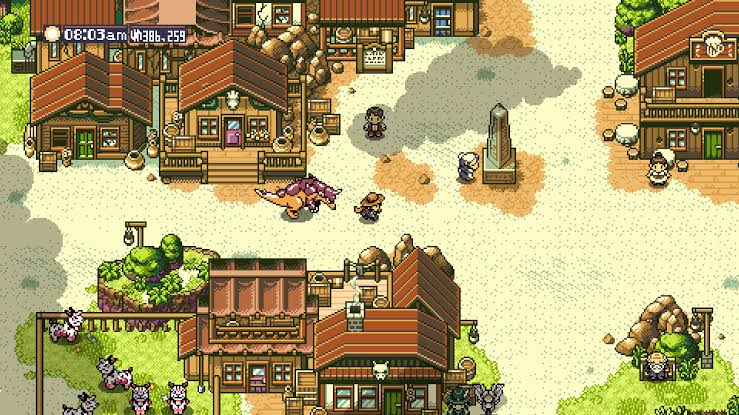
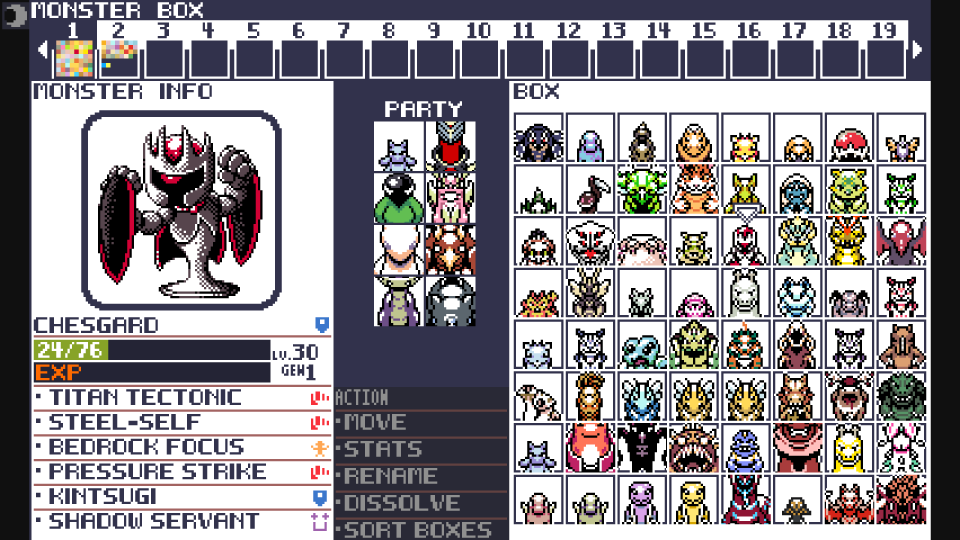
Mechanically, the game sets itself apart through an exceptionally deep and flexible breeding and fusion system. Unlike traditional monster-battlers that rely strictly on fixed evolution lines, Sin Eater allows any two monsters to be cross-bred or fused regardless of species. This mechanics-first approach lets players meticulously customize color palettes, stat distributions, typing, and movesets to craft hyper-specific combatants. Overworld interactions further complement this freedom: wild creatures visibly roam their environments—sometimes actively hunting the player—eliminating the tedious randomness of tall-grass encounters and making exploration feel unpredictable and grounded.
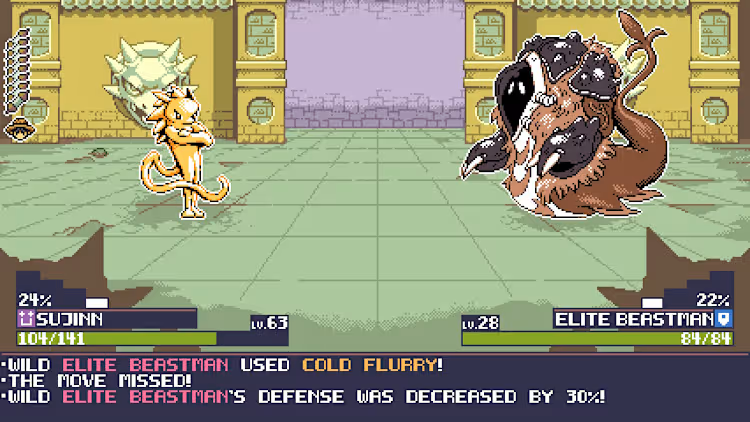
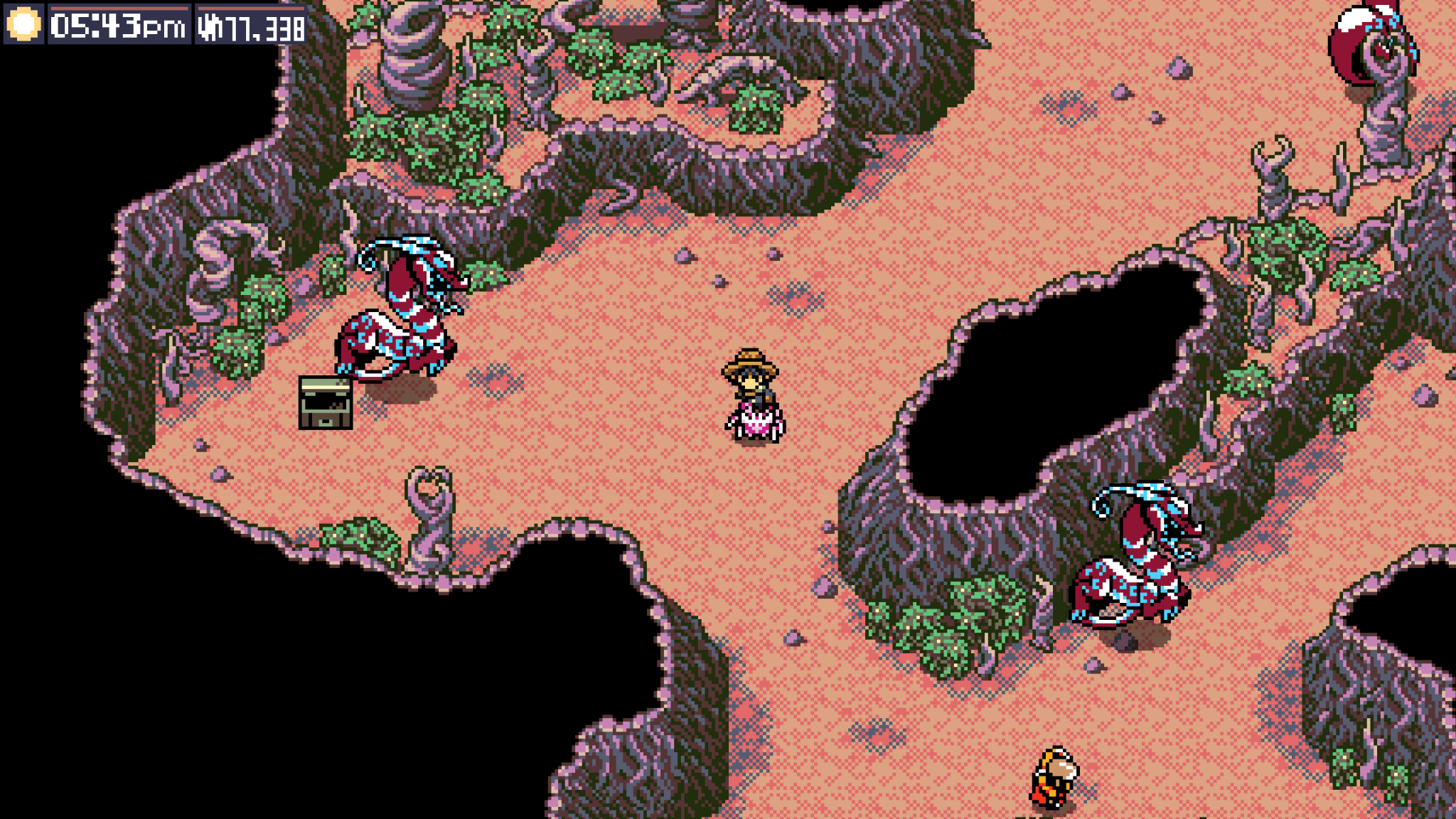
The tactical depth extends directly into turn-based combat, supported by modern visual refinements. Built on a classic elemental strength-and-weakness framework, battles are given additional strategic weight via the signature “Synergy” meter. By delivering and enduring damage, players charge this gauge to execute a “Crowned” attack, significantly boosting move power and shifting the momentum of tough boss encounters. Visually, the game utilizes an upgraded pixel-art style reminiscent of Game Boy Advance and late-16-bit JRPGs, featuring expansive widescreen battle layouts and rich environmental detail like swaying flora and dynamic lighting.
While Monster Crown: Sin Eater occasionally suffers from sharp difficulty spikes and minimal map signposting, these friction points reinforce its core design philosophy: respecting the player’s autonomy. The game does not offer hand-holding, forcing players to rely on experimentations, notebook logs, and trial-and-error to conquer its open-ended world. In doing so, Studio Aurum succeeds in delivering a refreshing alternative for veteran RPG fans seeking meaningful challenge and narrative grit. Sin Eater ultimately demonstrates that the monster-taming formula can grow up alongside its audience, offering a dark, rewarding sandbox for those willing to brave its world.