
Developer: Triple Boris Inc.
Publisher: Dodo Tako, Sticky Rice Games
Genre: Online, Co-Op, Building,
Price: $19.99
Release Date: Oct 9, 2026
Where to buy: Steam
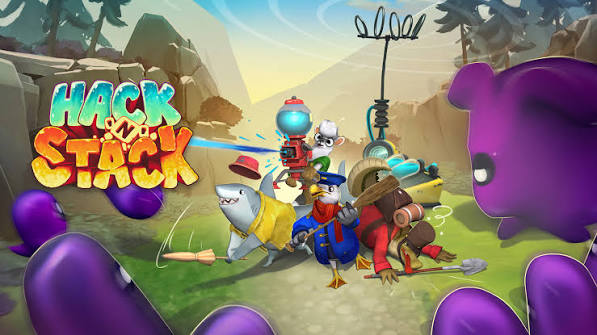
In recent years, the party game genre has expanded beyond simple party minigames to incorporate complex mechanics from other genres, giving rise to unique hybrid experiences. Hack ’n’ Stack, developed by Triple Boris and published under Dodo Tako, stands as a prime example of this evolution by merging the strategic rigor of tower defense with unpredictable, physics-driven multiplayer gameplay. The game places players in a besieged fantasy kingdom where activation of emitters is necessary to repel relentless enemy hordes. Rather than relying strictly on set pathways or static structures, the title invites players to craft barricades, deploy defenses, and fight off invaders in real time. By balancing mechanical complexity with slapstick party chaos, Hack ’n’ Stack delivers a fresh take on modern cooperative multiplayer.
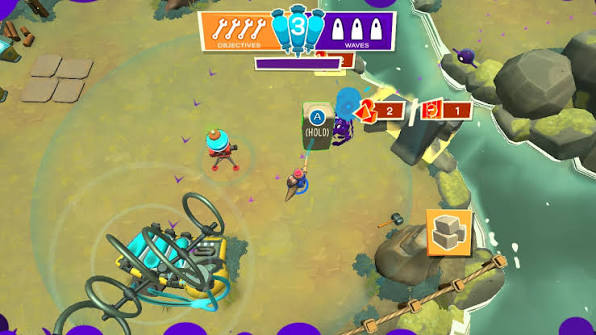
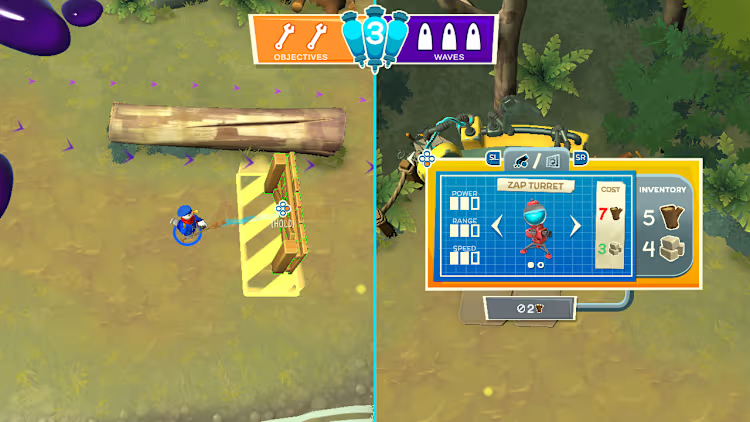
At the core of the game’s loop is its dual emphasis on real-time construction and active defense. Players gather resource blocks strewn across the environment to build fortified positions, construct turrets, and block enemy chokepoints. What sets the title apart from traditional tower defense is its stacking mechanic: placing resource blocks and defensive units directly on top of one another magnifies their strength, durability, and firepower. A taller tower delivers a significantly more powerful attack, but it also creates a prominent target for incoming waves. This dynamic forces players to carefully decide between spreading out a broad baseline of barricades or stacking high to maximize single-point firepower.
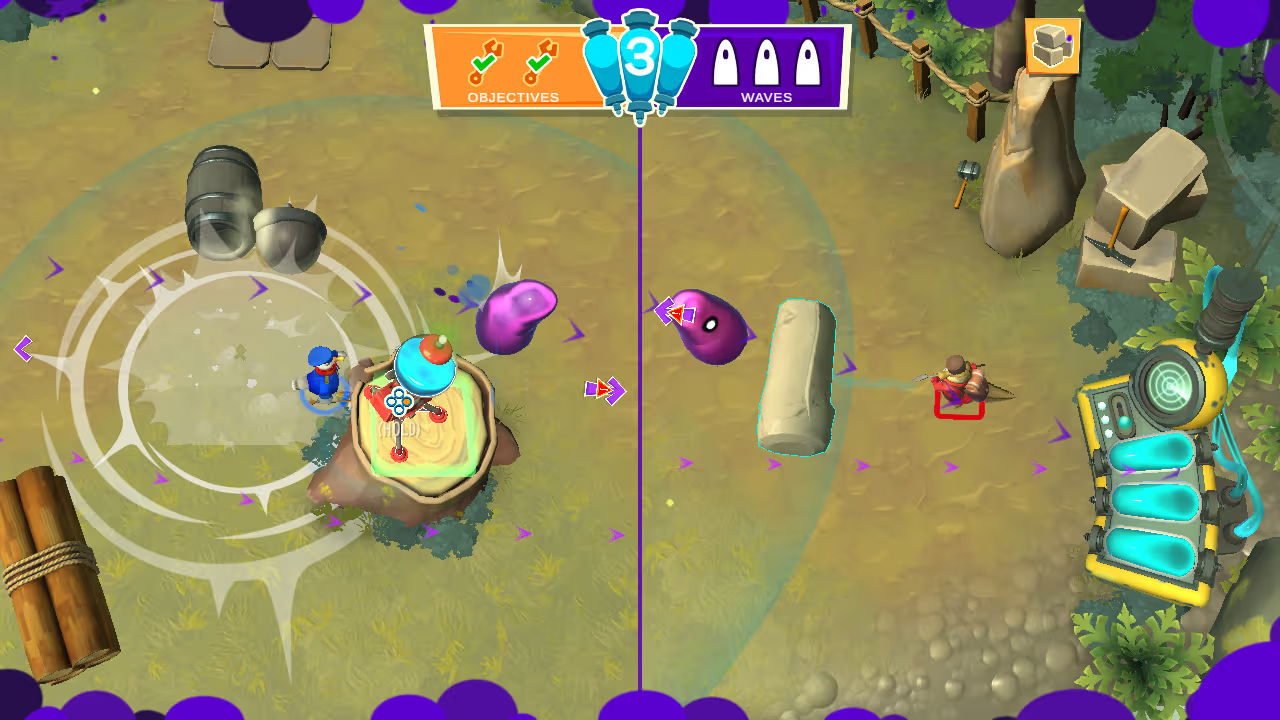
The central driver of Hack ’n’ Stack’s chaotic charm is its fully interactive, physics-based engine. Combat is far from passive; players directly engage enemy units using melee attacks, environmental objects, and constructed weaponry. Pretty much anything within the map can be weaponized—players can throw individual resource blocks, hurl stunned enemies back into their own ranks, or physically carry and throw teammates across the map to plug gaps in the defensive line. Because physics dictate object trajectories and collision impacts, well-planned choke points can instantly turn into hilarious structural collapses when a heavy enemy hits a poorly anchored stack.

Cooperation and team synergy serve as both the key to victory and a constant source of friction. Supporting up to four players across local split-screen and online co-op modes, Hack ’n’ Stack requires seamless communication to manage resources and hold emitters. One player might focus on gathering blocks to repair damaged barricades, while another manages offensive turrets and a third handles crowd control on the front lines. However, the same physics mechanics that allow for clever strategies often lead to deliberate or accidental griefing. Mistimed throws, misallocated building materials, or launching a teammate off a cliff ensure that even the best-laid defensive strategies frequently descend into high-energy, slapstick comedy.
In Conclusion, Hack ’n’ Stack succeeds by striking a balance between accessible party fun and genuine strategic depth. By allowing player creativity to directly influence defensive outcomes, the title avoids the rigid predictability that can sometimes settle over traditional tower defense games. Its combination of hand-crafted visual charm, physics-based interactive combat, and stacking mechanics creates an engaging gameplay loop for both casual groups and competitive teams. As hybrid party games continue to gain traction, Hack ’n’ Stack demonstrates how blending construction, physics, and cooperative combat can yield an unforgettable multiplayer experience.