
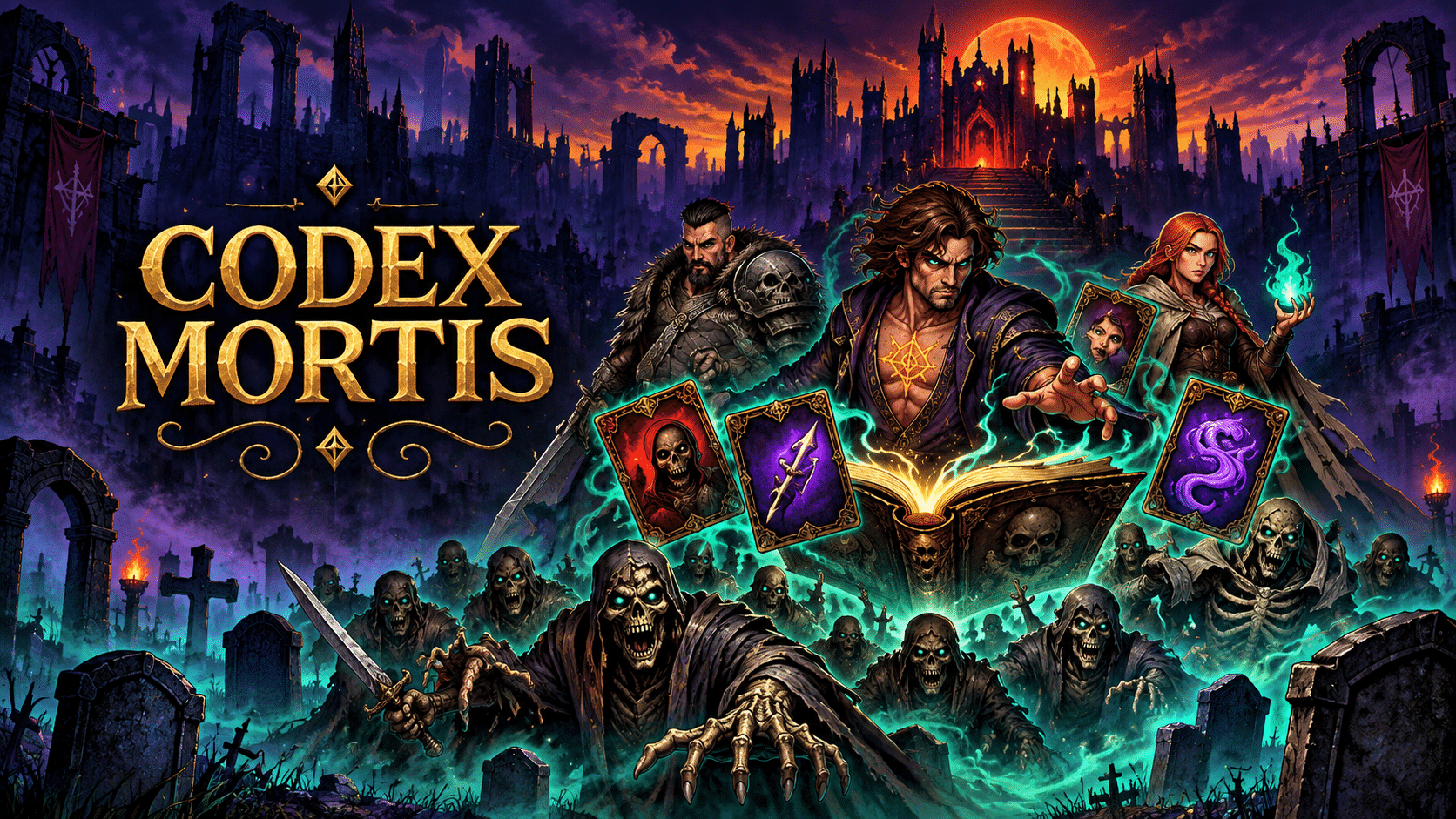
Death Has Lost Its Way: Exploring the Dark Fantasy World of Codex Mortis
An isometric survivors-like adventure where forgotten magic, undead hordes, and a shattered ancient codex stand between the living world and eternal decay.
I. When Death Refuses to Rest
Death is supposed to be the end. Bodies return to the earth, souls move beyond the living world, and the natural cycle continues. But in Codex Mortis, something has disrupted that balance, leaving behind a world where the dead refuse to rest and the very ground beneath them has become something sinister.
The game’s opening narrative introduces a world in which the ancient Codex has been torn apart, scattering its pages across an increasingly corrupted landscape. Wherever those pages have fallen, death has begun to rot in place. Flesh no longer returns to the soil, souls cannot pass beyond, and the dead remain bound to a world they should have left behind.
The story begins in the Forgotten Graveyard, a place once watched over by Lothar, who buried the nameless and bound the restless. Now, five missing pages of the Codex lie buried within its grounds, and recovering them becomes the player’s first major objective. The mission also calls for defeating Lothar and allowing the dead to finally remember how to die.
It’s a dark fantasy premise that gives the action a little more narrative direction than simply surviving against endless waves of enemies. There’s a mystery surrounding the missing pages, and the opening mission provides a glimpse into the larger conflict waiting to be uncovered.
II. Preparing for the Dead: The Character Hub
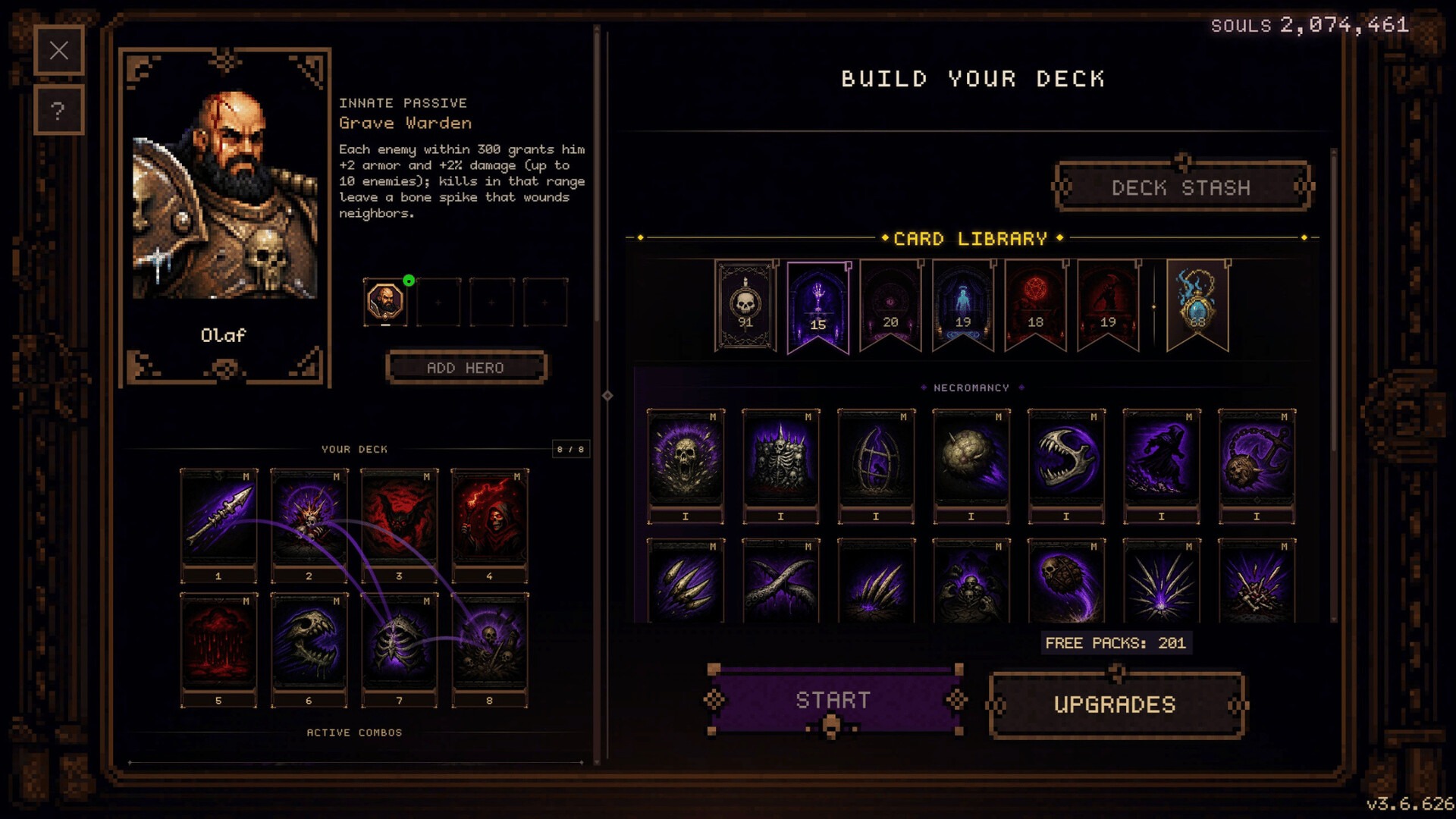
Before heading into the graveyard, players are introduced to the Character Hub, the central location for preparing heroes and their parties before embarking on a mission. Rather than simply selecting a character and jumping straight into combat, Codex Mortis gives players several progression systems to explore.
One of the first things introduced is the game’s hero collection and upgrade system. Ash Ward uses urns that randomly unlock a new hero or improve an existing one. Unlocking a hero also makes that character available for play, providing additional options as the collection grows.
The character system also incorporates different magic schools and abilities. Creatures that previously influenced character appearances now have their own abilities associated with the magic school system, giving players more to consider when preparing their characters.
III. Building a Deck of Destruction
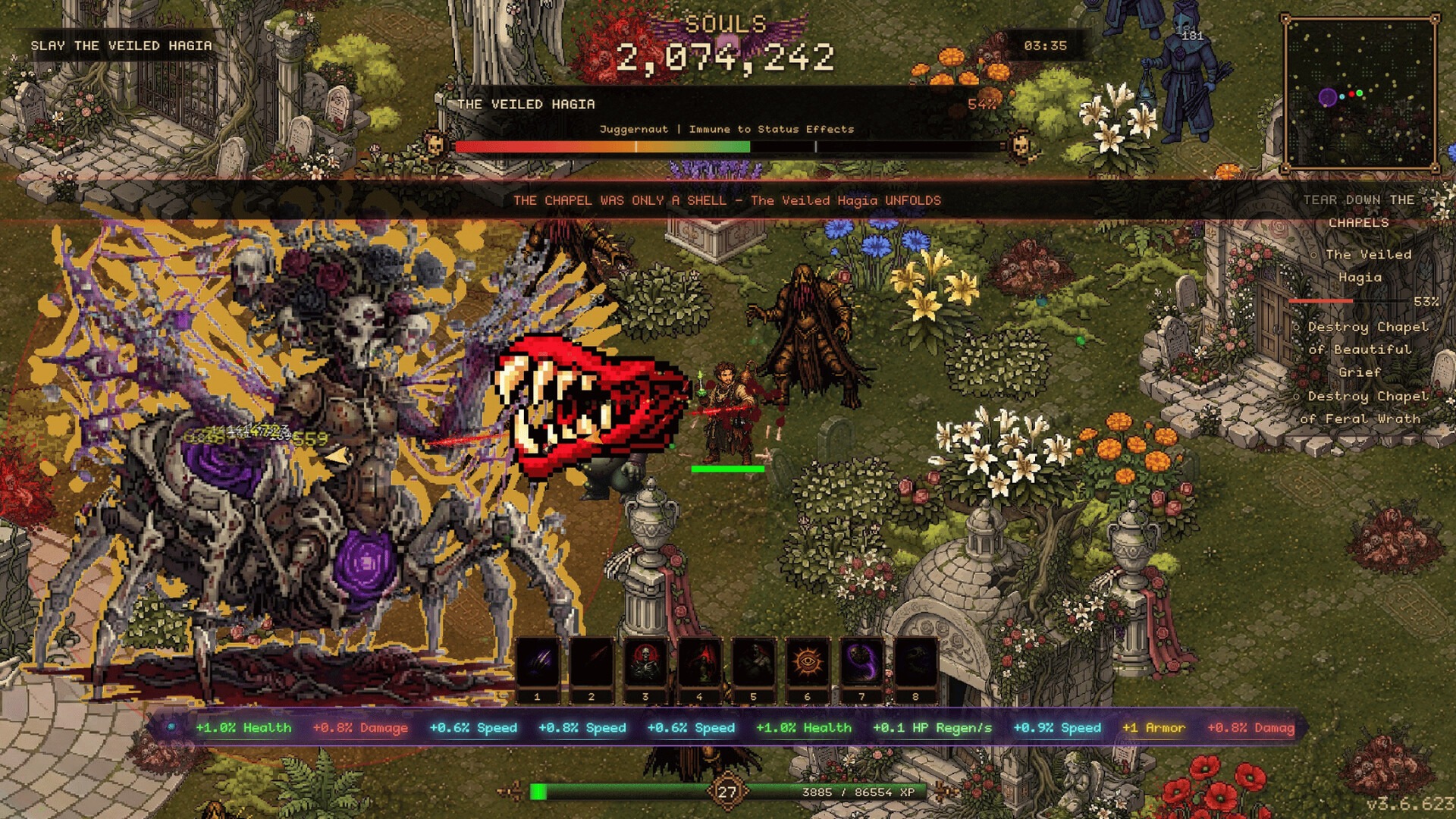
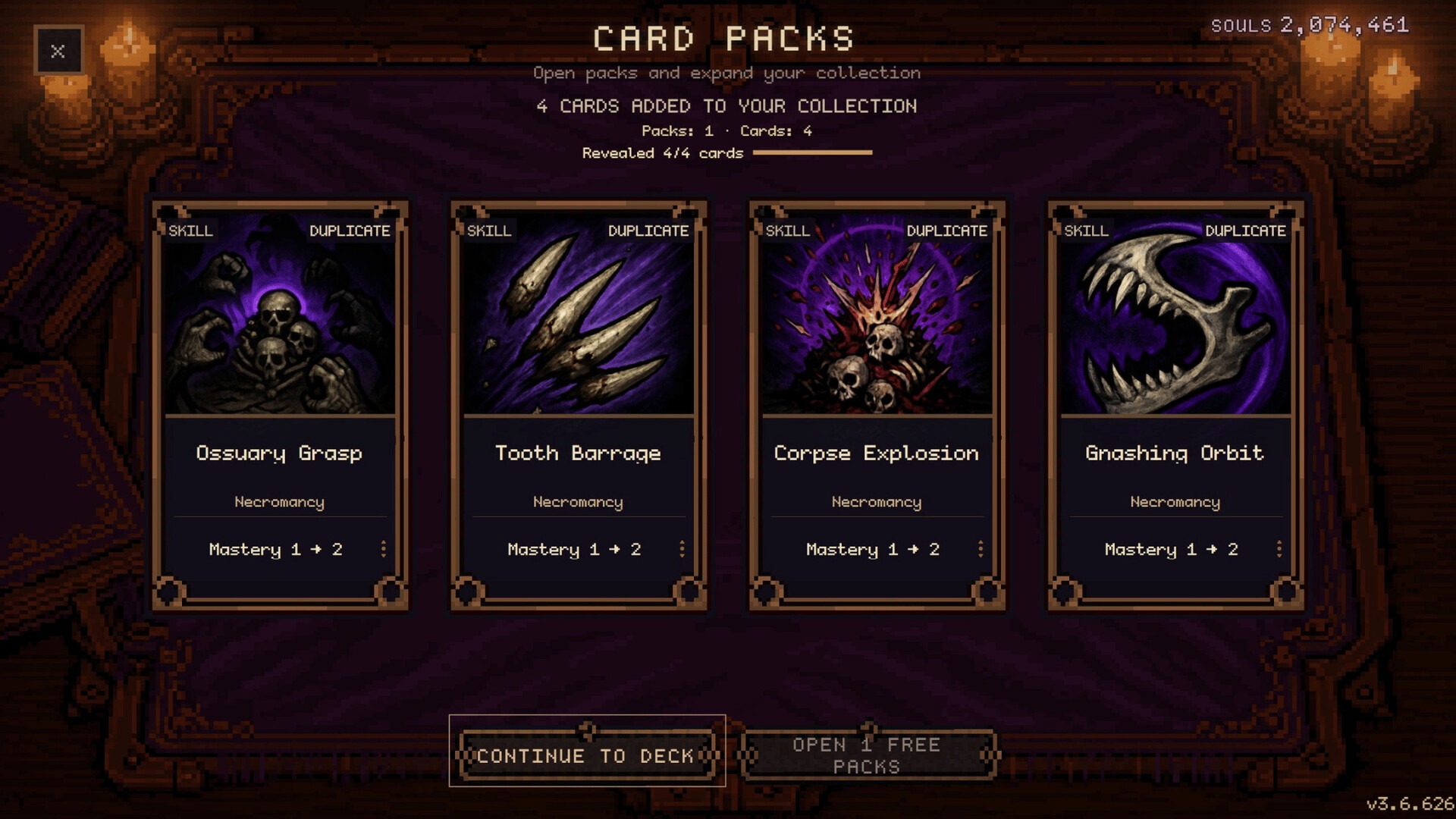
Character preparation extends beyond choosing a hero. The spell library allows players to examine cards that aren’t currently equipped but are compatible with their selected character’s magic schools.
Packs introduce random spells and upgrades into the collection, encouraging experimentation with different combinations as the available options expand. Players can then choose which unlocked cards they want to incorporate into their decks.
There is also an important distinction between the main deck prepared in the Character Hub and the separate deck used during an individual mission. Scrolls provide spells for the current run, while artifacts and urns reveal their rewards directly on the selection cards.
These systems give Codex Mortis an additional layer of preparation and customization. Learning how the different collections, character abilities, and decks interact takes a little time, but the potential for experimenting with different builds is an interesting part of the experience.
“Every grave is a promise. A body to the earth, a name to the stone, a soul to the cycle.”
IV. Into the Forgotten Graveyard
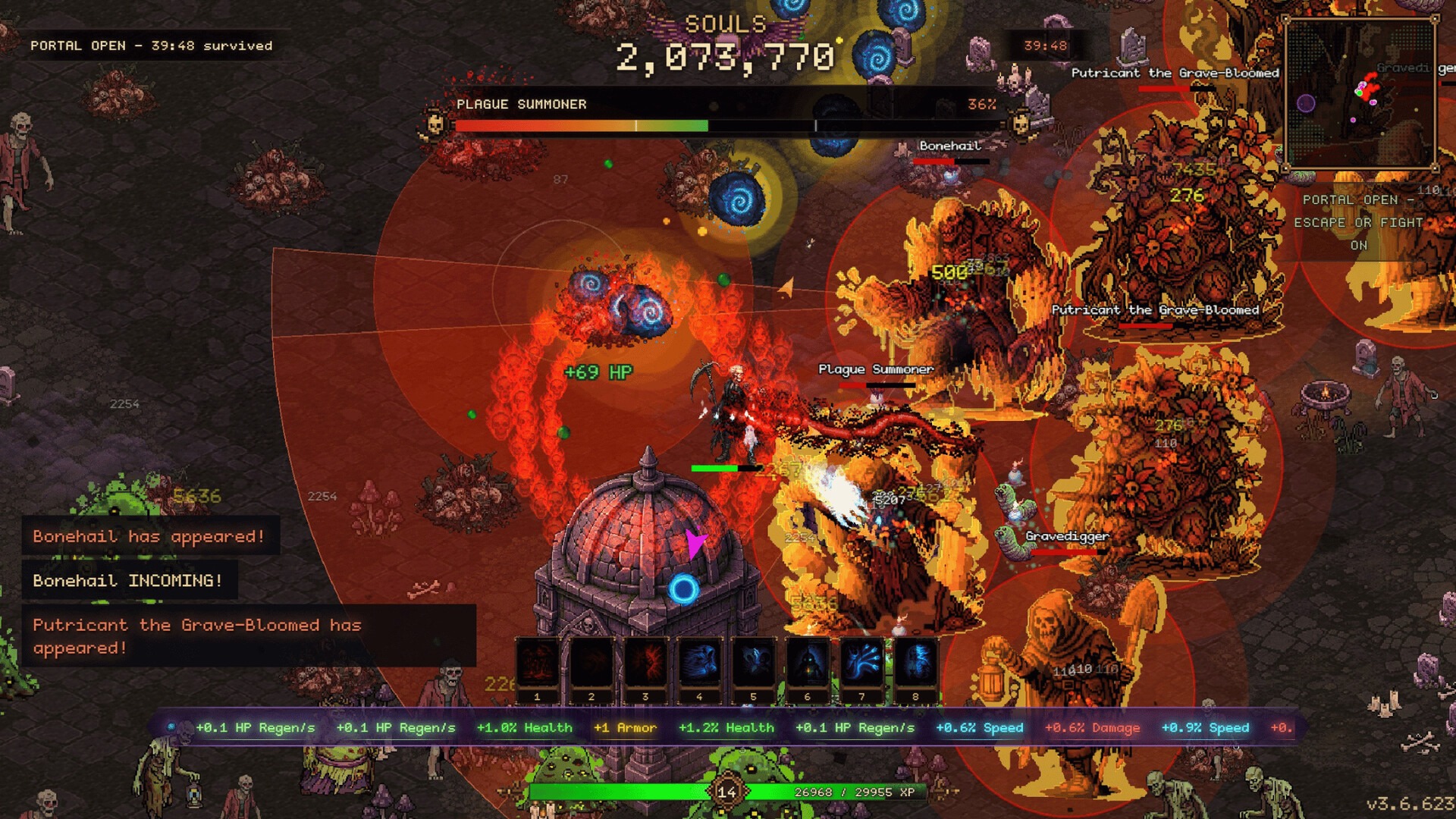
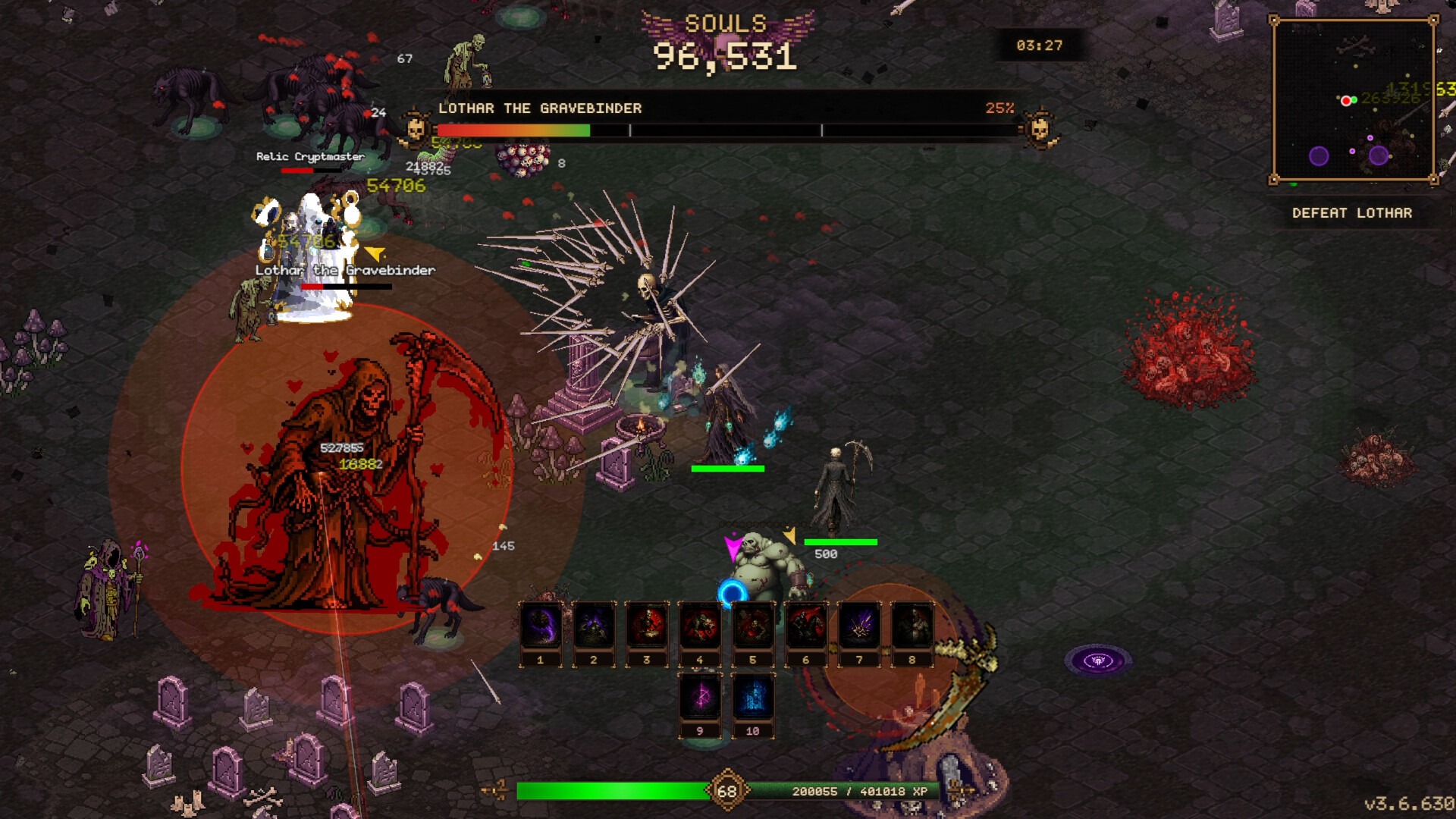
Once preparations are complete, it’s time to enter the Forgotten Graveyard and discover what Codex Mortis is really about. Despite its story-driven introduction, the gameplay quickly reveals itself as a survivors-like experience with an isometric perspective.
Players navigate the battlefield while enemies approach from different directions, using magical abilities and increasingly powerful attacks to keep the undead at bay. Anyone familiar with games like Vampire Survivors should recognize the general gameplay loop: defeat enemies, collect experience, level up, and select upgrades that gradually strengthen your character.
The isometric viewpoint gives the battlefield a distinct presentation, while the on-screen arrow provides direction toward the scattered Codex pages. This creates an objective beyond simply defeating enemies and surviving as long as possible.
It also introduces an interesting balancing act. Players need to keep moving toward their objectives while managing the enemies surrounding them. Getting distracted by the growing chaos can make it easy to lose track of where you’re supposed to be heading.
V. Magic, Upgrades, and the Fight to Survive
As enemies fall, experience and level-ups provide opportunities to improve your character. Each selection presents different ways to increase damage, improve survivability, or strengthen magical abilities.
During my first attempts, I experimented with increasing minion damage, improving health regeneration, and investing in abilities such as Tentacle Lash. These choices provide opportunities to develop a character’s build as a mission progresses.
The upgrade system encourages players to think about which improvements will offer the greatest advantage. Increasing damage might help eliminate enemies faster, while additional health regeneration can provide a little more breathing room when the battlefield becomes overwhelming.
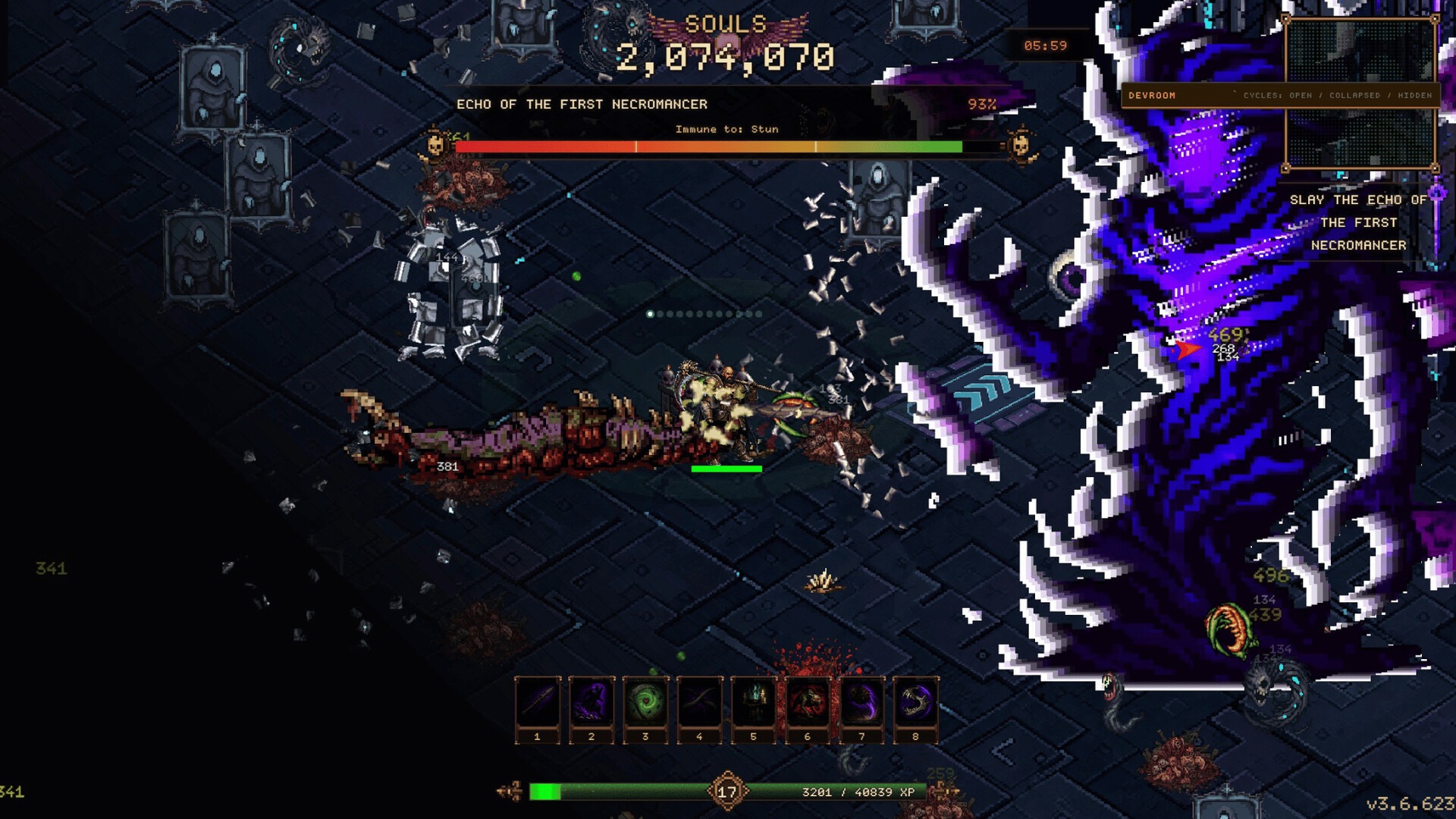
However, learning which upgrades work best together is part of the experience. My initial run involved a little confusion over the health bar and mission objectives, followed by an encounter that ended my attempt much sooner than expected.
It’s a reminder that simply leveling up doesn’t guarantee survival. Understanding your abilities, making effective upgrade choices, and knowing when to prioritize staying alive are all part of mastering the gameplay loop.
VI. Learning From Defeat
My first experience with Codex Mortis was a combination of exploration, experimentation, and a fairly quick defeat. There was a learning curve as I worked through the different menus, tried to understand the character progression systems, and figured out exactly what the mission expected me to accomplish.
Once the pieces started coming together, the gameplay became easier to follow. Understanding that collecting the scattered pages was central to the mission gave me a clearer objective, while experimenting with upgrades helped me better understand how to approach another attempt.
Returning to the Character Hub and making better use of the available cards and upgrades also becomes an important part of preparing for future runs. There is an incentive to keep experimenting, unlocking additional heroes, and discovering which magical combinations work best.
I only scratched the surface of what the game offers during this initial session, but there is enough variety in its progression systems to make me curious about what other characters, abilities, and combinations are waiting to be discovered.
VII. Final Impressions: A Dark Fantasy Worth Exploring
Codex Mortis brings together familiar survivors-like gameplay with a dark fantasy setting, an isometric battlefield, and a collection of character and spell progression systems. Its opening story provides a reason to venture into the Forgotten Graveyard, while the missing Codex pages give players a clear objective during their missions.
The Character Hub is one of the more interesting aspects of the experience, offering several systems to explore before entering a mission. Between unlocking heroes, collecting spells, and experimenting with different upgrades, there is plenty to learn as the collection develops.
That said, newcomers should expect to spend some time getting familiar with the different menus and progression mechanics. My first attempts were far from flawless, but once I started understanding how the systems worked together, I could see the appeal of returning for another run.
While my time with Codex Mortis was limited to an introductory session, it left me interested in exploring more of its character options, magical abilities, and mission progression.
If dark fantasy settings, undead enemies, and survivors-like gameplay are your thing, Codex Mortis is worth checking out and adding to your Steam wishlist.

