
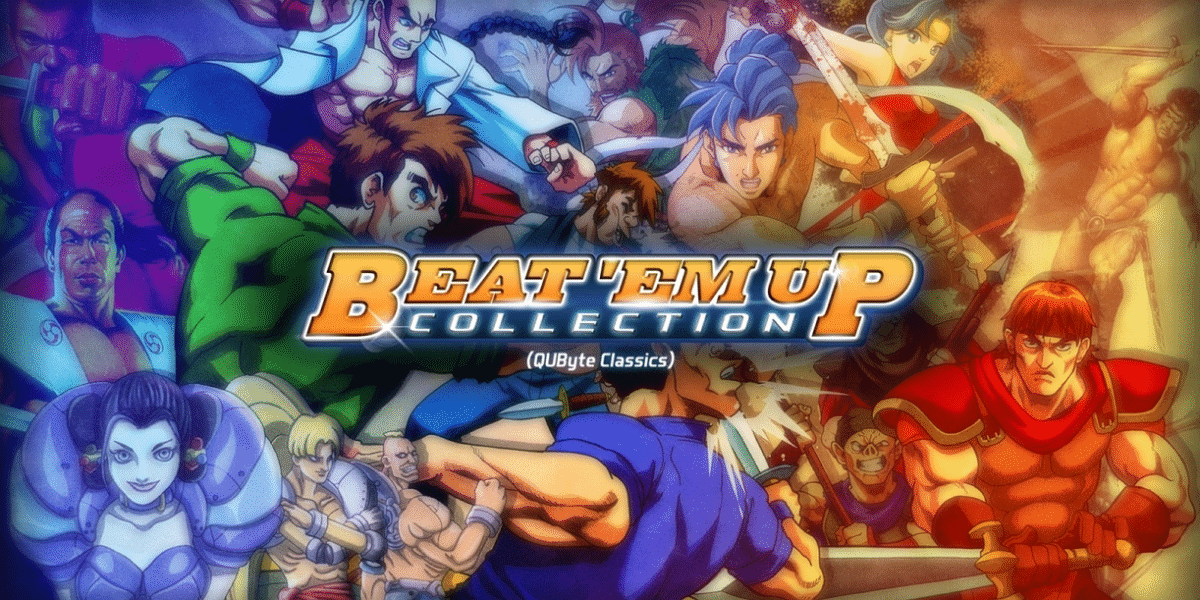
Beat ‘Em Up Collection (QUByte Classics)
Seven eccentric 16-bit brawlers step out of video-store obscurity and onto modern consoles in a gloriously unhinged anthology.
In the golden age of 16-bit consoles, the side-scrolling brawler ruled the living room floor with a simple, intoxicating promise: walk right, punch everything that moves, and eat suspiciously placed floor chicken to survive. While household names like Final Fight and Streets of Rage dominated the cultural conversation, a wildly eccentric underbelly of cult brawlers thrived in the margins of the Super Nintendo era. Beat ‘Em Up Collection (QUByte Classics) exhumes seven of those deep-cut oddities—First Samurai, Second Samurai, Gourmet Warriors, Iron Commando, Legend, Water Margin: The Tales of Clouds and Winds, and Switchblade—bundling them into a single digital time capsule. Rather than presenting a polished museum exhibit of immaculate masterpieces, this anthology celebrates the glorious, unhinged weirdness of 1990s action design. For retro enthusiasts and curious newcomers alike, it offers a fascinating window into a time when developers threw convention out the window in favor of bodybuilders cooking protein shakes and time-traveling samurai fighting demons.
Protein Shakes & Post-Apocalyptic Camp
At the heart of the collection’s appeal is its sheer tonal whiplash, kicking off with the cult-classic absurdity of Gourmet Warriors (originally released in Japan as Gourmet Sentai Barayaro). Set in a post-apocalyptic Neo-Zeus where food is scarce and mutated thugs roam the streets, this 1995 oddity plays like a fever dream directed by a competitive bodybuilder. You control one of three hyper-muscular heroes who pummel robot chefs and leather-clad punks, collecting raw ingredients instead of traditional health pickups. Between stages, you actually combine those collected ingredients in a bizarre cooking minigame to restore your vitality, creating dishes that determine how much stamina you carry into the next brawl. Combined with deliberately stiff, comical poses and an aesthetic dripping with mid-nineties Japanese surrealism, Gourmet Warriors alone justifies the price of admission for fans of retro camp.
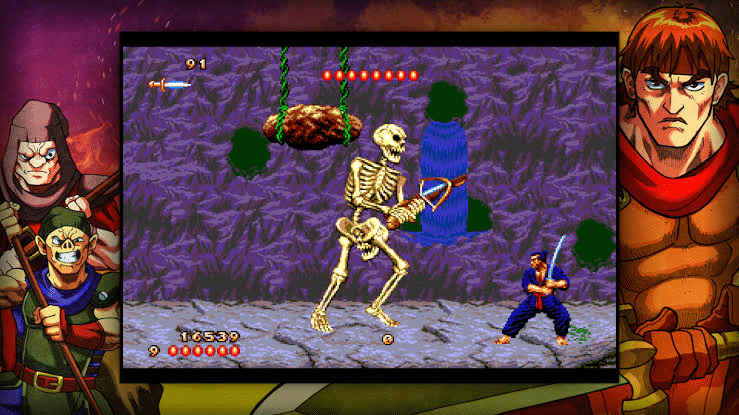
Shifting gears from Japanese surrealism to European arcade ambition, Iron Commando and Legend represent the ambitious output of French developer Arcade Zone. Originally released in 1994, Legend trades neon alleyways for a gritty medieval fantasy world filled with skeletons, warlocks, and fire-breathing dragons. Its chunky, rotoscoped-style character sprites and heavy, deliberate swordplay give it a distinct Golden Axe-meets-King of Dragons atmosphere, complete with screen-clearing magic spells and dramatic boss encounters. Meanwhile, Iron Commando—which famously saw only a limited Super Famicom release in Japan before gaining a cult following—pivots back to modern urban warfare. Putting players in the boots of a soldier and a martial artist battling an eco-terrorist syndicate, it spices up standard crowd-control brawling with vehicular segments, letting you tear through enemy lines on motorcycles and jeeps while mowing down goons with heavy weaponry.
British Platforming & Global Lore
The collection also serves as an intriguing retrospective on British developer Vivid Image, featuring both First Samurai and Second Samurai alongside the cyberpunk action-platformer Switchblade. Unlike pure belt-scrolling beat ’em ups, the Samurai titles blend hack-and-slash combat with sprawling, labyrinthine platforming stages packed with hidden secrets, puzzle keys, and cheeky fourth-wall-breaking humor. In First Samurai, you guide a warrior across feudal Japan on a quest for vengeance against the Demon King, utilizing magic bells and weapon upgrades to survive treacherous vertical climbs. Its sequel, Second Samurai, expands the scope dramatically, hurling the hero across time periods—from prehistoric jungles teeming with dinosaurs to futuristic sci-fi strongholds—while adding a welcome two-player cooperative mode that turns chaotic platforming into a shared endurance test.
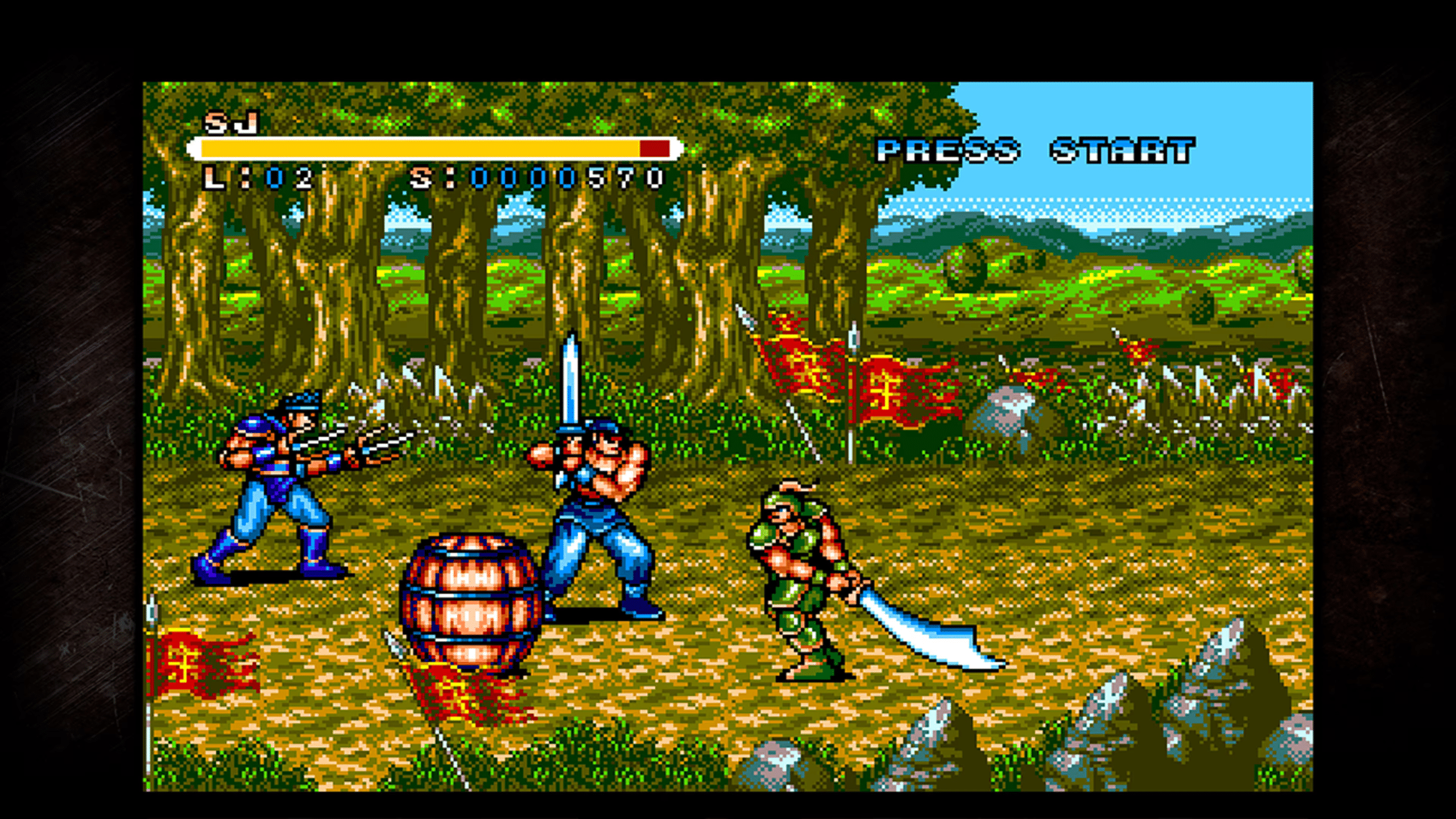
Rounding out the seven-game roster is Water Margin: The Tales of Clouds and Winds, an obscure Taiwanese Mega Drive/Genesis brawler inspired by the classic Chinese literary epic Outlaws of the Marsh. Visually distinct from its 16-bit Nintendo counterparts, Water Margin features vibrant, expressive pixel art, lush historical backdrops, and a trio of playable outlaws wielding distinct martial arts styles and traditional weaponry. Its inclusion highlights the global reach of the 16-bit brawler boom, proving that studios far outside Tokyo, London, and Paris were eager to put their own cultural spin on the coin-op formula. Seeing how Water Margin’s brisk combo strings contrast with the slower, methodical pacing of Switchblade makes jumping between titles in the menu feel like flipping through channels on an international retro television broadcast.
“Even when a particular design choice feels rough around the edges, it radiates an unmistakable creative hunger that modern, focus-tested indies rarely replicate.”
Modern Comforts for Quarter-Munching Classics
Of course, revisiting seven uncompromising 1990s action games without modern conveniences would test the patience of even the most hardened arcade veteran, which is where QUByte Interactive’s emulation wrapper steps in. Built on the studio’s established QUByte Classics framework, the package equips every title with essential quality-of-life upgrades, including instant save states, a rewind feature to undo cheap off-screen hits, and customizable button mapping. Visual purists can toggle between crisp pixel-perfect scaling, smoothed filters, and nostalgic CRT scanline overlays, framed by custom-illustrated screen borders tailored to each game. While the collection omits deep archival museum extras like scanned manuals or developer interviews, the responsive controls and snappy menu transitions ensure the focus stays squarely on the action.
Crucially, Beat ‘Em Up Collection understands that brawlers are inherently social creatures, and couch co-op remains the ultimate way to experience its best entries. Grabbing a second controller to tackle the screen-filling chaos of Gourmet Warriors, Legend, Iron Commando, or Water Margin transforms clunky enemy AI and sudden difficulty spikes into shared comedic triumphs. Coordinating crowd control, arguing over who gets the best weapon drop, and accidentally knocking each other into hazards recaptures the exact living-room energy that defined Saturday afternoons in 1995. Even solo players will appreciate how quick save states mitigate the quarter-munching design philosophies baked into these games’ DNA, allowing you to experiment with unfamiliar mechanics without losing an hour of progress to a cheap boss pattern.
Desperation & Innovation in 1995
Look closely at the mechanics across these seven titles, and you will also discover a fascinating snapshot of how designers wrestled with genre fatigue in the mid-nineties. By 1994 and 1995, straight-ahead street brawlers were losing ground to one-on-one fighters like Street Fighter II and Mortal Kombat, forcing developers to innovate wildly to stand out on store shelves. You can feel that experimental desperation in every corner of this compilation: the RPG-lite stat building of Gourmet Warriors, the platform-exploration hybrids of the Samurai duology, and the firearm-heavy run-and-gun detours of Iron Commando. None of these games play identically, and even when a particular design choice feels rough around the edges, it radiates an unmistakable creative hunger that modern, focus-tested indies rarely replicate.
For prospective buyers, approaching Beat ‘Em Up Collection (QUByte Classics) with the right expectations is everything. If you walk in expecting the razor-sharp hitboxes and finely tuned combo physics of Streets of Rage 4 or Teenage Mutant Ninja Turtles: Shredder’s Revenge, the stiff animations of Switchblade or the erratic collision detection of First Samurai might catch you off guard. These are unabashedly quirky, slightly janky B-movies of the 16-bit era—games originally rented from neighborhood video stores on a Friday night based purely on bizarre box art. Viewed through that lens, however, the anthology is an absolute treasure trove of gaming history, rescuing hard-to-find cartridges—some of which command absurd prices on the secondhand collector market—and making them effortlessly accessible on modern hardware.
Ultimately, Beat ‘Em Up Collection (QUByte Classics) succeeds because it preserves a vital, eccentric chapter of gaming heritage that might otherwise remain locked behind steep collector paywalls or obscure emulation forums. By gathering seven wildly different takes on side-scrolling combat under one roof, QUByte Interactive has created an ideal weekend dive for retro aficionados, curious historians, and couch co-op partners looking for something wonderfully weird. Whether you stay for the protein-fueled absurdity of Gourmet Warriors, the sword-and-sorcery grit of Legend, or the historical flair of Water Margin, this compilation proves that sometimes the most memorable classics are the ones that dared to be strange.

