
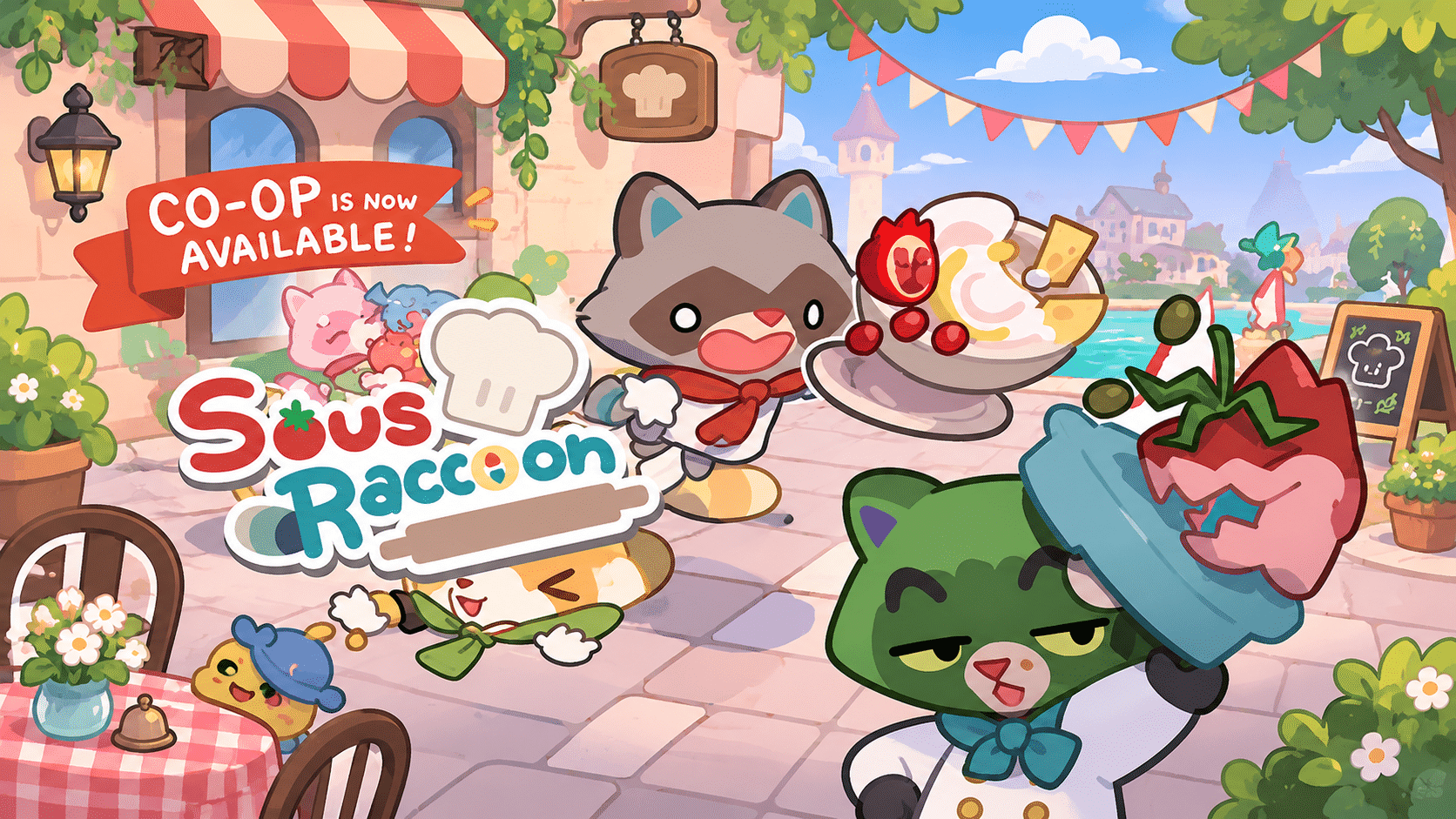
Sous Raccoon: A Restaurant Full of Hungry Customers, Chaotic Monsters, and One Very Busy Raccoon
A cute restaurant-management adventure that mixes order-taking, kitchen duties, upgrades, and monster trouble into one surprisingly hectic shift.
I. Welcome to the Restaurant: One Raccoon, a Whole Lot of Work
There’s something about a cute management game that makes you think you’re in for a relaxing time. You picture taking orders, preparing food, serving customers, and watching your little restaurant become a success. Sous Raccoon initially gives off that kind of energy, but it doesn’t take long to discover that this restaurant has a few more problems than your average neighborhood eatery.
Sous Raccoon is a restaurant-management game with a co-op option, and I decided to start out playing solo. The premise immediately reminded me of Overcooked, which is a comparison I was happy to make. I enjoy games where you have to juggle multiple tasks, keep customers happy, and try to stay organized while everything around you gets increasingly hectic.
Before jumping into the restaurant, I had to choose a difficulty. The game presents three options: Intern, Staff, and Manager. Based on the color coding and the usual way games label their difficulty settings, I assumed Intern would be the easiest, Staff would be the standard experience, and Manager would be the toughest.
There was a little confusion here, though. When selecting the modes, the warning text appeared to suggest that each one was very hard and could not be changed. That seemed a little odd, especially when the options were clearly presented as different difficulty levels.
I decided to go with my initial assumption and start with Intern. After spending more time with the game, that seemed to be the right call: the green Intern option played like the easier difficulty. I would still like to see the warning text clarified, because it could leave new players unsure about what they’re selecting.
II. Learning the Ropes: Orders, Ingredients, and a Dancing Raccoon
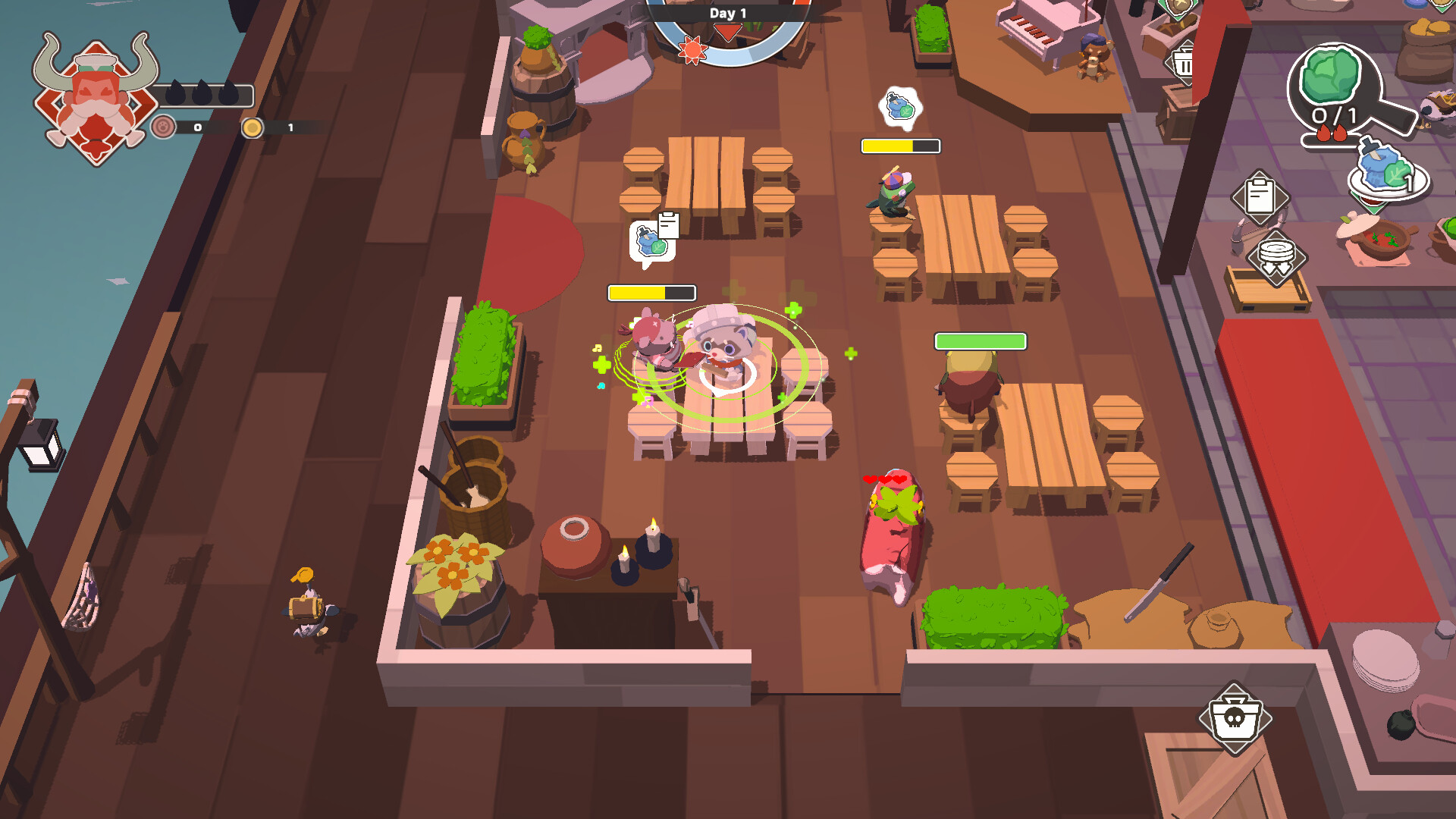
Thankfully, Sous Raccoon includes a tutorial, and I decided to work through it before opening the restaurant for business. The tutorial introduces Alto, the restaurant’s owner, who walks the new raccoon employee through the basics of the job.
The first part is fairly straightforward. When a customer sits down, you need to take their order and bring it to the order counter. From there, you head into the kitchen, collect the ingredients the chef requests, and deliver them to the proper station.
Once the food is ready, it’s your responsibility to take it out to the customer. Picking up the wrong order isn’t the end of the world, either. There’s a bin where mistakes can be discarded, although the chef’s prepared food has to be returned through the designated food-return tray instead.
Customer satisfaction is important because it directly affects how much money you earn. If customers have been waiting too long, you can even entertain them by dancing. Yes, apparently this restaurant believes a little dance performance is part of good customer service.
I wasn’t expecting that particular job requirement, but I can’t argue with giving customers something to watch while they wait. It’s a silly little touch that fits the game’s playful tone.
The tutorial also introduces the ability to return uneaten food after customers leave, along with some of the restaurant’s more unusual problems. It doesn’t take long before the raccoon is doing considerably more than simply carrying plates.
III. This Isn’t Just a Cooking Game: Watch Out for Monsters
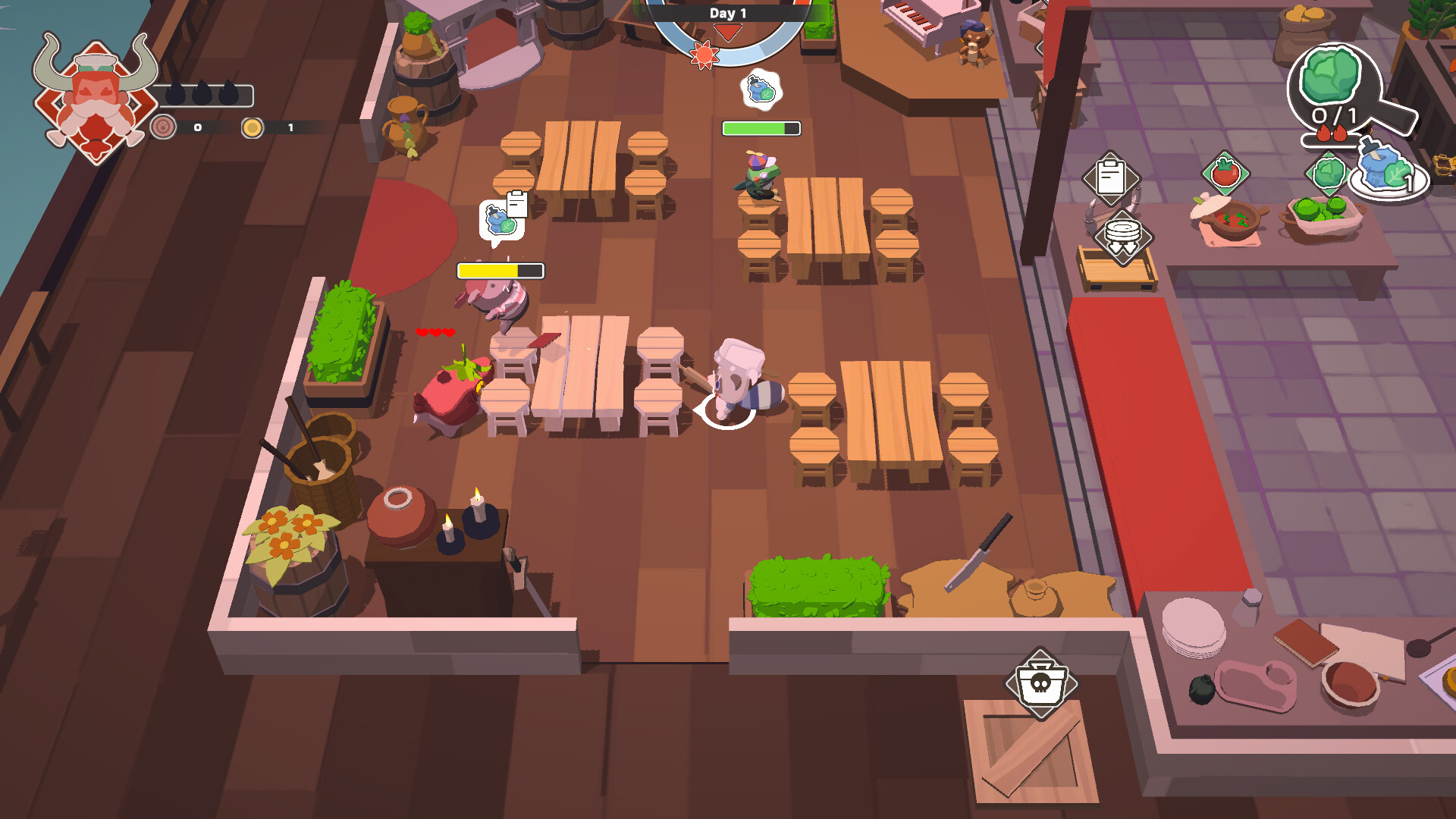
Here’s where Sous Raccoon starts separating itself from a more traditional restaurant-management game. While you’re taking orders and helping the chef prepare meals, monsters can show up and cause trouble inside the restaurant.
Some of these creatures will attack customers, and it’s up to you to step in and protect them. You can fight back, and successfully dealing with these threats can earn you coins. Naturally, this means you have to keep an eye on the restaurant while also watching for anything trying to turn your shift into a disaster.
The monsters aren’t simply an occasional distraction, either. If customers are lost because their patience runs out, the chef’s rage level increases. Let that rage reach its maximum, and it’s game over.
Things can get even stranger when customers are defeated. You’re expected to deal with the situation quickly before things get worse, which is certainly not something I expected to hear during my first restaurant tutorial.
The combination of food service and combat gives Sous Raccoon a little more personality than a straightforward cooking simulator. You’re not just trying to keep the kitchen running. You’re also protecting the people who came in for a meal.
“Taking orders is only half the job. The other half is keeping the monsters away from your customers.”
IV. Solo Service Can Get Overwhelming
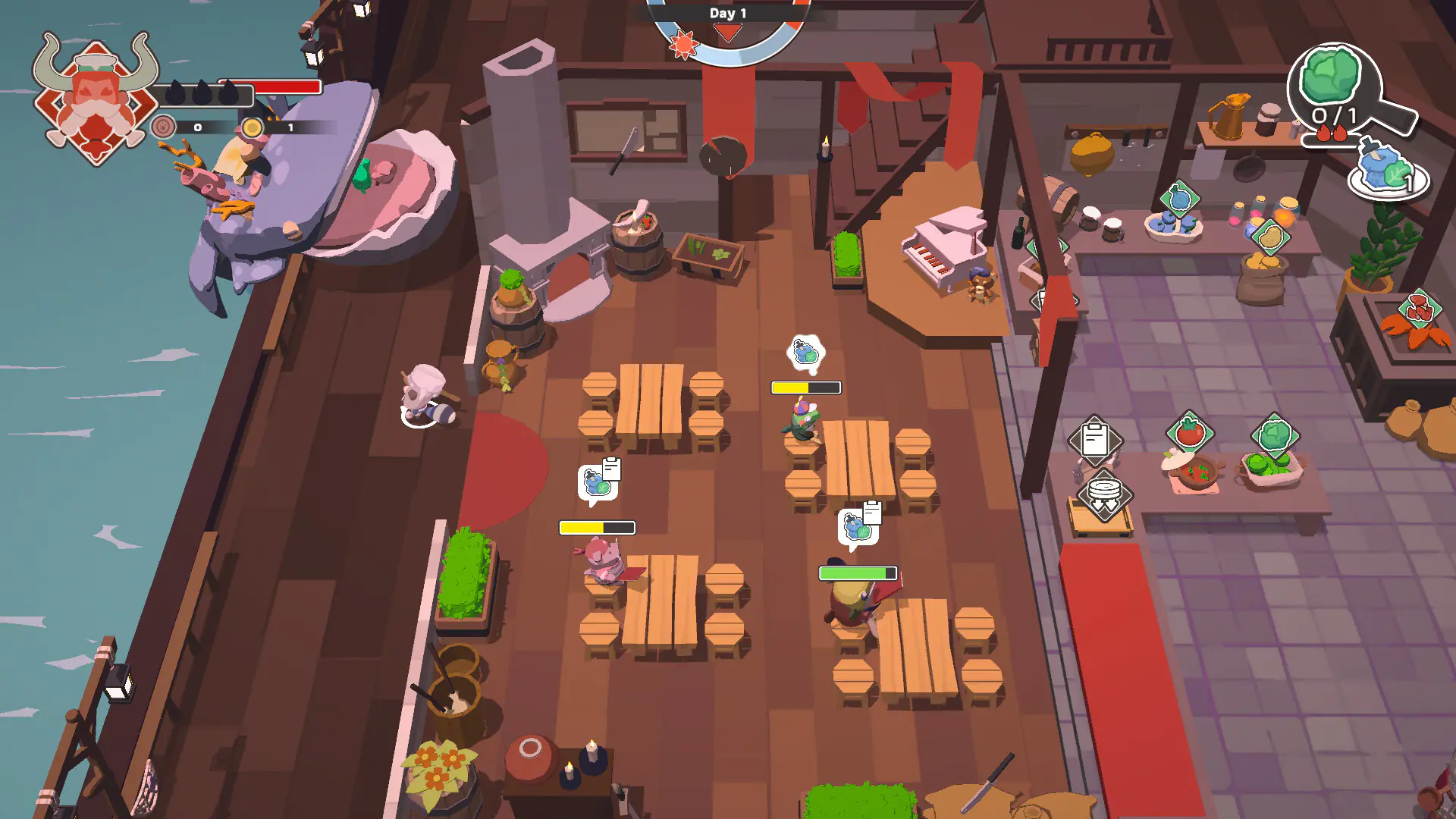
I won’t lie: my first experience playing Sous Raccoon solo was rough. There is a lot happening at once, and the game expects you to move between different responsibilities without giving you much breathing room.
You’re taking orders, collecting ingredients, delivering food, keeping customers happy, dealing with monsters, and trying to make sure the chef doesn’t lose his patience. It’s a lot for one raccoon to handle.
At one point, I found myself wondering how the game expected me to keep up with everything. Monsters were running around, customers needed attention, and I was trying to figure out which task deserved priority.
The experience made me think about how much more manageable the game could be with additional players. Since Sous Raccoon supports co-op, I can imagine dividing responsibilities between friends making the restaurant feel much more organized. One player could focus on orders and food delivery while another handles the monsters and protects the customers.
Unfortunately, I wasn’t able to test the co-op experience during this playthrough, so I can only speak to what I experienced playing alone.
I also noticed that the opening portion felt especially demanding. As I continued playing and became more familiar with the mechanics, things started to feel more manageable. That learning curve is worth keeping in mind, particularly if you’re planning to jump in by yourself.
V. Upgrades, Restaurant Layouts, and a Little Roguelike Flavor
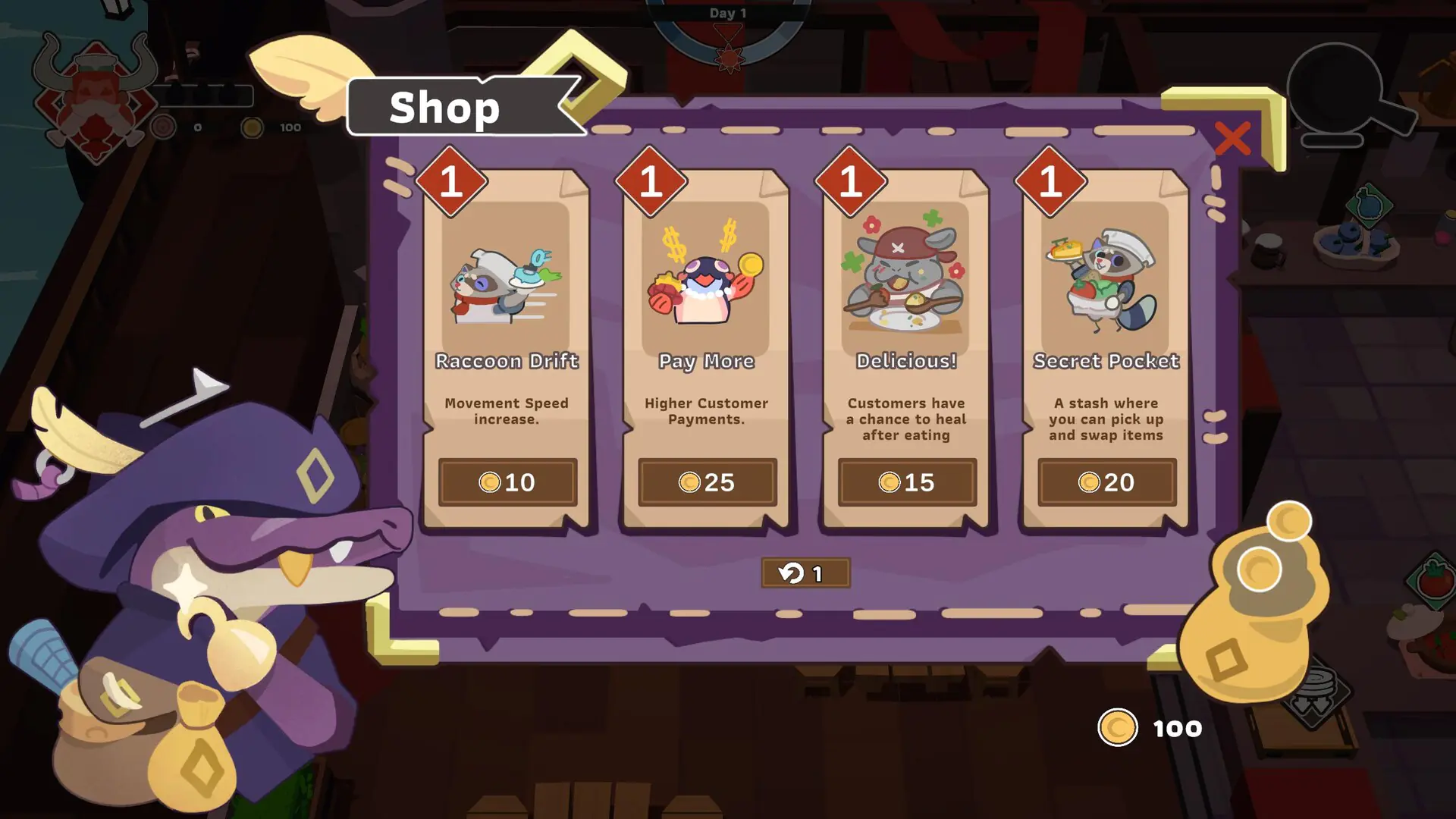
Sous Raccoon isn’t just about surviving one shift after another. The money you earn can be used to purchase upgrades that make your work easier. During my time with the game, I was able to look at improvements such as movement speed, rolling distance, cooking speed, and healing effectiveness.
These upgrades are useful because they let you gradually improve how your raccoon handles the demands of the restaurant. I was particularly interested in anything that could help me move around faster, since getting from one side of the restaurant to the other can become a challenge when several things need attention at once.
There are also assistants that can be purchased and upgraded. One example introduced during my playthrough was Henry, who can help by delivering ingredients to the chef. Having another set of paws to help with the workload sounds pretty good to me.
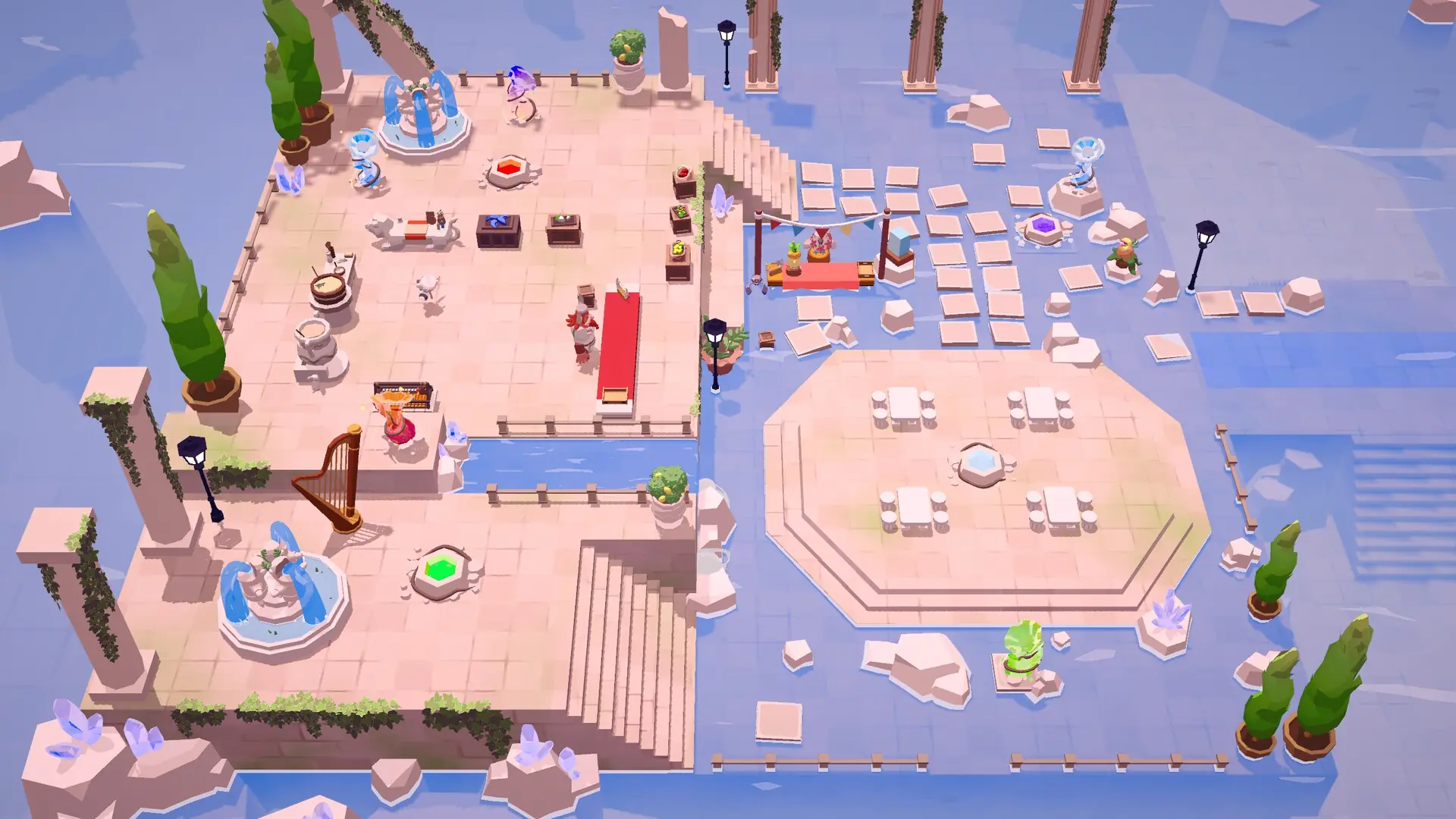
Another feature I enjoyed was the ability to choose the restaurant’s layout for the following day. Different layouts can produce different results, giving players a chance to decide which arrangement might work best for their next shift.
That combination of upgrades, assistants, and layout choices gives the game a little roguelike flavor. You’re not simply repeating the same day without changes. You’re making decisions that can give you an advantage as you work toward completing the stage.
The game also introduces a progression system where completing seven days unlocks the next stage. That gives players another reason to keep improving their restaurant and finding a routine that works.
VI. Finding My Rhythm and Getting Comfortable With the Chaos
After spending more time with the game, I started to get a better feel for how everything worked. The rolling ability became useful for getting around, and I began to understand which tasks I needed to prioritize during a shift.
I also started noticing how the different systems work together. Keeping customers happy helps bring in money, dealing with monsters prevents them from causing more trouble, and upgrades can make future shifts easier to manage.
There were moments when I could see the strategy coming together. Choosing upgrades, selecting a layout, and deciding how to spend the coins I had earned all gave me something to think about between shifts.
I particularly liked having the option to bring in assistants. When you’re playing solo, anything that helps take a little pressure off your shoulders is welcome.
The game still has a lot going on, and I think the experience would benefit from having other players to share the workload. However, once I understood the mechanics better, Intern mode felt considerably more approachable than my first few moments had suggested.
VII. Final Impressions: A Cute Restaurant Game With a Chaotic Side
Overall, I enjoyed my time with Sous Raccoon. It takes the familiar idea of a cooperative cooking game and adds a combat element that gives players another responsibility to juggle. You’re preparing meals and serving customers, but you’re also defending the restaurant from monsters that would rather ruin everyone’s day.
The comparison to Overcooked is an easy one to make, especially when it comes to the multitasking and kitchen management. However, the added fighting, character upgrades, assistants, and restaurant-layout choices give Sous Raccoon its own identity.
My biggest concern during this first experience was how demanding the game felt when playing solo. There were moments when I felt like I was being asked to handle too many things at once. I can imagine that co-op could make the experience considerably more enjoyable, although I wasn’t able to test that mode myself.
I also think the difficulty descriptions could use a little clarification. The warning text I encountered when selecting a mode didn’t seem to match how the Intern difficulty actually played. After spending time with it, green appeared to be the easier option, with the other colors seemingly representing higher levels of challenge. Making those descriptions clearer would help players understand what they’re choosing before starting a run.
If you enjoy restaurant-management games, chaotic multitasking, and the kind of experience that could be even more entertaining with friends, Sous Raccoon is worth checking out. There’s a fun idea here, and I enjoyed seeing how the restaurant management and monster-fighting systems fit together.
Sous Raccoon is available on Steam for $14.99 USD.

