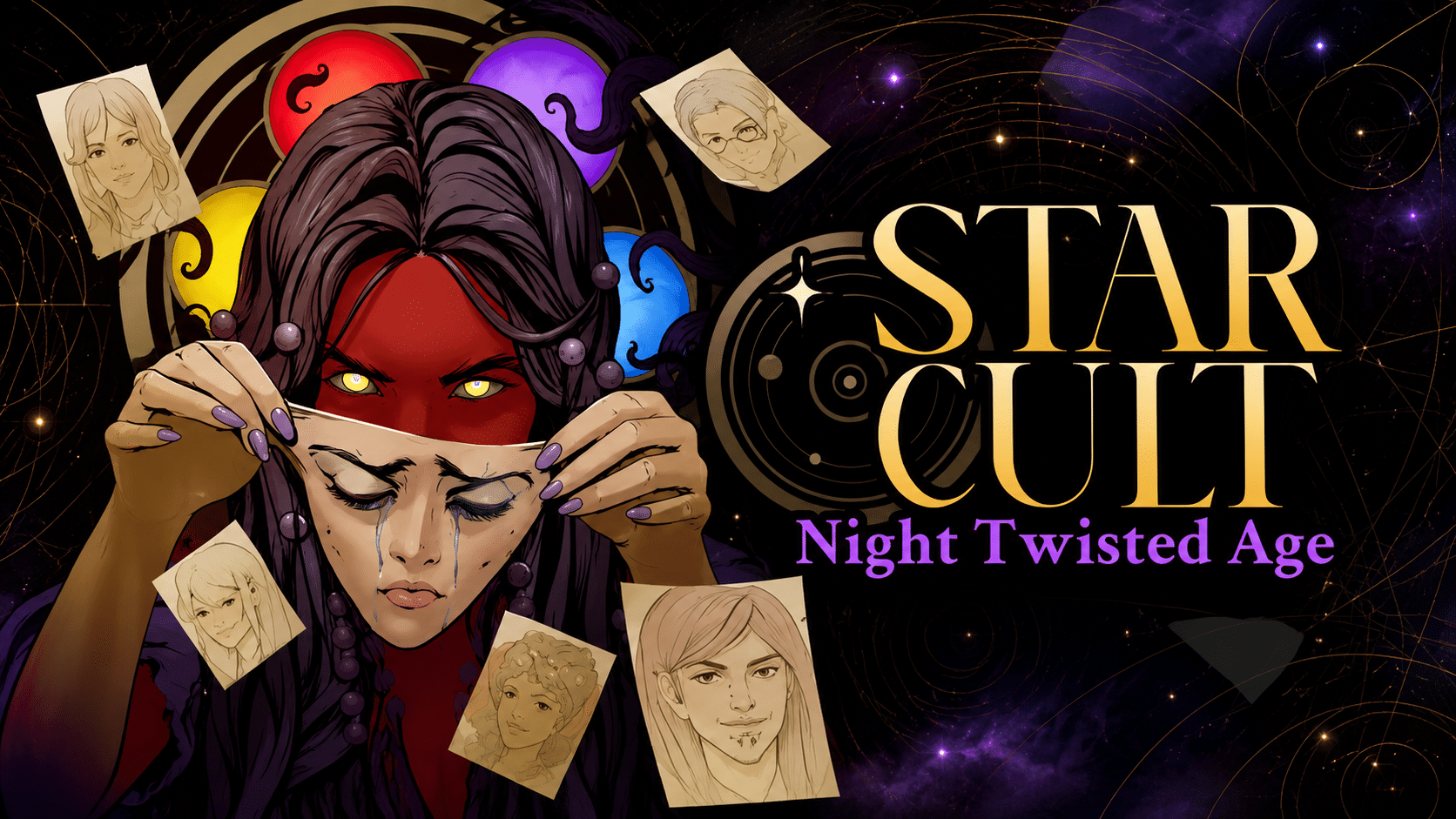
STARCULT Night Twisted Age: A Wedding, a Murder, and Emotions That Can Change Everything
A dark fantasy visual novel where romance, mystery, supernatural secrets, and an unusual emotion-based dialogue system invite players to shape Silviya’s story one decision at a time.
I. A Wedding Celebration With Something Sinister Beneath the Surface
Some visual novels ease players into their stories with a little romance, a few introductions, and the promise of something interesting on the horizon. STARCULT Night Twisted Age takes a slightly different approach. What begins as a grand wedding celebration quickly becomes a story filled with unsettling characters, strange revelations, and questions that leave you wondering who can actually be trusted.
The story follows Silviya, an artist who has married Hans Nebula, the young head of a noble family. At first, everything seems to be going according to plan. There’s a celebration at the Nebula estate, guests are gathered for the occasion, and Silviya believes she has finally found happiness.
That happiness doesn’t last long.
Hans presents his new bride with a special wedding gift: a heavy, spiked collar. Rather than being a romantic gesture, the necklace is tied to a much darker custom involving the control of commoners. And as if that weren’t unsettling enough, Hans has another surprise waiting for her: a blindfolded prisoner named Baltazar.
Baltazar claims to know Silviya and insists that the entire world is in danger. Hans, however, has a very different explanation for why the man is there.
Right from the beginning, the story establishes that there’s more happening beneath the surface of this noble household than Silviya realizes.
II. Choices, Relationships, and a Very Suspicious Husband
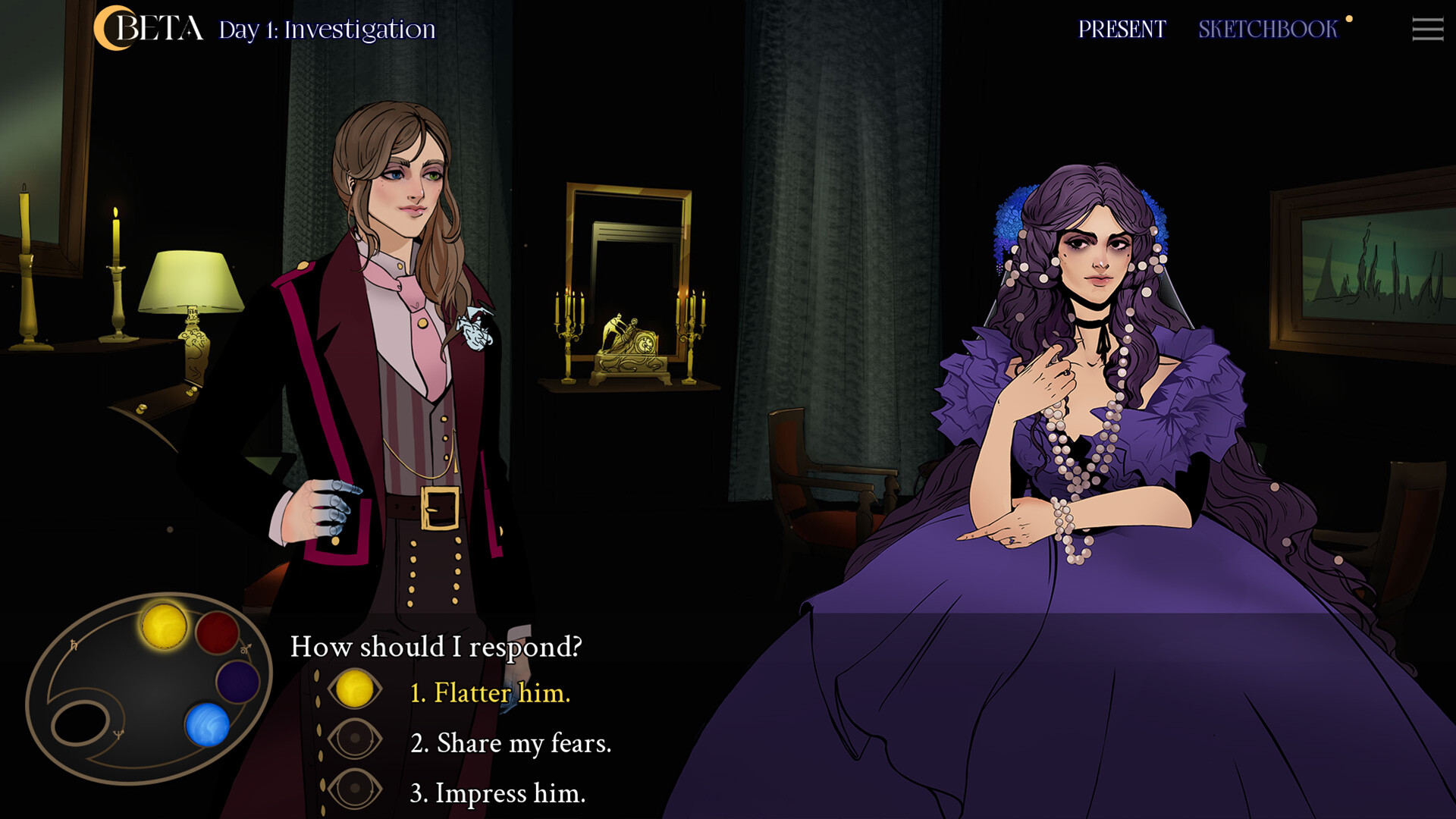
One of the first things I noticed about STARCULT Night Twisted Age is how much attention it gives to relationships and dialogue choices. Conversations aren’t simply there to move the story forward. They can influence how characters perceive Silviya and how her relationships develop.
The game also provides a character sketchbook where players can look at relationship information and see how certain interactions affect the people around her. There’s also a glossary that explains terminology and world-building details, which is particularly useful in a setting with its own language and lore.
I appreciated having these features available because there are quite a few names, concepts, and relationships to keep track of.
And then there’s Hans.
I wasn’t particularly convinced by him from the beginning. Giving your new wife a prisoner and explaining that she can eventually use him as her personal servant is certainly one way to make a wedding memorable, but probably not the way most people would want.
When Baltazar asks Silviya how she feels about her husband, I chose the option that reflected my suspicion: fear. That decision negatively affected her relationship with Hans, but honestly, I wasn’t about to pretend everything was perfectly fine.
The game makes it clear that these choices have consequences. You may not always get the relationship outcome you want, but that’s part of what makes the experience interesting.
III. The Emotion Palette: More Than Just Picking Dialogue
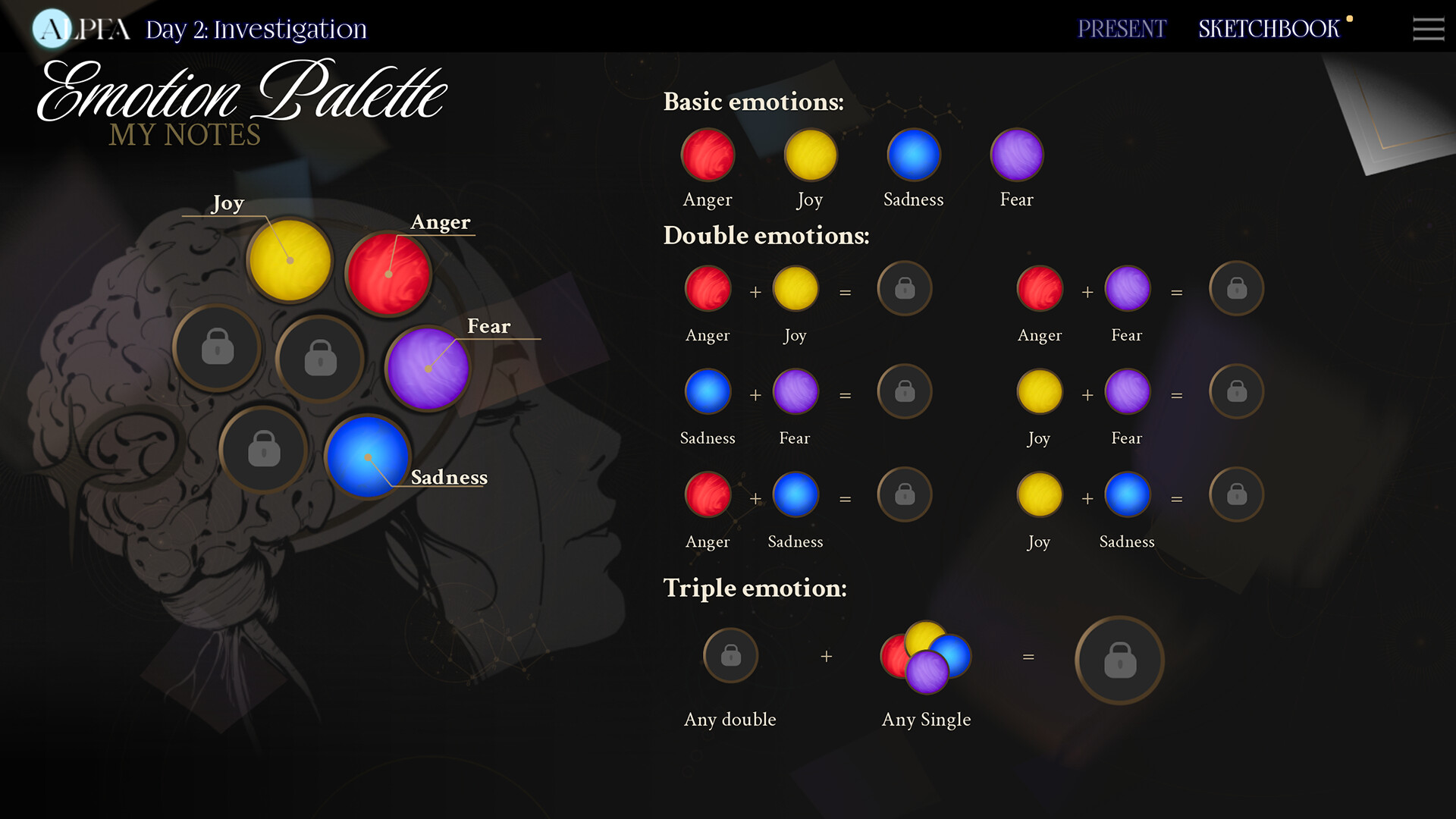
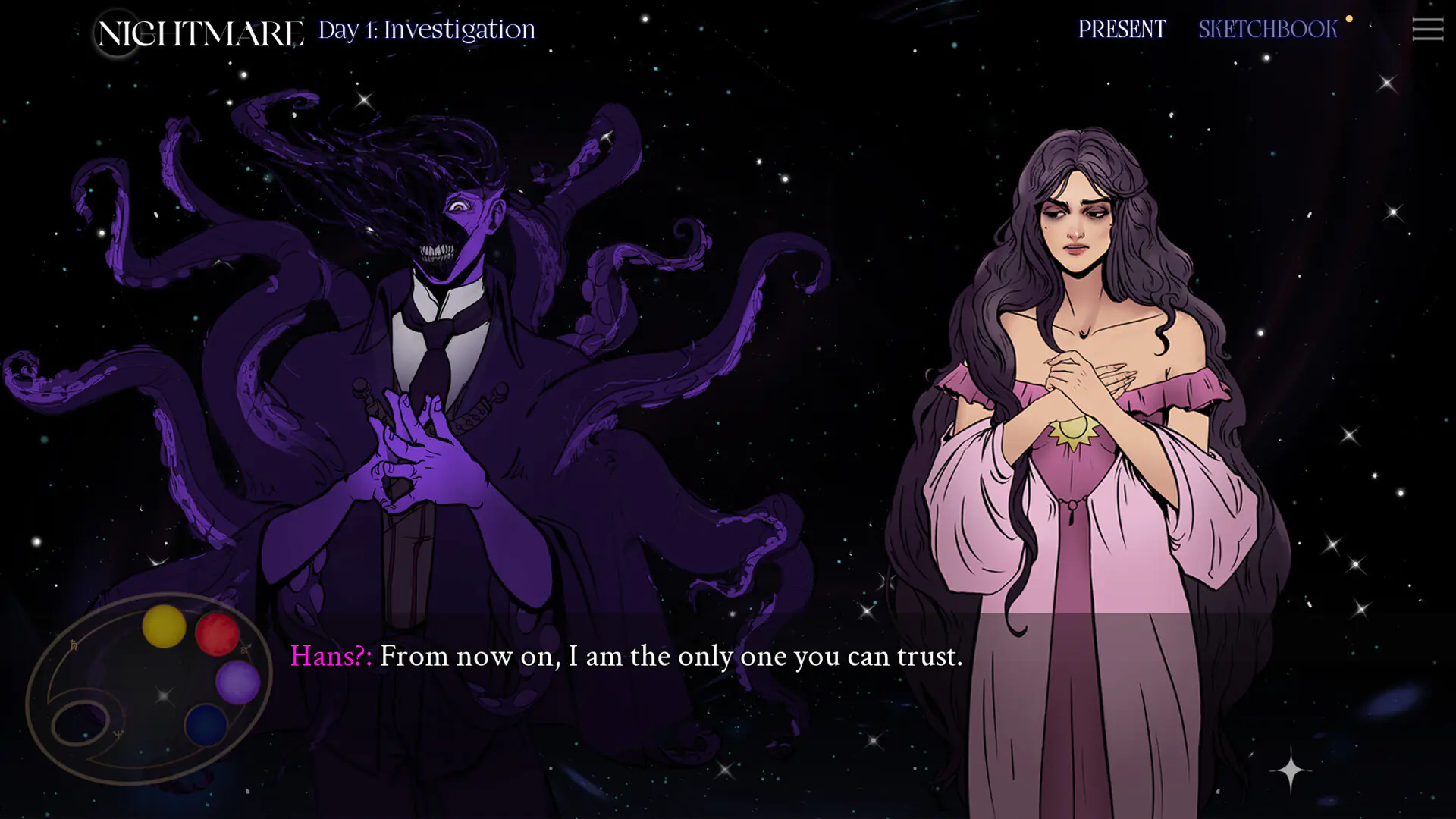
The most interesting mechanic I encountered during my time with the demo was the Emotion Palette.
Rather than simply selecting from a list of traditional dialogue responses, Silviya can use emotions to influence conversations. The tutorial introduces several basic emotions, each represented by a different color:
- Joy — Yellow: Can help change the subject, lighten an uncomfortable conversation, or distract someone.
- Anger — Red: Represents a more confrontational emotional response.
- Fear — Purple: Allows Silviya to express vulnerability and react through fear.
- Sadness — Blue: Can encourage others to show pity or allow Silviya to open up to someone she trusts.
These emotions can change the way conversations unfold, and they add another layer to the usual visual novel decision-making.
During my playthrough, I used sadness to ask Baltazar how long he had been searching for Silviya. I also explored questions about their supposed past relationship and whether he felt lonely in his cell.
Some of his responses were rather flirtatious, which made the whole situation even more entertaining.
What makes this system especially interesting is that the choices aren’t always about saying the most obvious thing. You’re deciding how Silviya approaches another character emotionally, and that can influence the direction of the conversation.
It reminded me a little of how emotions are represented in Inside Out, although STARCULT Night Twisted Age uses the concept as an interactive storytelling mechanic rather than simply a way to describe someone’s feelings.
IV. A Mystery That Takes a Very Unexpected Turn
After deciding to investigate Baltazar’s claims, I made my way down to the estate’s cellar. There, Silviya gets the opportunity to speak with him without the usual distractions of the wedding celebration.
One of the decisions I made was to send the guards away. If Silviya was going to have an honest conversation with this prisoner, I figured it would be better to do it without two guards standing nearby listening to everything.
That choice led to an interesting exchange. Baltazar spoke about their previous lives, claimed they had once been gods, and mentioned something called the black holes. When Silviya heard those words, she experienced a sudden wave of pain and fear.
The guards immediately assumed Baltazar had done something to her, and the situation escalated quickly.
After returning to her bedroom, Silviya eventually fell asleep. What followed was another strange encounter involving Baltazar, who appeared to her in a dream-like setting and began explaining how emotions could be used to influence conversations.
It was here that the Emotion Palette tutorial really came into play.
But the biggest surprise was still waiting.
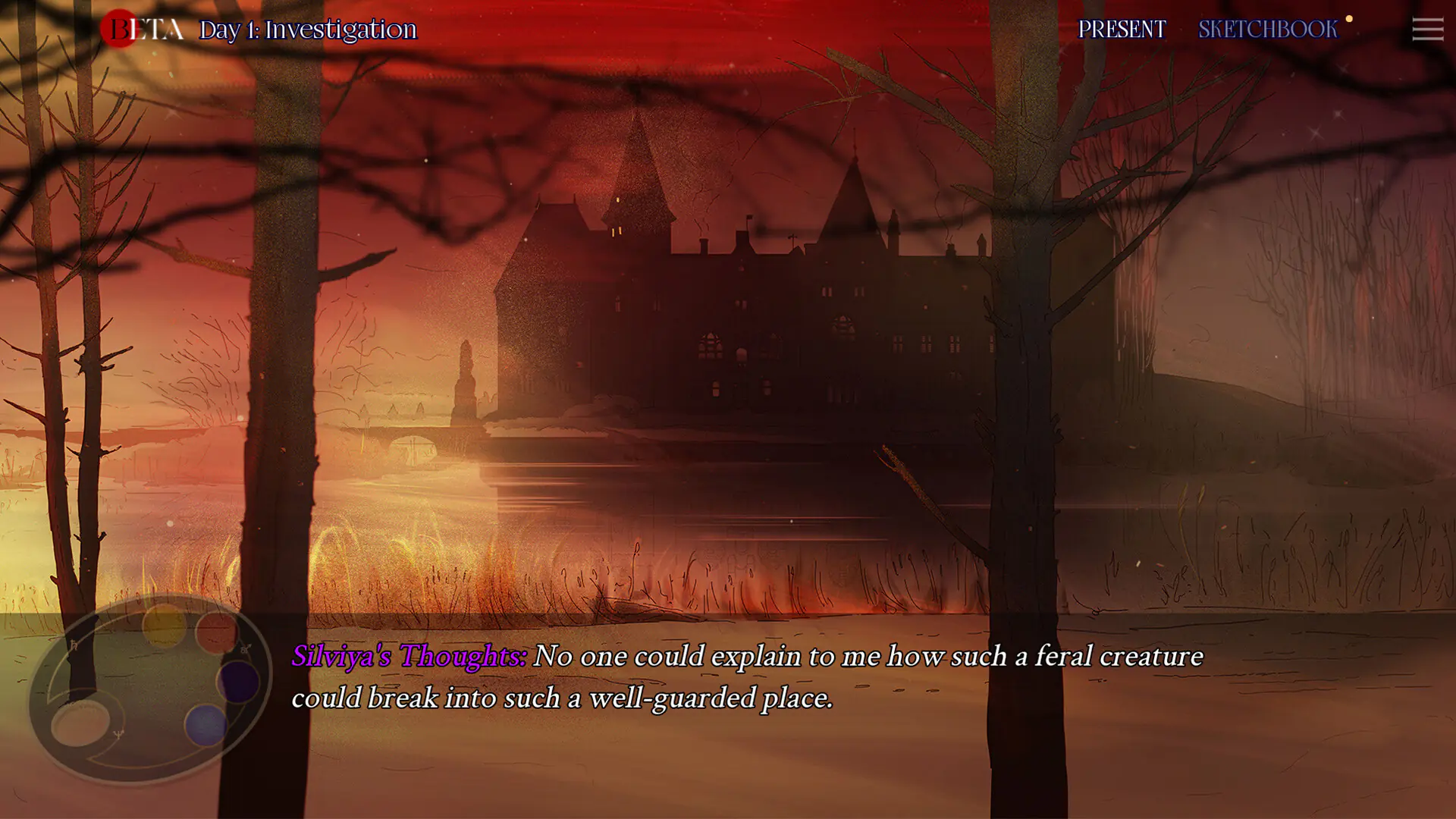
When Silviya woke up, she learned that Hans was dead. His death was sudden and brutal, and the estate’s residents were left trying to understand how such a creature could have entered a heavily guarded palace.
Just like that, the story shifted from an uncomfortable wedding celebration into a murder mystery.
V. Learning the Controls and Finding Your Way Around
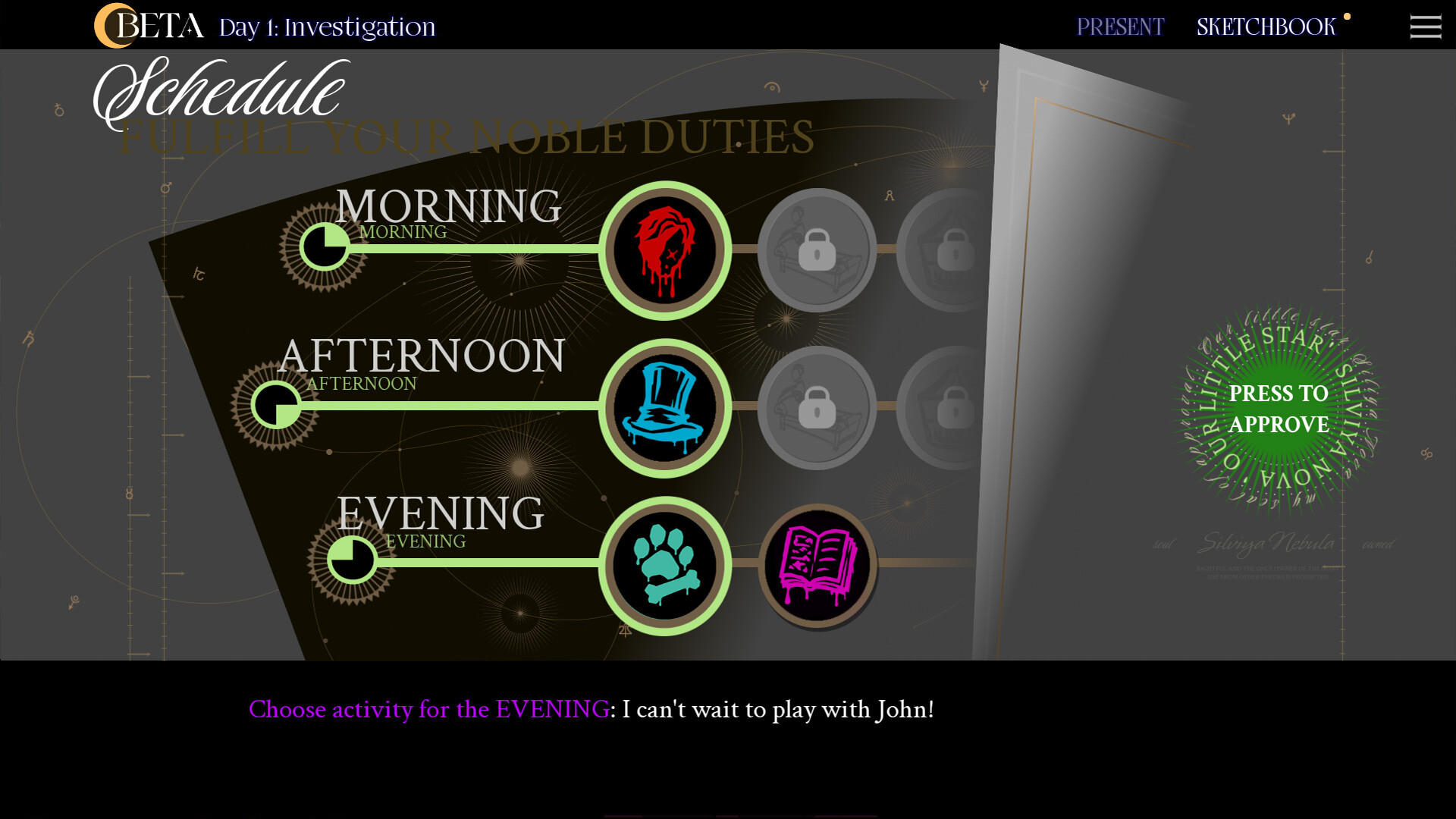
I did run into a few minor frustrations while getting started, particularly when it came to the controls.
Although the game supports controller input, I eventually decided to switch over to keyboard and mouse. That felt more comfortable for navigating the menus and making dialogue selections.
One small thing that initially gave me trouble was figuring out how to return to the previous screen. I eventually discovered that right-clicking brings up the back function, but I wish that had been communicated a little more clearly.
Since this is a demo, I can understand that some interface details may still be refined. Once I figured out the controls, navigating the story became much easier.
I also appreciated the ability to save at different points. Because choices can affect relationships and conversations, having the option to save before making a decision is useful, especially if you want to explore different outcomes.
The sketchbook and glossary are also welcome additions, giving players a place to review character relationships and understand some of the terminology used throughout the story.
VI. The Art Direction and Presentation
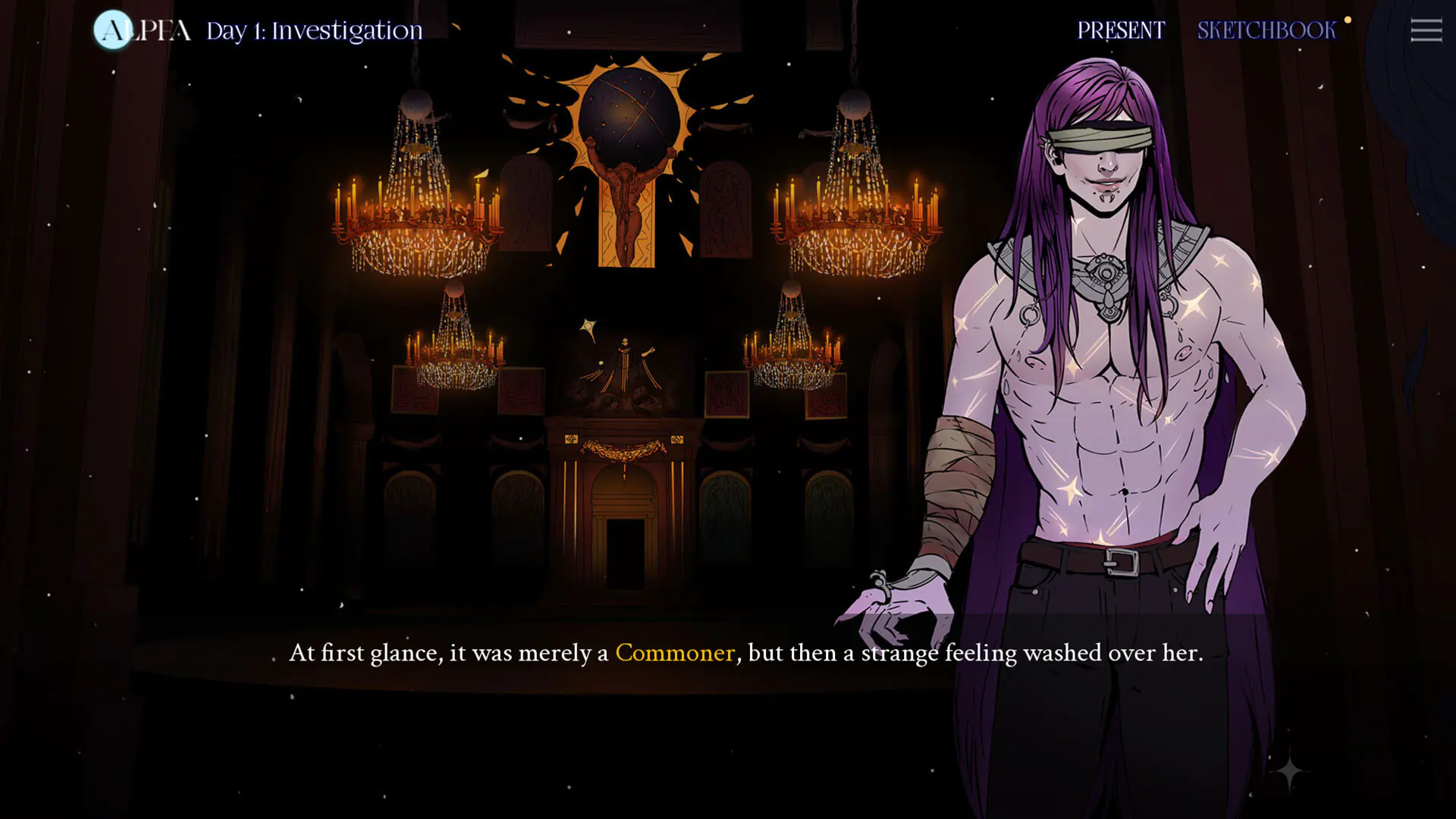
Visually, STARCULT Night Twisted Age has a distinctive art style that caught my attention. There were moments when I wondered whether some of the artwork might have been created using AI, simply because of certain visual characteristics.
However, after looking into it further, I confirmed that this is the developer’s intentional art direction and that generative AI was not used in the game’s production. I wanted to make that distinction clear rather than leave readers with the wrong impression.
The artwork has a particular look that may not appeal to everyone, but it gives the game an identity of its own. Between the character portraits, backgrounds, and atmospheric scenes, it helps establish the strange fantasy world Silviya is navigating.
The presentation also works well with the visual novel format. You’re spending a lot of time reading dialogue, making decisions, and learning about the characters, so having an art style that supports that experience is important.
VII. Final Impressions: A Visual Novel With Plenty of Secrets Left to Uncover
Overall, I had a really good time with the STARCULT Night Twisted Age demo. The story became increasingly interesting as I progressed, and I found myself wanting to know more about Baltazar, the strange world he described, and what really happened to Hans.
The Emotion Palette is easily one of the most interesting parts of the experience. It gives conversations another layer of interaction and makes the choices feel more personal than simply selecting one line of dialogue over another.
I also appreciate how visual novels have continued to evolve. I grew up playing the genre when the experience was often centered around reading a story and occasionally making a decision. More recently, I’ve noticed more titles incorporating interactive systems that make players feel more directly involved in shaping the narrative. STARCULT Night Twisted Age is an example of that direction, blending traditional visual novel storytelling with relationship management and emotion-based choices.
One thing worth mentioning is that visual novels can be a little more demanding to present during livestreams, especially when they don’t have full voice acting for every character. Reading dialogue and giving different characters their own voices takes some work, which is why I don’t necessarily play them on stream as often as other genres. That doesn’t mean I don’t enjoy them, though. I still appreciate a good visual novel when one comes along.
If you enjoy story-driven games, branching dialogue, romance, mystery, and supernatural fantasy, I’d recommend keeping STARCULT Night Twisted Age on your radar. The demo gave me plenty of reasons to want to see where Silviya’s story goes next.
“Your emotions are more than feelings here. They’re another way to shape the story.”

