

Alpha Nomos: A Rhythm Roguelike That Marches to Its Own Beat
Musical combat, quirky characters, and a mysterious world come together in an action-packed roguelike where timing your attacks is just as important as choosing your next upgrade.
I. Finding the Beat in a Strange New World
Rhythm games are all about timing. Whether you’re following a melody, hitting notes in sequence, or keeping up with a fast soundtrack, being able to feel the beat is usually the name of the game. But what happens when you take that concept and mix it with action combat and roguelike progression? That’s where Alpha Nomos comes in.
Going into this one, I knew it was a rhythm-based game, but I didn’t initially realize just how much of a roguelike experience it would be. I had watched a little bit of someone else’s playthrough before deciding to give it a try, but I deliberately avoided seeing too much because I wanted to experience the game for myself.
The story begins with Jello waking up in an unfamiliar place, confused about where everyone has gone and what exactly is happening. Before long, you’re introduced to some rather unusual characters, including a talking teddy bear named Teddy.
Naturally, the first few encounters involve plenty of questions. Where are Jello’s friends? What happened to this place? And why are there strange creatures wandering around?
The game doesn’t take itself too seriously when introducing its world. The dialogue has a playful, storybook quality, and some characters communicate through rhymes. At times, it reminded me of reading a Dr. Seuss book, which was not something I expected to encounter while trying to figure out how to fight monsters to a musical beat.
It’s an unusual way to introduce the setting, but it gives Alpha Nomos a personality that stands out.
II. Combat Has a Rhythm of Its Own
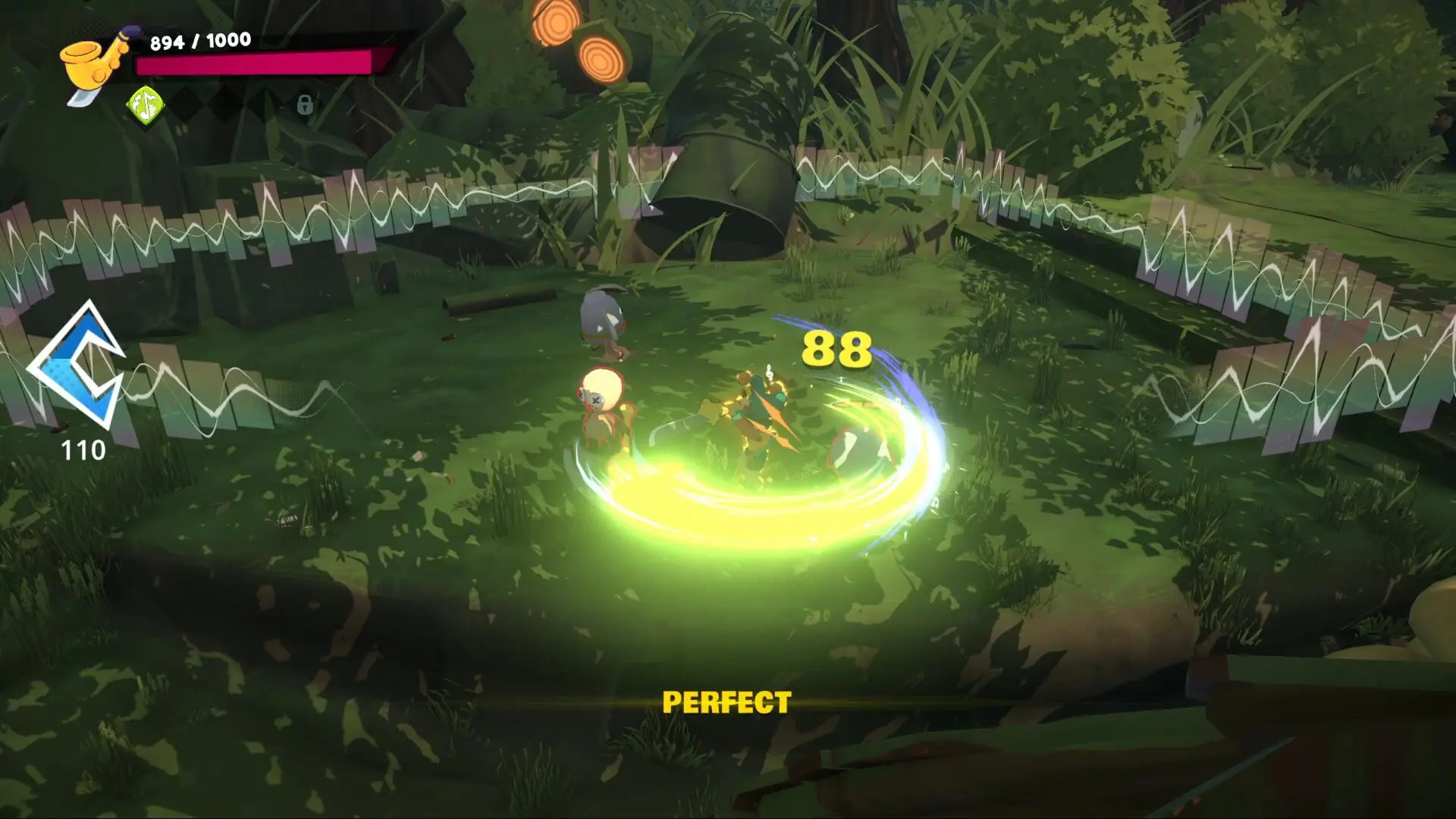
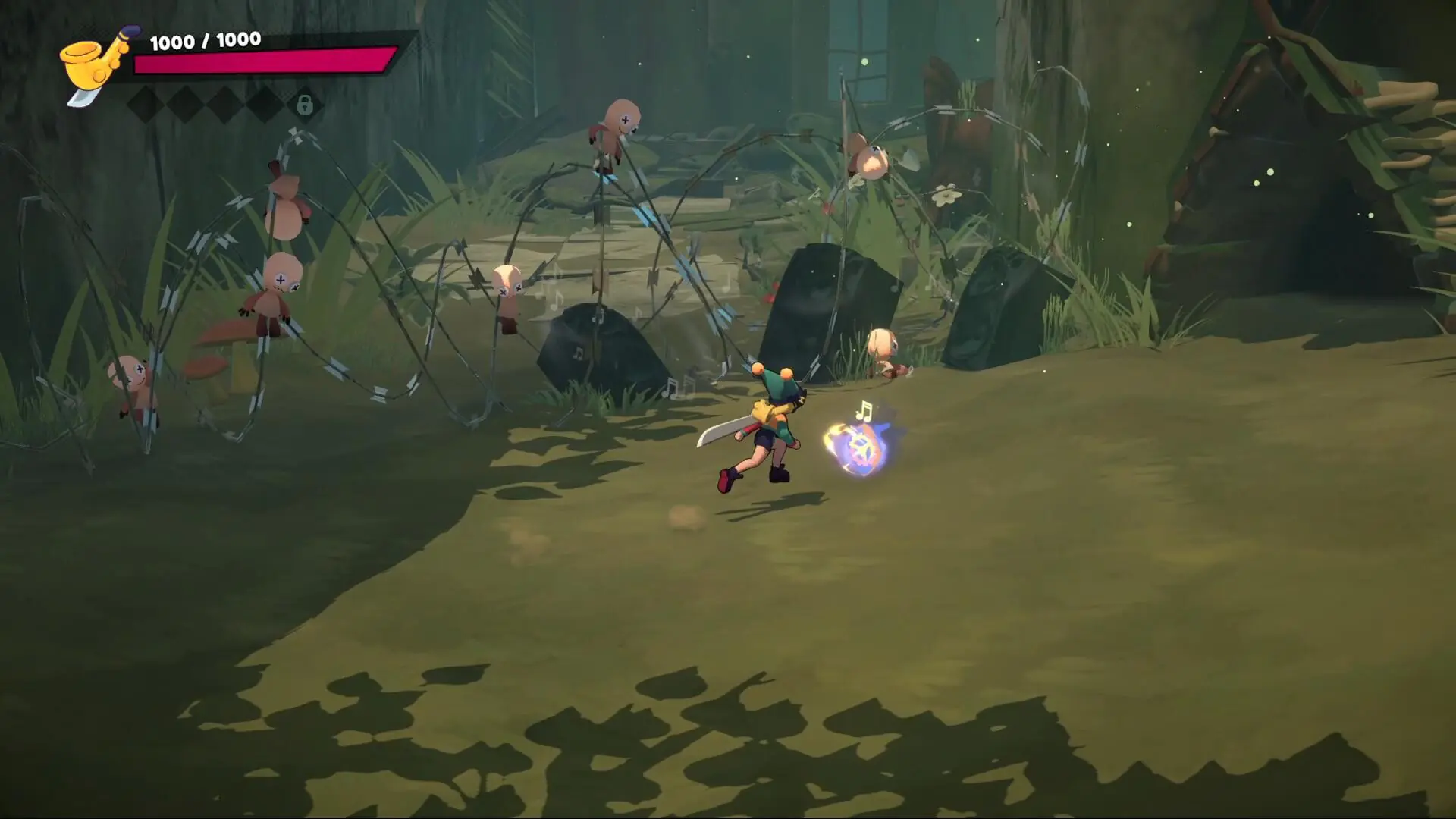
The biggest thing to understand about Alpha Nomos is that swinging your weapon whenever you feel like it isn’t necessarily going to get you very far. Combat is tied directly to the music, and players need to time their attacks with the rhythm to maximize their effectiveness.
Early on, Teddy introduces the basic combat mechanics and explains that the weapons in this world are more than ordinary blades. They’re instruments that need to be played. In other words, your weapon attacks need to follow the beat.
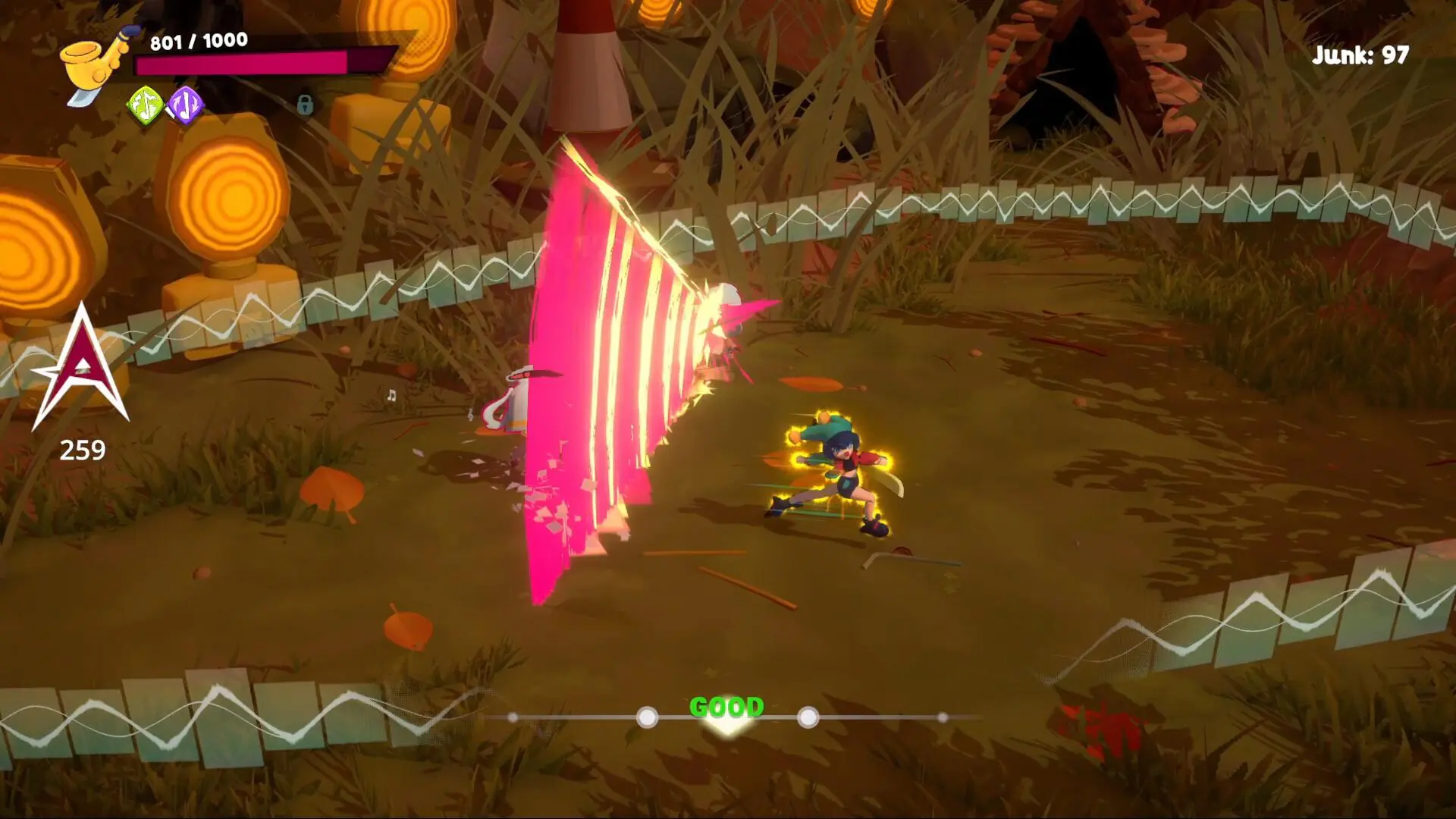
The tutorial also walks players through calibrating the game’s audio timing to their setup. This involves pressing the appropriate input along with the metronome so the game can better match the timing to your system.
There’s also an on-screen timing indicator that players can choose based on what feels most comfortable. I spent some time experimenting with the available options before settling on one that was easier for me to follow.
The tutorial makes it clear that simply mashing the attack button won’t be enough. You need to listen to the music, time your swings, and eventually learn how to combine attacks into more effective combos.
Dodging and timing also play a role in combat. Once I started paying closer attention to the rhythm, I could see how the different actions fit together. It takes a little practice, but the idea of turning the soundtrack into part of your combat strategy is an interesting approach.
III. Learning the Timing and Making the Controls Work
One thing I noticed early on was how important it is to make sure your controls and audio timing are comfortable before getting too far into the game.
I generally prefer using a controller, but rhythm games can sometimes be particular about input timing. Having a wired connection can be helpful when you’re trying to keep your inputs as consistent as possible.
I also noticed that my controller seemed to be reacting to the metronome during the opening portion of the game. It was an unusual feeling, especially while I was still getting used to the timing mechanics.
Fortunately, Alpha Nomos gives players some control over how forgiving the combat timing can be. One setting allows for larger timing windows, making it easier to land successful inputs. Another option offers smaller timing windows for players who prefer more precise control.
I decided to go with the more forgiving option. There’s nothing wrong with wanting a little extra room to learn the mechanics, especially when a game is asking you to coordinate combat with music.
I appreciated having that choice available. It allows players to find a balance between challenge and comfort instead of forcing everyone into the same timing requirements.
IV. A Roguelike With Musical Modifications
Once I got past the opening tutorial, I started to see how Alpha Nomos incorporates its roguelike elements. As you progress through combat encounters, you’ll have opportunities to choose upgrades and modifications that change how your attacks work.
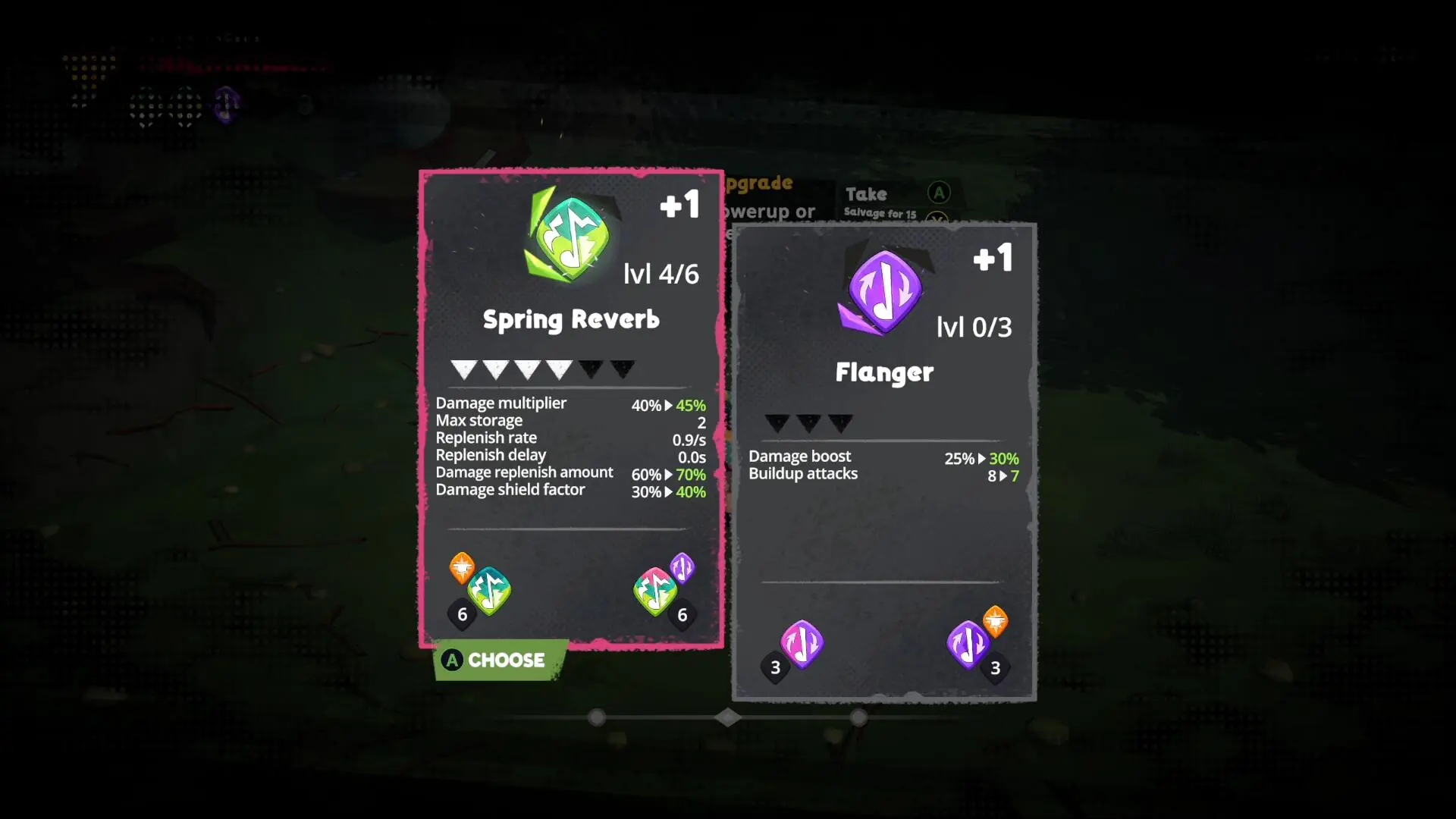
These aren’t simply standard damage boosts. Many of the modifications are built around musical effects, including Reverb, Delay, and Flanger. Each one can influence how your attacks behave and give you different ways to approach combat.
For example, Reverb can add bonus damage to attacks, while other effects can modify how your next hit works. One upgrade I encountered involved attaching a bomb to enemies, with successive hits building toward a larger final blast.
There are also upgrades that focus on more straightforward improvements. During my run, I had the option to increase damage against enemies that were still at full health. I decided to take that one because it seemed like a useful way to make the opening attack of an encounter more effective.
Another choice involved increasing the damage bonus from Reverb. I opted for the larger bonus rather than choosing another special effect because I wasn’t particularly enjoying how that other ability felt during combat.
That’s one of the things I like about this kind of progression: you can experiment with different combinations and decide which upgrades actually suit your playstyle.
“In Alpha Nomos, the music isn’t just playing in the background. It’s part of your weapon.”
V. The Village, Its Residents, and a World Full of Questions
Between combat encounters, Alpha Nomos gives players a chance to explore a village and interact with its residents. This introduces another side of the game beyond fighting enemies to the beat.
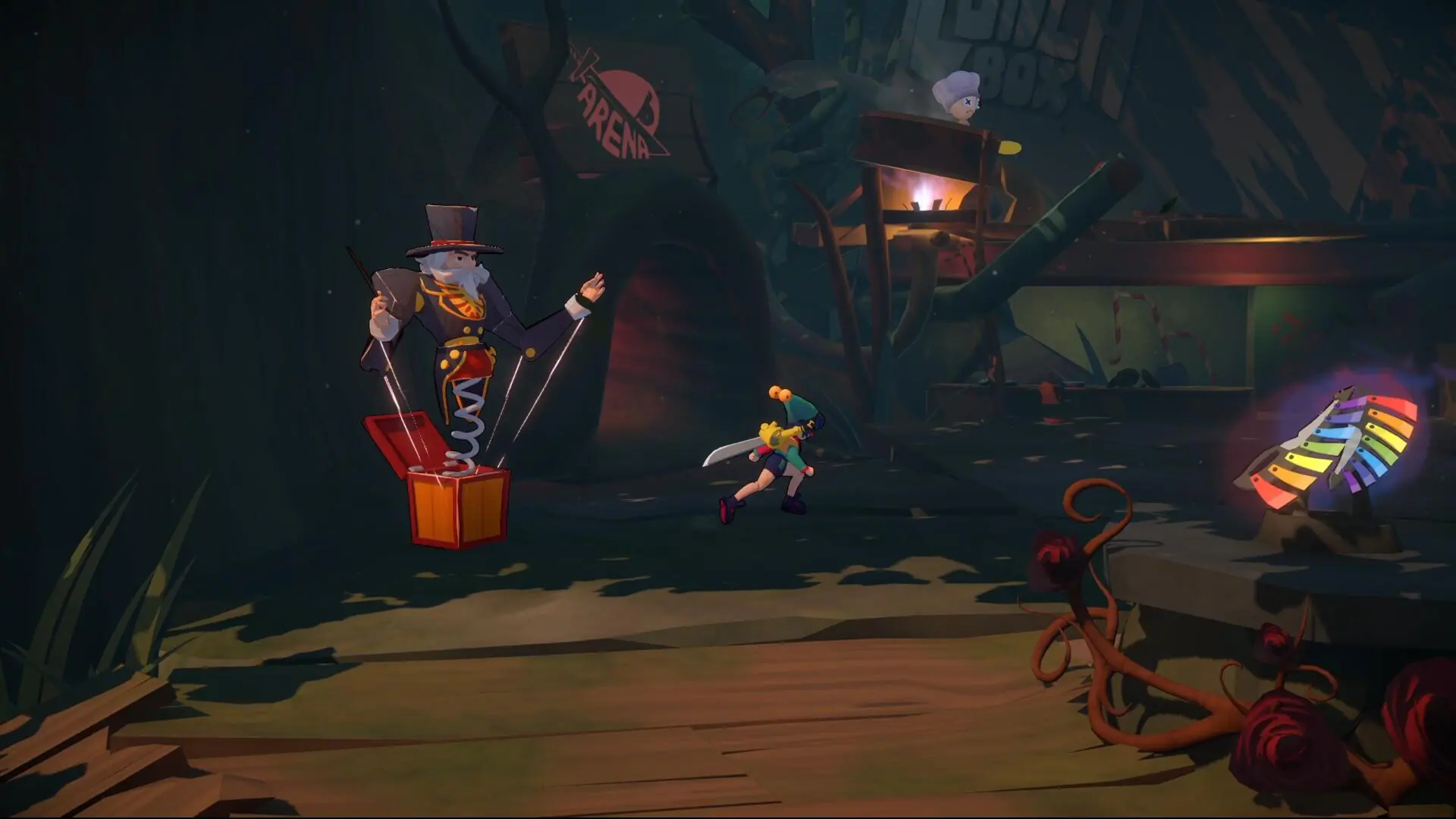
After meeting Teddy, I eventually encountered Roddy, who explained that the village was a relatively safe place for those who lived there. He also suggested asking the other residents about Jello’s missing friends.
Not everyone was immediately welcoming, though. Some of the villagers seemed suspicious of outsiders, and it quickly became apparent that the people living there had their own problems.
One character offered Jello a mysterious box that could be given to other villagers to make them more accommodating. The explanation was that the contents would become whatever the recipient wanted them to be, with magic working through intention.
I also met a shopkeeper who explained that many of his supplies disappear when you return to the village. He made it clear that players would need to venture out and defeat enemies before he could offer more useful items.
Then there was the elder Scrub, who claimed to be looking for his missing children. His conversation was another example of the game’s strange sense of humor, particularly when he insisted that he could have shown everyone what he was capable of if his knees were still what they used to be.
The village is full of these little interactions, and they help make the world feel like more than a series of combat rooms connected by menus.
VI. Trials, Training, and Preparing for What’s Ahead
While exploring the village, I also came across a character who appeared to be connected to the game’s training system. I asked whether they could teach Jello more about using the musical weapons, but the answer wasn’t exactly a straightforward yes.
Instead, I was given a trial to complete in the forest. The character explained that completing the challenge would determine whether Jello was worthy of becoming an apprentice.
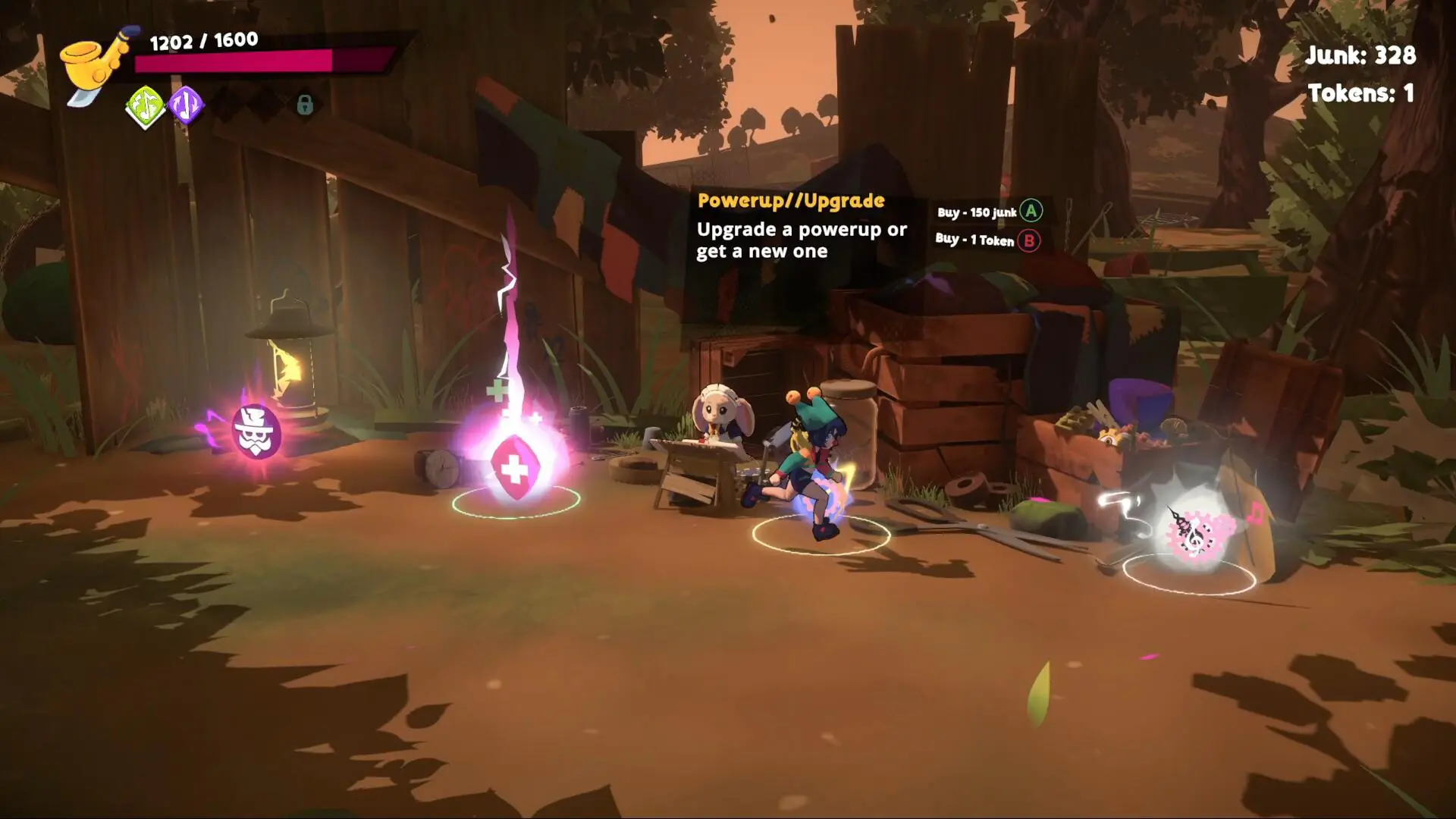
This gave me another reason to explore the available areas and take advantage of the different upgrades. Before heading into the next challenge, I found options to increase maximum health, restore some health, upgrade my weapon, and take on a combo challenge for a potential reward.
I decided to prioritize the health upgrade first. When you’re still learning how enemies behave and trying to get comfortable with the rhythm mechanics, having a little more room for mistakes is always welcome.
I also encountered additional combat rooms and upgrade opportunities that encouraged me to think about which musical modifications would work best for my current run.
Eventually, I made it through several encounters and continued working toward the trial. It wasn’t always easy, and there were certainly moments when I thought I was about to be taken out by even the simplest enemies. But that’s part of the roguelike experience: learning from each encounter and gradually improving your approach.
VII. Final Impressions: A Rhythm Roguelike Worth Listening To
Going into Alpha Nomos, I expected a rhythm game with some interesting combat mechanics. What I didn’t expect was how much of a roguelike experience would be wrapped around that concept.
The combination of beat-based attacks, musical weapon modifications, upgrade choices, and combat encounters gives the game an identity of its own. I particularly enjoyed discovering how Reverb, Delay, and other effects could change the way attacks worked.
The storybook-style dialogue also caught me off guard in a good way. The rhyming conversations are unusual, sometimes downright silly, and give the characters a memorable personality. The village adds another layer to the experience by introducing residents, shops, training opportunities, and more questions about the world Jello has found themselves in.
I also appreciate that the game provides options for adjusting combat timing. Rhythm-based gameplay can be challenging, particularly when you’re still learning how the mechanics work. Having the ability to choose larger or smaller timing windows gives players some flexibility in how they approach the experience.
I still had plenty to learn by the time I finished my session, and I hadn’t uncovered everything the game had to offer. However, I came away interested in seeing what other upgrades, characters, and encounters were waiting further into the adventure.
If you enjoy rhythm games, action combat, roguelikes, or simply want something that combines those ideas in an unusual way, Alpha Nomos is worth checking out. It’s a different kind of rhythm experience, and I enjoyed getting to know its musical combat system.
Alpha Nomos was listed at $17.99 USD at the time of my playthrough.

