
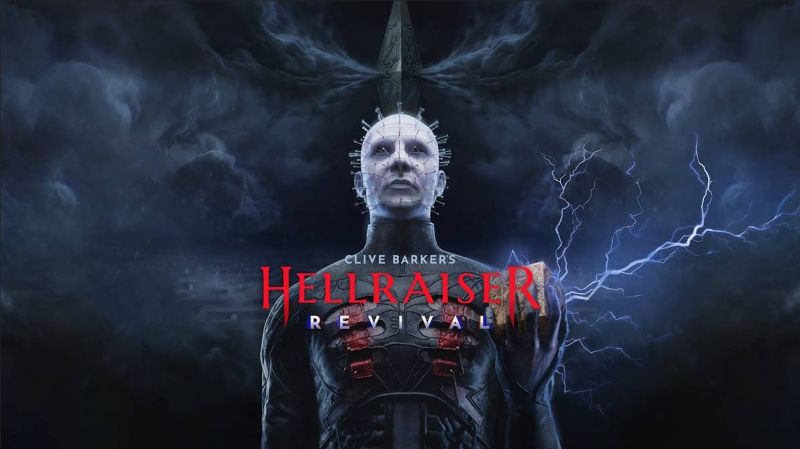
Developer: Saber Interactive
Publisher: Saber Interactive
Genre:Gore, Action, Sexual content, Horror,
Price: $39.99
Release Date: Oct 8, 2026
Where to buy: Steam
A giant thanks to Saber Interactive for allowing us, at TheDailyGamepad.net for providing us with a game code for Steam to cover the game for you all! – DanVanDam
The Historical Context and Franchise Evolution

Clive Barker’s Hellraiser: Revival marks a monumental milestone in the history of interactive survival horror, standing as the first fully realized standalone video game adaptation of the iconic film series. For decades, fans of Clive Barker’s seminal work were forced to rely on guest appearances, such as Pinhead’s inclusion in titles like Dead by Daylight, to experience the mythology in a digital space. Developed by Saber Interactive using Unreal Engine 5, Revival was conceived to fill a long-standing void in horror gaming. By directly consulting Barker himself on the narrative framework, the developers sought to ensure the project remained faithful to the dark themes of the 1987 original film and its 1988 sequel, Hellbound: Hellraiser II. The release of the game in October 2026 brought this vision to life across modern consoles and PC. It signaled a return to authentic, uncompromising adult horror that avoids watering down Barker’s signature vision for commercial palatability.
Narrative Premise and Protagonist Dynamics
At the core of Revival is a story driven by addiction, obsession, and flawed human relationships. Players take on the role of Aidan Lynch, a troubled protagonist voiced by Xalavier Nelson Jr., whose tumultuous relationship with his girlfriend, Sunny, sets the tragic events into motion. Rather than portraying heroic figures, the narrative focuses on character flaws, where affection is inextricably intertwined with dark vices and emotional dependency. When an encounter involving forbidden rituals inadvertently opens a gateway to the Labyrinth, Sunny is snatched away by the extradimensional entities known as the Order of the Gash. Aidan is left to navigate a world invaded by nightmarish forces while confronting both cultic zealots and his own internal demons. This framing grounds the supernatural horror in personal, visceral stakes that drive the player deeper into the abyss.
Voice Talent and Iconic Performances

A key pillar of the game’s identity is its performance direction, most notably the triumphant return of Doug Bradley. Reprising his legendary role as the Hell Priest (Pinhead), Bradley delivers a performance defined by calm, imposing authority and philosophical gravity. His distinct cadence elevates the dialogue beyond standard villainy, instilling each encounter with an understated dread. Complementing Bradley is a voice cast that balances raw human distress with the cold, alien detachment of the Cenobites. Xalavier Nelson Jr. delivers a grounded performance as Aidan, capturing the desperation, exhaustion, and stubborn resolve of a man operating on the brink of collapse. The chemistry and vocal direction work in tandem to maintain dramatic tension throughout the campaign, honoring the theatricality of the original film entries.
Atmospheric Design and Visual Worldbuilding
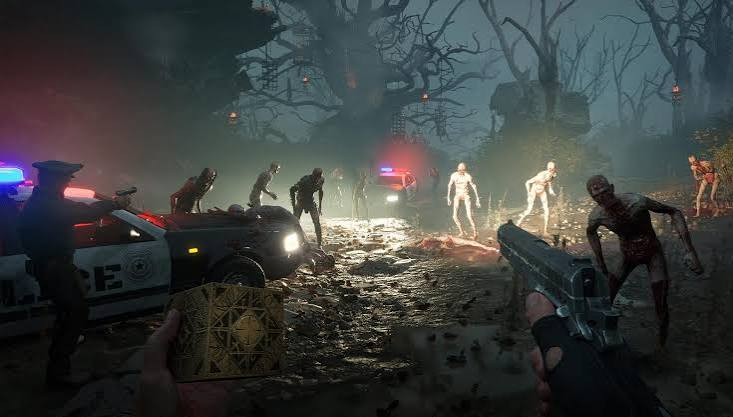
Visually, Revival utilizes Unreal Engine 5 to construct an environment defined by stark, unsettling contrasts. The game constantly transitions between the gritty, rain-slicked reality of mundane human environments and the surreal architecture of the Cenobites’ home dimension. The Labyrinth is rendered as a monumental, cold expanse of endless stone corridors, hanging chains, and geometric tortures, directly reflecting the aesthetic established in Hellbound. Lighting plays a crucial role in shaping the atmosphere, utilizing heavy shadows and harsh spotlights to create a constant sense of vulnerability. Furthermore, environmental details—such as rusted iron, blood-stained flesh, and intricate leather textures—work together to ground Barker’s mythos in a dirty, tactile reality.
Core Gameplay Mechanics and Survival Horror Structure
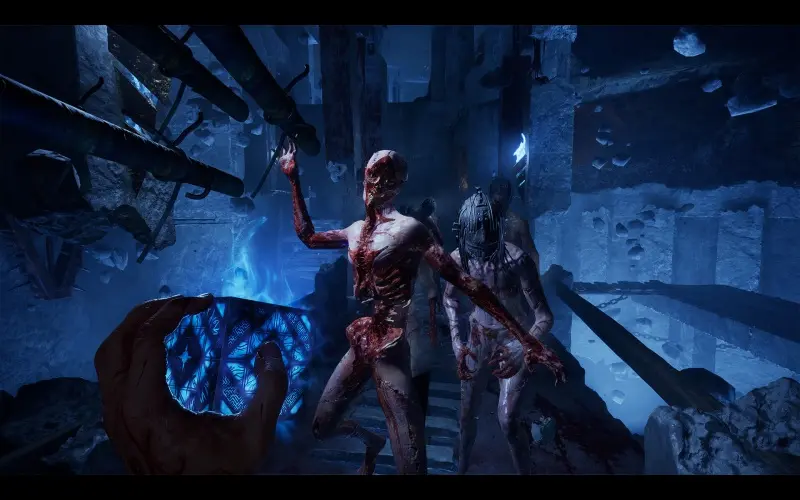
In terms of design, Revival operates as a classical survival horror title from a first-person perspective, drawing structural comparisons to games like Resident Evil 7 and Resident Evil Village. Exploration requires players to navigate claustrophobic corridors, search for scarce resources, and solve environmental puzzles to progress. Inventory management is strict, forcing deliberate decisions regarding which weapons, healing supplies, or key items to carry. Rather than feeling like an empowered action hero, the player is made to feel vulnerable, where every encounter carries significant risk. Stealth plays a vital role in survival, allowing players to slip past overwhelming forces or eliminate isolated human cultists quieted from behind.
Combat System, Durability, and Resource Management
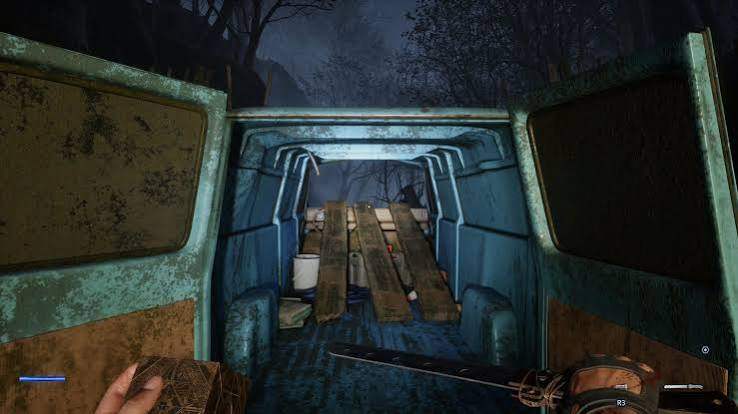
When combat becomes unavoidable, the mechanics emphasize desperation and heavy, tactile feedback. Melee weapons—ranging from blunt baseball bats to sharp machetes—are essential for conserving ammunition, but they feature finite durability and shatter after repeated use. Blunt weapons specialize in breaking through enemy armor, while bladed weapons allow players to sever limbs to stagger or neutralize hostiles. Firearms provide immediate stopping power against aggressive cultists, but ammunition is deliberately scarce throughout the Labyrinth. This scarcity forces players to constantly evaluate whether to stand and fight or save their resources and flee, maintaining the tension essential to survival horror.
The Genesis Configuration and Unique Puzzle Abilities
A distinct mechanical innovation introduced in Revival is the playable integration of the Genesis Configuration, a unique puzzle box. Beyond serving as a plot device and narrative key, the box functions as a dynamic tool that grants Aidan otherworldly abilities, such as telekinesis. Players manipulate the box in real time to solve complex mechanical locks, redirect environmental hazards, or manipulate objects during combat encounters. However, invoking the power of the box comes with intrinsic risks; bending the fabric of reality draws the attention of nearby Cenobites and causes the surrounding environment to bleed into the Labyrinth. This mechanic balances risk and reward, integrating the central lore directly into active gameplay.
Enemies, Cenobite Encounters, and Unstoppable Threats
The enemy variety in Revival spans from human fanatics belonging to the Scarlet Church to horrific extradimensional entities. Classic Cenobites such as Butterball, Chatterer, and Deep Throat appear alongside new monstrosities like the multi-armed Sisters of Mercy and cancerous Embracers. The game treats Cenobites not as standard target practice, but as implacable forces of nature. Encounters with figures like the Chatterer are designed as high-stakes chase and stealth sequences where conventional weapons are completely ineffective, forcing players to run, hide, or alter the environment to survive. This design choice preserves the intimidation factor of the franchise’s iconic villains.
Narrative Themes and Body Horror
True to Clive Barker’s intellectual heritage, Revival explores deep thematic territory involving the duality of pleasure and pain, flesh, and spiritual transformation. The game does not shy away from extreme body horror, incorporating themes of ritualistic modification, addiction, and taboo desires. The plot builds toward grotesque climaxes involving dark rites of rebirth, pushing body horror elements to their narrative limits. By confronting themes of fleshly sacrifice—such as Aidan submitting parts of himself to progress through the Labyrinth’s demands—the game ensures its horrors are not merely superficial jump scares, but deeply uncomfortable psychological tests.
In conclusion: Clive Barker’s Hellraiser: Revival ultimately succeeds because it understands that true horror lies not in cheap jump scares, but in the intersection of human obsession and grotesque, otherworldly consequences. By pairing uncompromising body horror and faithful lore with tight survival mechanics, the game honors Clive Barker’s vision while delivering a fresh, unsettling entry to modern gaming. For long-time fans and newcomers alike, it stands as a harrowing descent into the Labyrinth that proves the Hellraiser mythos is as potent and terrifying as ever.