
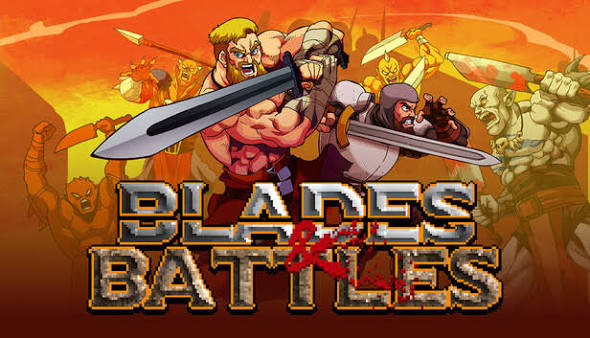
Developer: QUByte Interactive
Publisher: QUByte Interactive
Genre: Beat’em up
Price:
Release Date: Sept 29th, 2026
Where to buy: Steam
QUByte Interactive’s Blades & Battles arrives as a unabashed love letter to the golden era of arcade fantasy beat ’em ups. Taking direct inspiration from 16-bit classics like Golden Axe and Capcom’s Knights of the Round, the game sets out to recapture the heavy, mechanical satisfaction of quarter-munching sword combat. By contextualizing its brawling within the early, wilder days of Arthurian legend, it gives players an immediate, recognizable framework for cutting through hordes of dark mythical forces.
Narrative & Setting
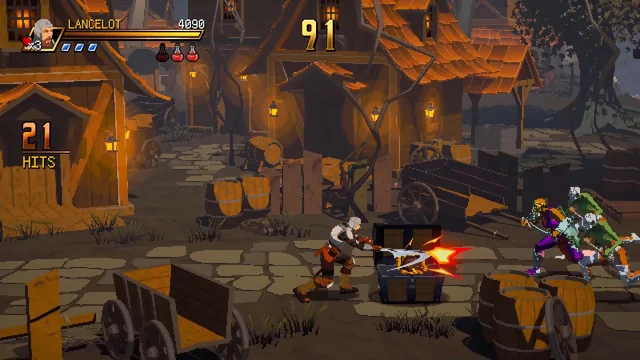
Rather than retreading the familiar tales of Camelot at its peak, Blades & Battles zeroes in on Arthur’s barbarian youth and the chaotic period preceding the Round Table’s formation. Players step into the boots of either young Arthur or the swift knight Lancelot as they rally against the rising darkness of Morgana le Fay. The fantasy backdrop allows for an entertaining mix of corrupted beasts, wild mercenaries, and sorcerous commanders. It is straightforward lore, serving primarily as a backdrop to keep the steel swinging across varied fantasy environments.
Visual Style & Nostalgia Engine

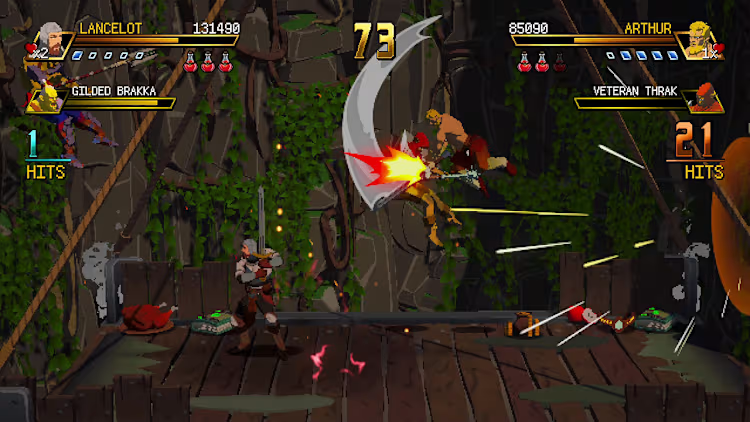
Visually, the game utilizes a hybrid 2.5D presentation that projects 3D character models and environments through a custom pixelation filter. This “Dual-Mode Nostalgia Engine” gives players the option to toggle between crunchier, 16-bit aesthetic filters and a smooth, unfiltered 3D look. Stage designs feature lively animated backgrounds and environmental detail that mimic arcade cabinets of the mid-90s without feeling excessively rigid. The visual feedback during strikes—complete with retro hit-sparks—keeps the impact readable.
Combat Mechanics & Gameplay Loop
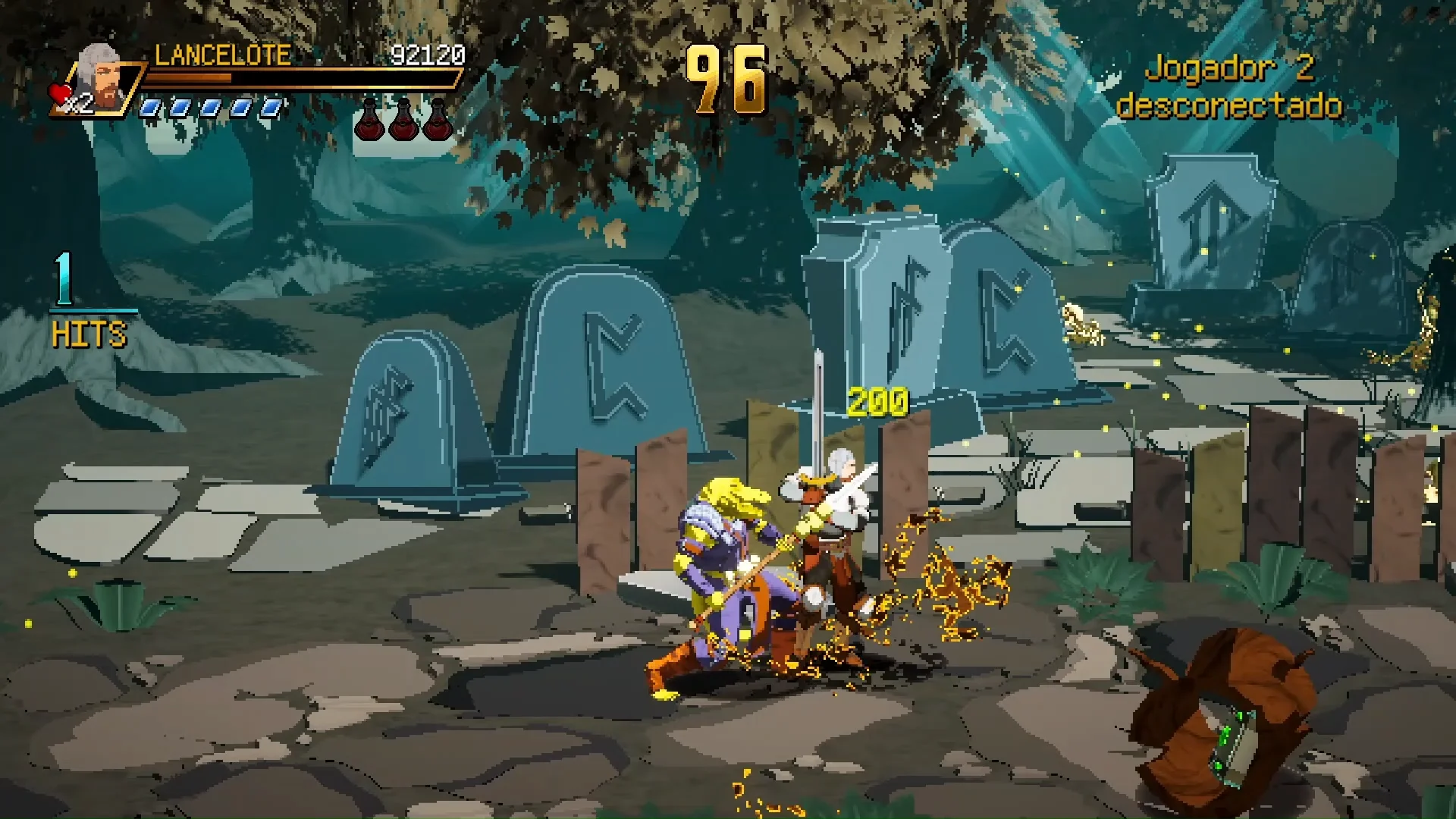
At its core, Blades & Battles strips away modern bloated progression systems in favor of clean, rhythm-focused arcade combat. Light-to-heavy combo routes, jump slashes, directional throws, and special magic spells form the baseline toolkit. Arthur plays as a heavy-hitting power character capable of clearing crowds with broad swings, while Lancelot offers agile mobility and faster juggles. The addition of desperation attacks—which consume a portion of meter to push back surrounding enemies when taking damage—gives players an essential defensive escape valve.
Enemy Design & Boss Encounters
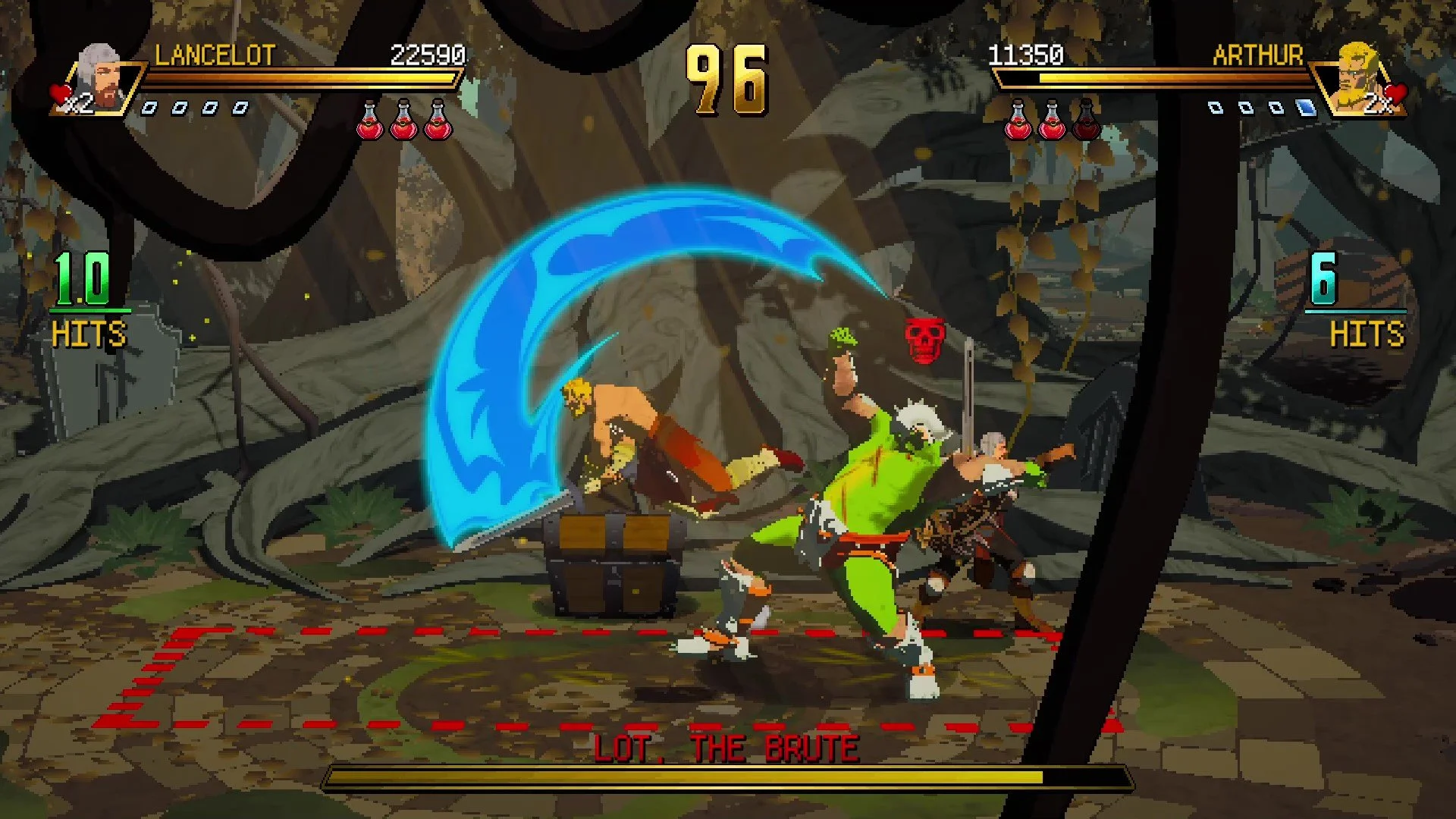
The game’s enemy roster balances standard melee fodder with specific threat types that force tactical positioning. Armored vanguards, evasive archers, and aerial foes require thoughtful target prioritization rather than mindless button-mashing. To fix common beat ’em up pacing issues, bosses feature telegraphed attack indicators and dedicated stun meters. Hitting heavy bosses repeatedly builds a stun gauge, breaking their armor to leave them open for massive combo punishment.
Co-op Experience & Modern Accessibility
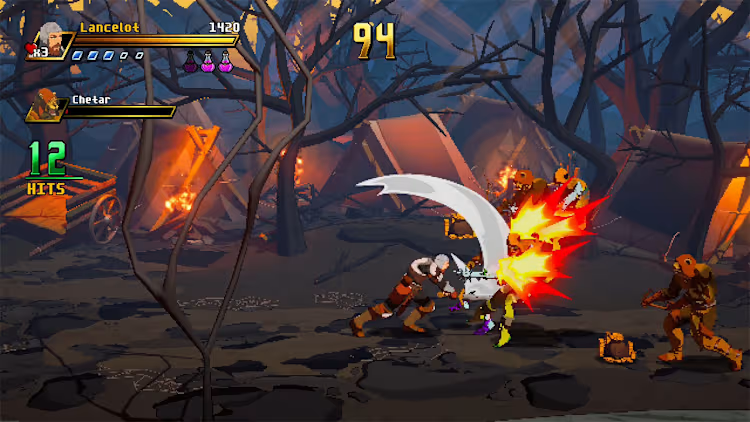
Designed around local shared-screen co-op, Blades & Battles excels when two players synchronize their attacks to control the screen space. Modern quality-of-life adjustments ensure the experience remains tight rather than frustrating. Invulnerability frames on wake-up prevent unfair enemy juggle traps, and off-screen enemy tethering stops foes from lingering out of sight. Full controller remapping and custom audio controls further refine the accessibility suite.
Sound & Atmosphere
The audio landscape bridges classic FM-synth energy with modern orchestral weight. Heavy sword clashes, shield thuds, and enemy grunts provide punchy tactile feedback for every landed hit. Stage tracks lean heavily into high-tempo fantasy battle motifs, evoking the driving synth-rock soundtracks of 90s arcade cabinets. Sound design plays a functional role as well, with distinct audio cues signaling unblockable attacks or incoming off-screen strikes.
Stage Design & Pacing
Campaign stages span classic fantasy vistas, taking players through dense forests, icy mountain passes, and corrupted strongholds. Stages are structured with distinct encounters separated by brief side-scrolling traversal, keeping the pacing brisk. Destructible stage props yield restore pickups or magic scroll refills, encouraging players to scour the perimeter during lulls in combat. Interactive hazards like falling debris or environmental traps add an extra layer of positional strategy during skirmishes.
Comparative Strengths
Where many retro revival titles struggle with loose combat physics or artificial difficulty spikes, Blades & Battles focuses on tight frame pacing and clear hitboxes. By honoring the structure of Golden Axe while implementing modern hit-stun and juggle mechanics, it strikes a strong balance between homage and modernization. It respects the player’s execution skill without forcing them to endure archaic 90s arcade quarter-sink design traps.
Final Verdict
Blades & Battles delivers an engaging, well-crafted retro revival that honors its arcade heritage. QUByte Interactive successfully captures the tactile charm of classic sword-and-sorcery brawlers, refining the formula with smart mechanical tweaks, crisp feedback, and flexible visual filters. For fans of 16-bit beat ’em ups and Arthurian myth, it stands out as a polished, highly playable slice of side-scrolling combat.