
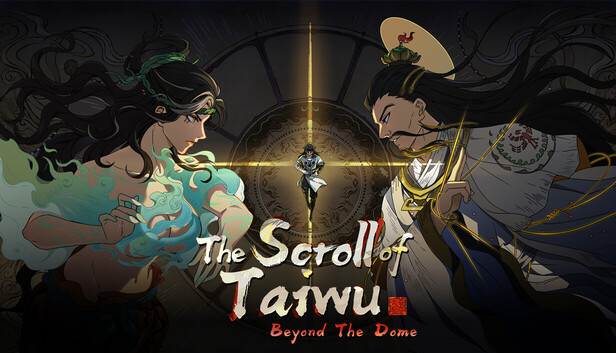
Developer: ConchShip Games
Publisher: ConchShip Games
Genre: RPG,
Price: $29.99
Release Date: Sep 21, 2018
Where to buy: Steam
For decades, Chinese wuxia and xianxia media have captivated audiences with tales of martial arts sects, dynamic rivalries, and the pursuit of spiritual mastery. The Scroll of Taiwu: Beyond The Dome, an ambitious indie sandbox RPG developed by ConchShip Games, transforms these traditional literary tropes into a sprawling, multi-layered interactive experience. Departing from straightforward narrative structures, the game combines strategy, life simulation, roguelike mechanics, and tactical combat into a single sandbox. Through its intricate systems and vast scope, The Scroll of Taiwu: Beyond The Dome redefines what a martial arts RPG can be, establishing a rich sandbox that honors its mythic roots while challenging conventional genre boundaries.
At its core, the game’s defining feature is its generational legacy system, which fundamentally shifts how progression works. Rather than following a single immortal protagonist throughout a linear story, players step into the shoes of the “Heir of the Taiwu Clan” tasked with defeating an ancient corruption known as Xiangshu. Because mortality, illness, and combat take a real toll, a single lifetime is rarely enough to complete this quest. Players must build relationships, marry, train successors, and pass down cultivated martial techniques, internal Qi, and equipment to subsequent generations. This lineage-driven design creates a deep sense of continuity, where every defeat or natural passing is simply a bridge to a stronger heir.
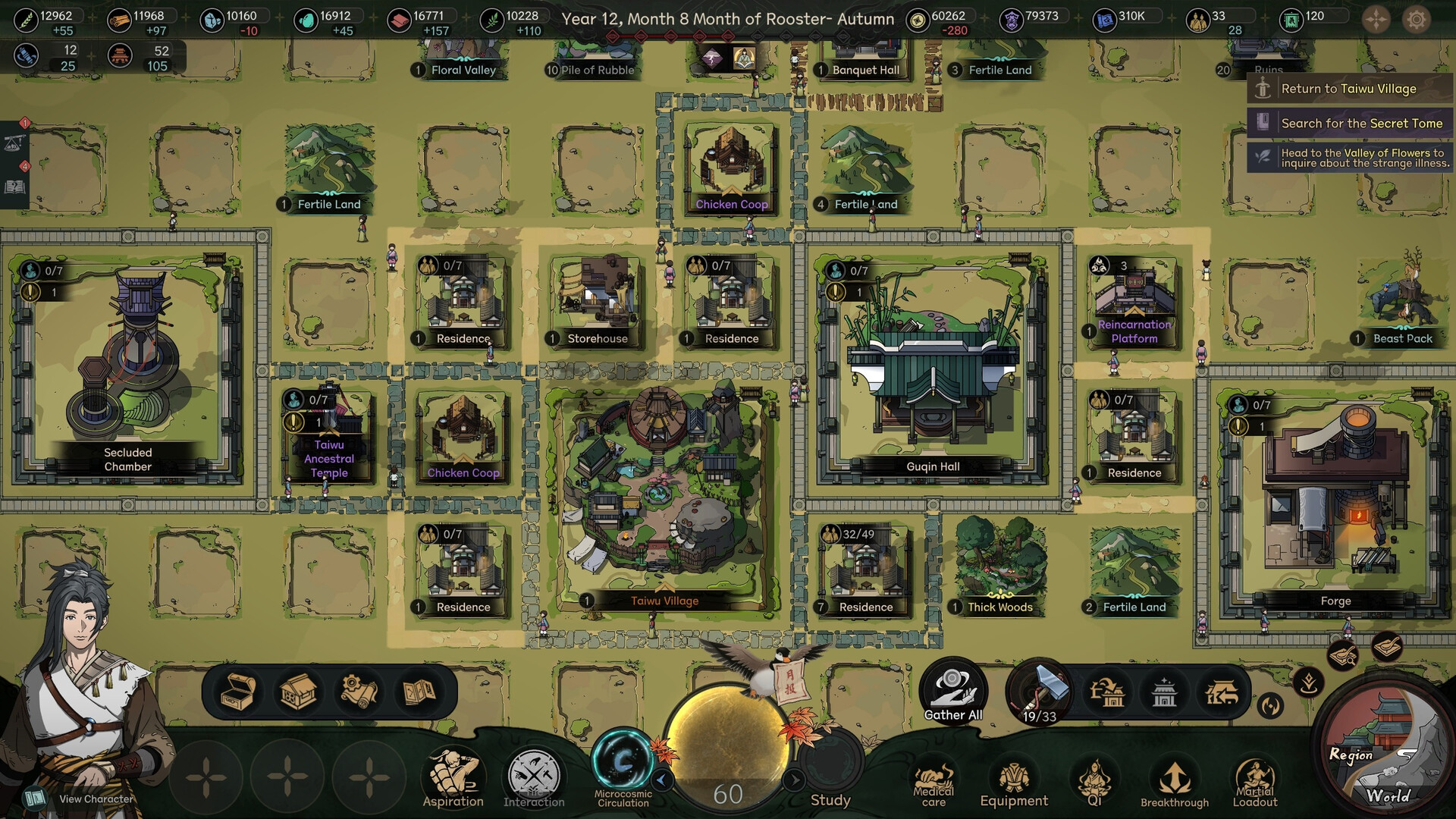
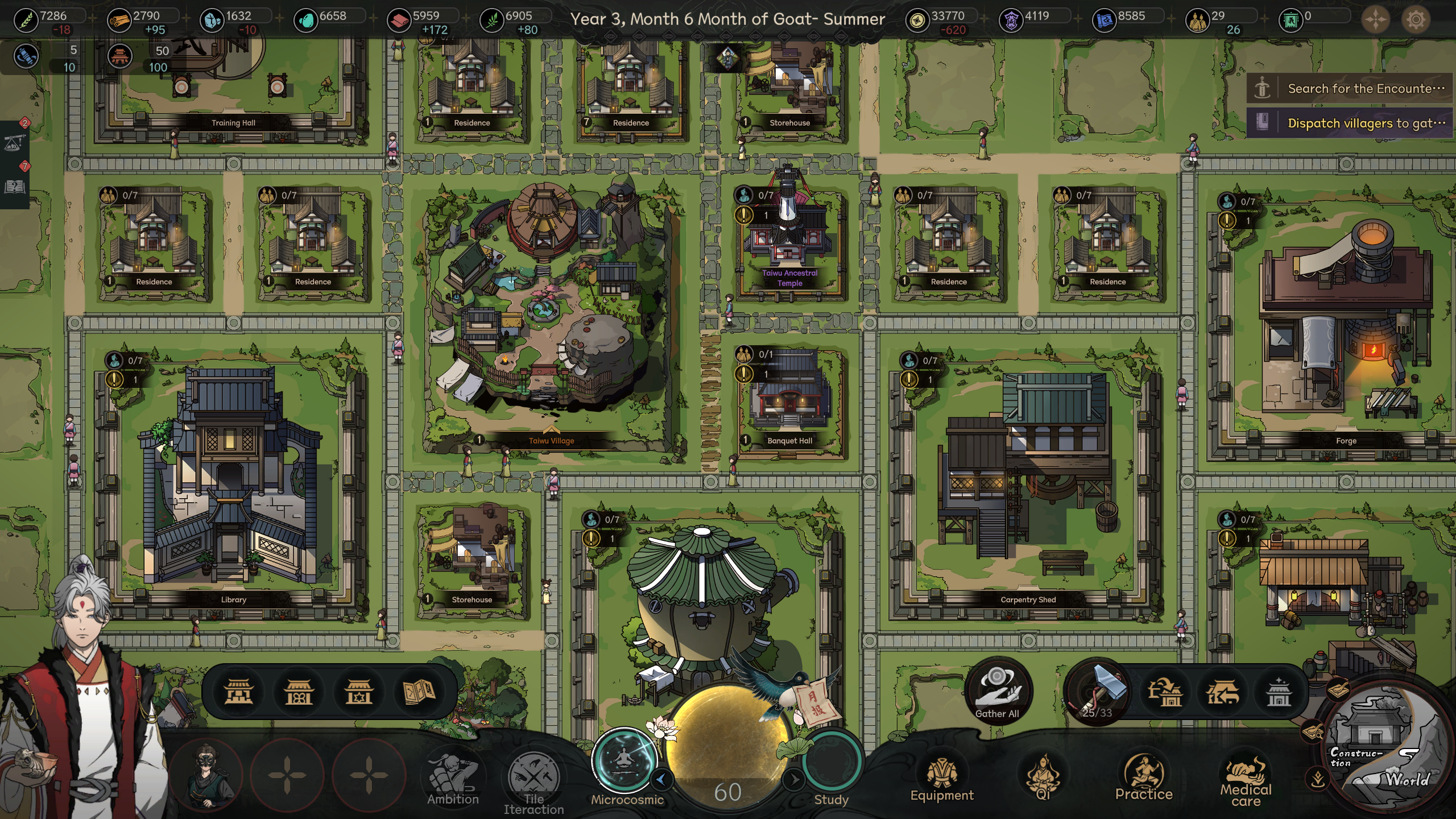
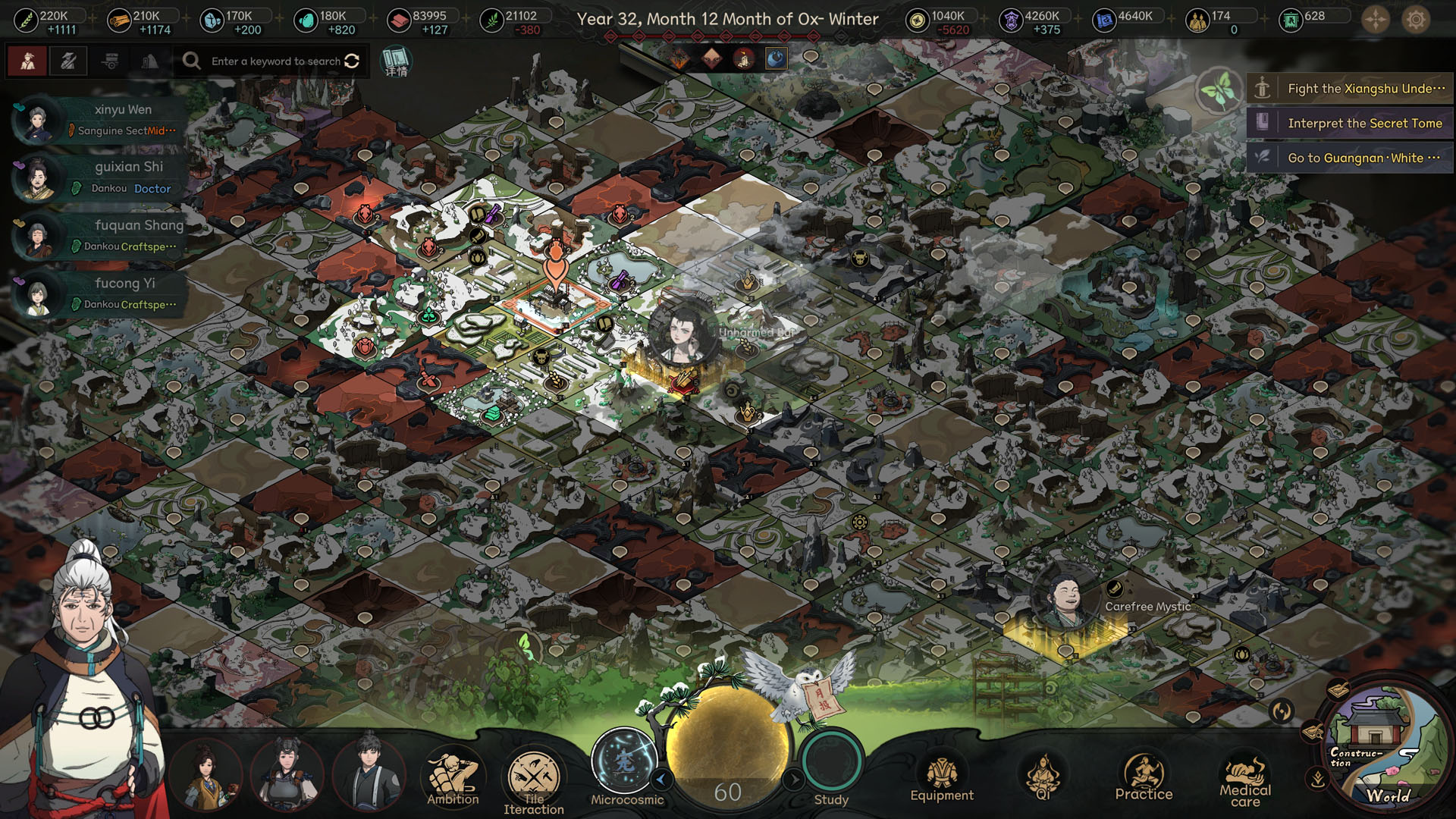
Complementing this generational narrative is a complex web of procedural systems and life-simulation mechanics. The world of Shenzhou is populated by thousands of autonomous Non-Player Characters (NPCs) belonging to fifteen distinct martial arts sects, each with their own personal alignments, blood feuds, and life cycles. Alongside mastering thousands of secret martial arts manuals, players must construct and manage their own Taiwu Village, gather resources, craft equipment, and engage in cultural activities like cricket fighting diplomacy. This integration of village simulation with sandbox exploration gives the game world a living, breathing quality where choices reverberate through local economies and social standings.
In combat, The Scroll of Taiwu: Beyond The Dome abandons simplistic hack-and-slash tropes in favor of tactical, distance-based strategy. Battle mechanics emphasize authentic wuxia concepts, such as weapon reach, body-part targeting, internal Qi allocation, and move counter-attacks. Players must balance offensive martial techniques—ranging from delicate needle strikes to long-range spells—with defensive stances and footwork. Because enemies, including the formidable followers of Xiangshu, adapt to player tactics, combat demands careful preparation through crafting, alchemy, and skill synergization rather than brute force.
In conclusion, The Scroll of Taiwu: Beyond The Dome stands as a monumental achievement in indie game development, offering an unparalleled martial arts simulation. By blending procedural generation, generational inheritance, tactical combat, and village management, it captures the true essence of a living Jianghu—a world where actions outlast individual lives and legends are written across centuries. Though its steep learning curve can be daunting, those who embrace its depth will find a sandbox RPG that is as vast, demanding, and rewarding as the mythology that inspired it.