
| Developer: | Chrous Worldwide Games, Toge Productions |
| Publisher: | Chrous Worldwide Games |
| Release Date: | May 21, 2026 |
| Genre: | Interactive Visual Novel |
| Price: | 14.99 |
| Platforms: | PC macOS Steam Deck Verified Nintendo Switch 2 PS5 Xbox Series X|S |
| Where to Buy or Wishlist | Steam GOG Nintendo Switch 2 eShop Playstation Store Xbox Game Store |
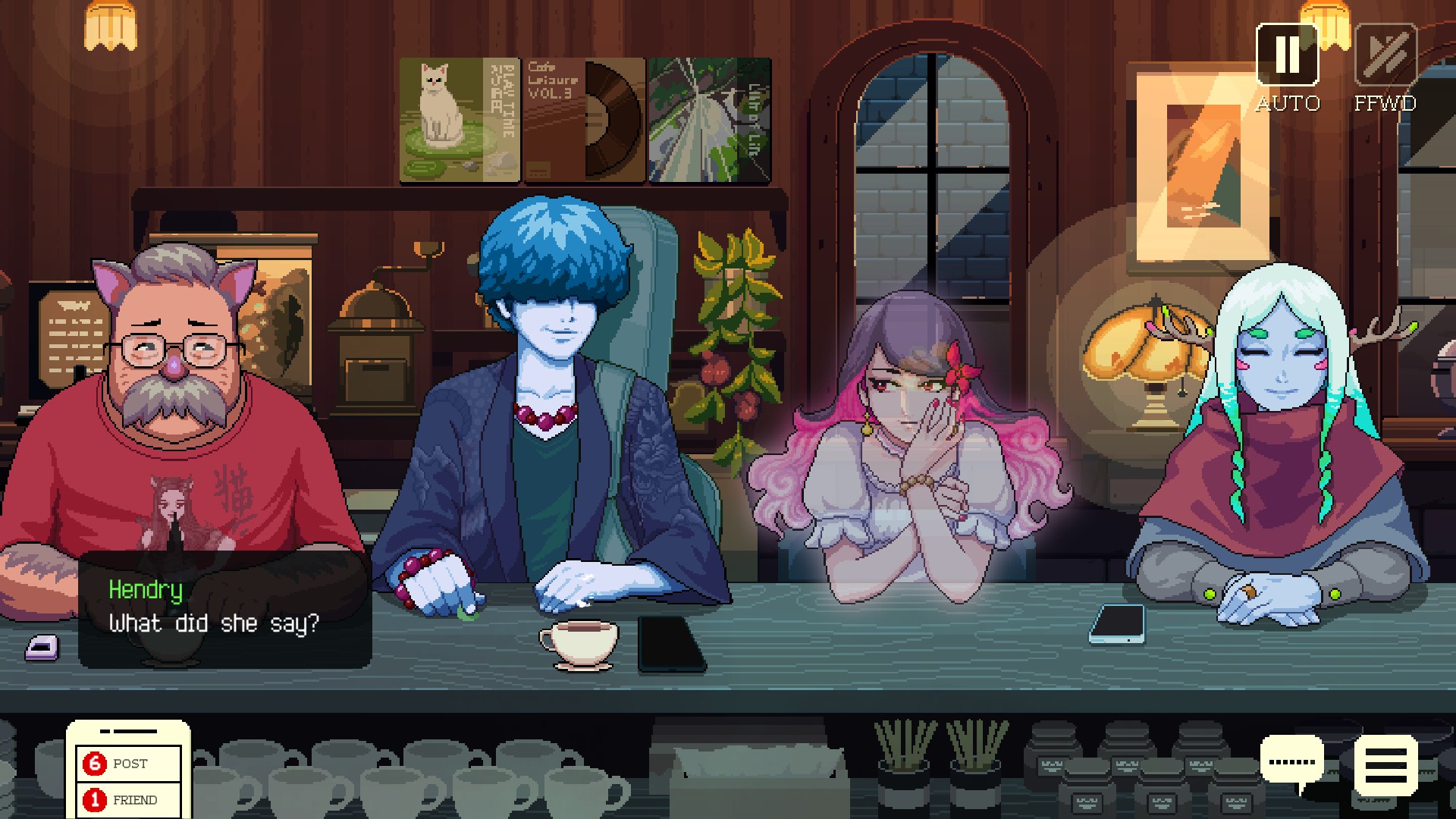
When I first heard that Coffee Talk Tokyo was being released, I was genuinely surprised. As a fan of both Coffee Talk and Coffee Talk Episode 2: Hibiscus & Butterfly, I wasn’t expecting to see another entry in the series. Given the circumstances surrounding the passing of the original creator, seeing the franchise continue felt unexpected but also reassuring. It’s clear from the opening moments that the team behind Coffee Talk Tokyo understands what made the series special while also looking for ways to expand upon it.
For those unfamiliar with the series, Coffee Talk is more than just a visual novel. While story and dialogue remain at the heart of the experience, the series has always mixed in interactive gameplay elements through its drink-making system. As someone who has played visual novels for years, I’ve noticed how the genre has evolved. Modern visual novels often include mechanics that help break up long reading sessions, and Coffee Talk has always done a great job of balancing storytelling with interaction. That balance appears to be returning in Coffee Talk Tokyo.
This time, the story moves from the familiar setting of Seattle to Tokyo in the year 2026. Right away, the game establishes a world where humans and yokai spirits coexist. Fans of Japanese folklore will likely appreciate this shift, as it opens the door to a variety of supernatural characters and cultural influences. One of the first things that crossed my mind was wondering which yokai might appear throughout the story. From kitsune to oni and everything in between, Tokyo feels like a natural setting for the next chapter of Coffee Talk.
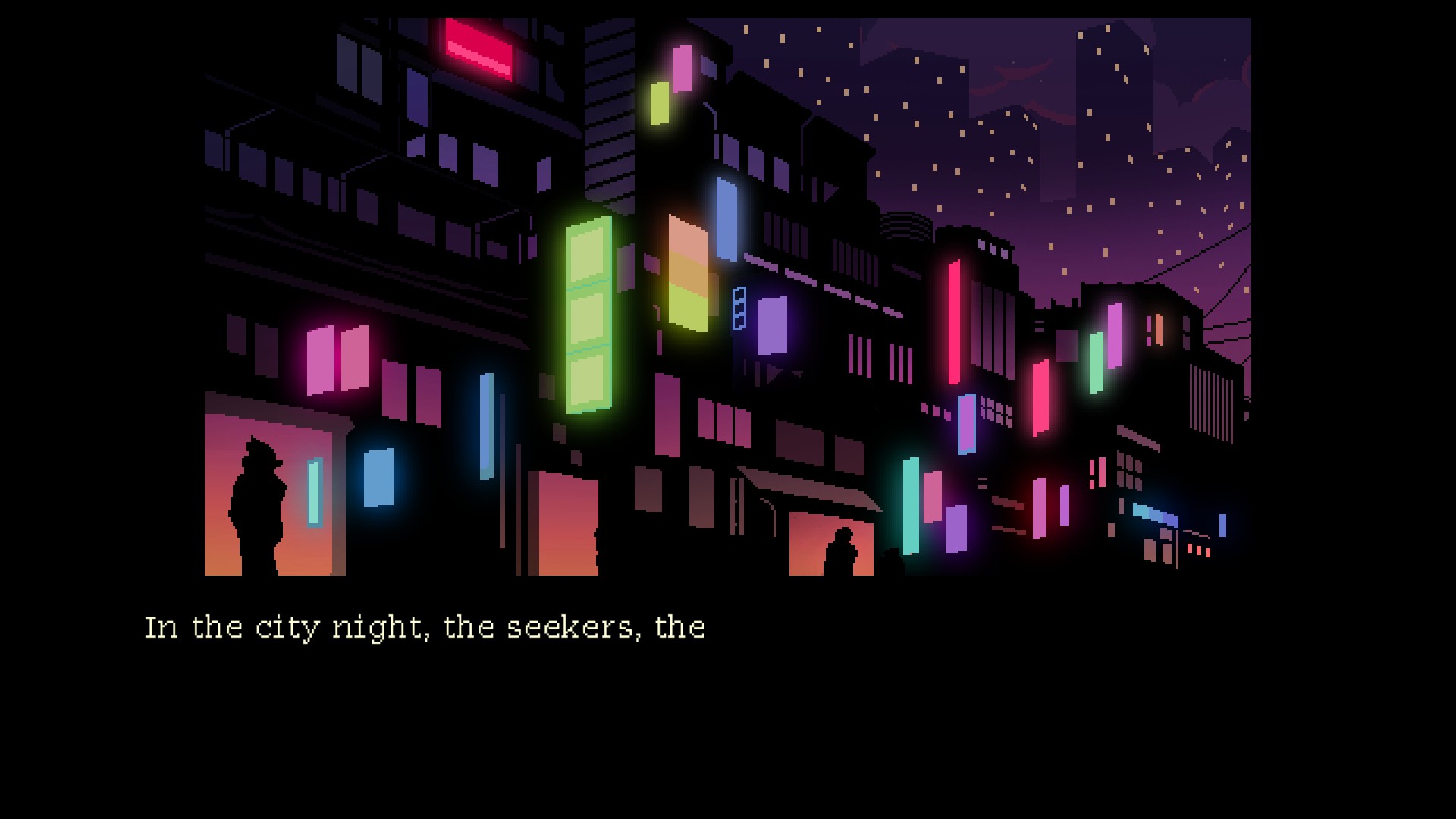
The game’s opening sequence immediately grabbed my attention. Like previous entries, the visuals are beautiful, but Coffee Talk Tokyo feels more polished than ever. Neon lights illuminate the city skyline, colorful buildings stand out against the darkness of the night, and the overall presentation creates an atmosphere that is both relaxing and inviting. The introduction almost feels like the opening of a movie rather than a traditional visual novel. Through a series of still images and credits, the game slowly draws players into its world before they even begin serving drinks.
One of the biggest improvements I noticed was the environmental detail. The café itself feels more alive than ever. Characters can be seen moving outside the windows, creating the impression that the city continues to exist beyond the walls of the coffee shop. These small touches go a long way toward making the setting feel believable and lived in.
The story begins inside a café tucked away behind a skyscraper in Tokyo. Like previous Coffee Talk games, this café serves as a place where people can cool their heads, warm their hearts, and share their stories. It doesn’t take long before we’re introduced to several key characters.
The player character, which I named Sairena, immediately comes across as warm, welcoming, and caring. As the owner of the café, Sairena creates an environment where customers can relax, share their stories, and temporarily escape the pressures of daily life.
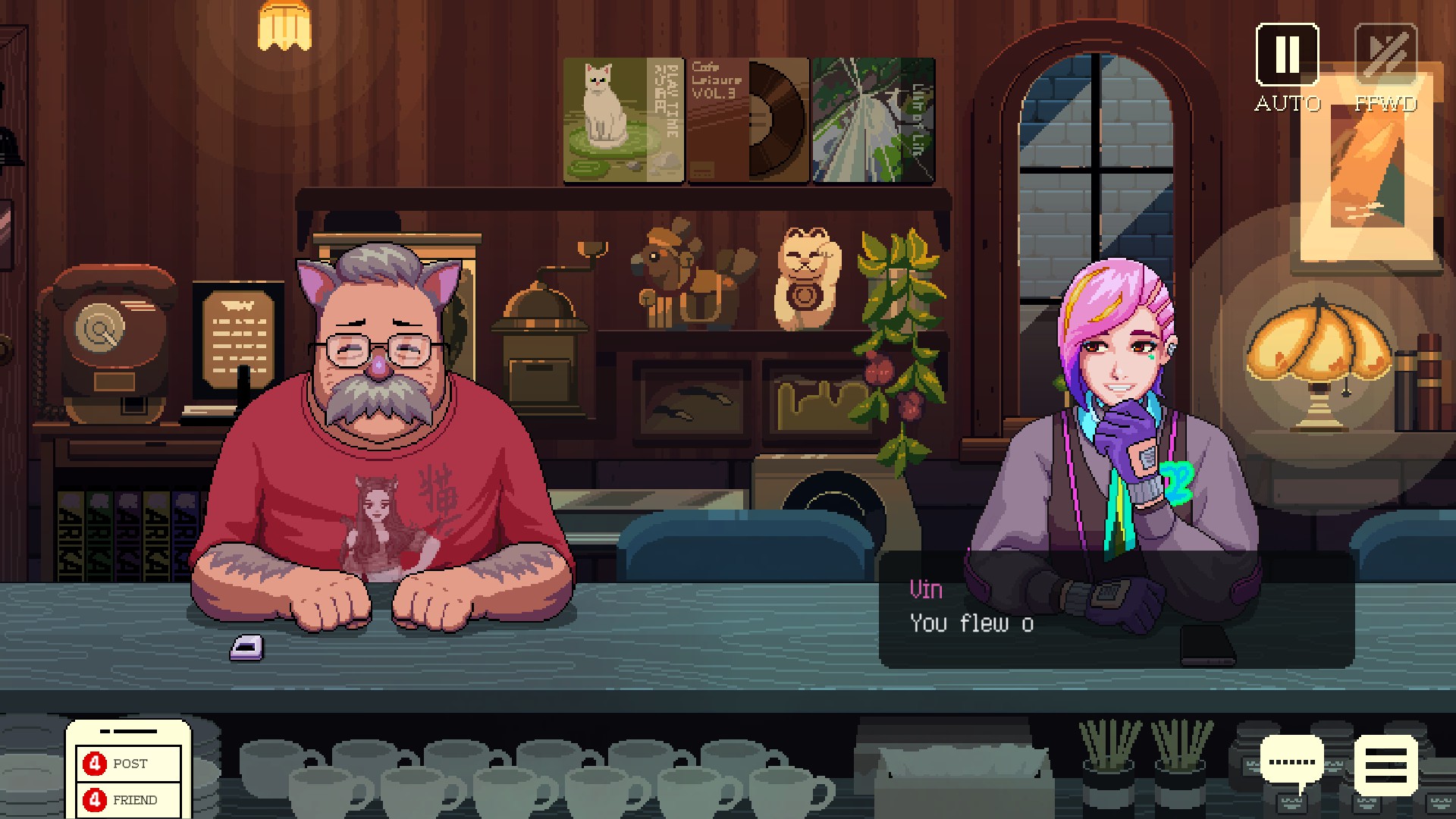
Alongside Sairena is Vin, an assistant who helps run the café. Vin’s situation appears more complicated than it first seems, with conversations hinting at health struggles and personal challenges. Their relationship with Sairena feels genuine and supportive, creating an interesting dynamic early on.
One of the first customers players meet is Hendry, a visitor from Seattle who works in the music industry. Hendry quickly becomes one of the more relatable characters in the opening chapter. Conversations about aging, health problems, and life’s challenges give him a grounded quality that feels authentic.
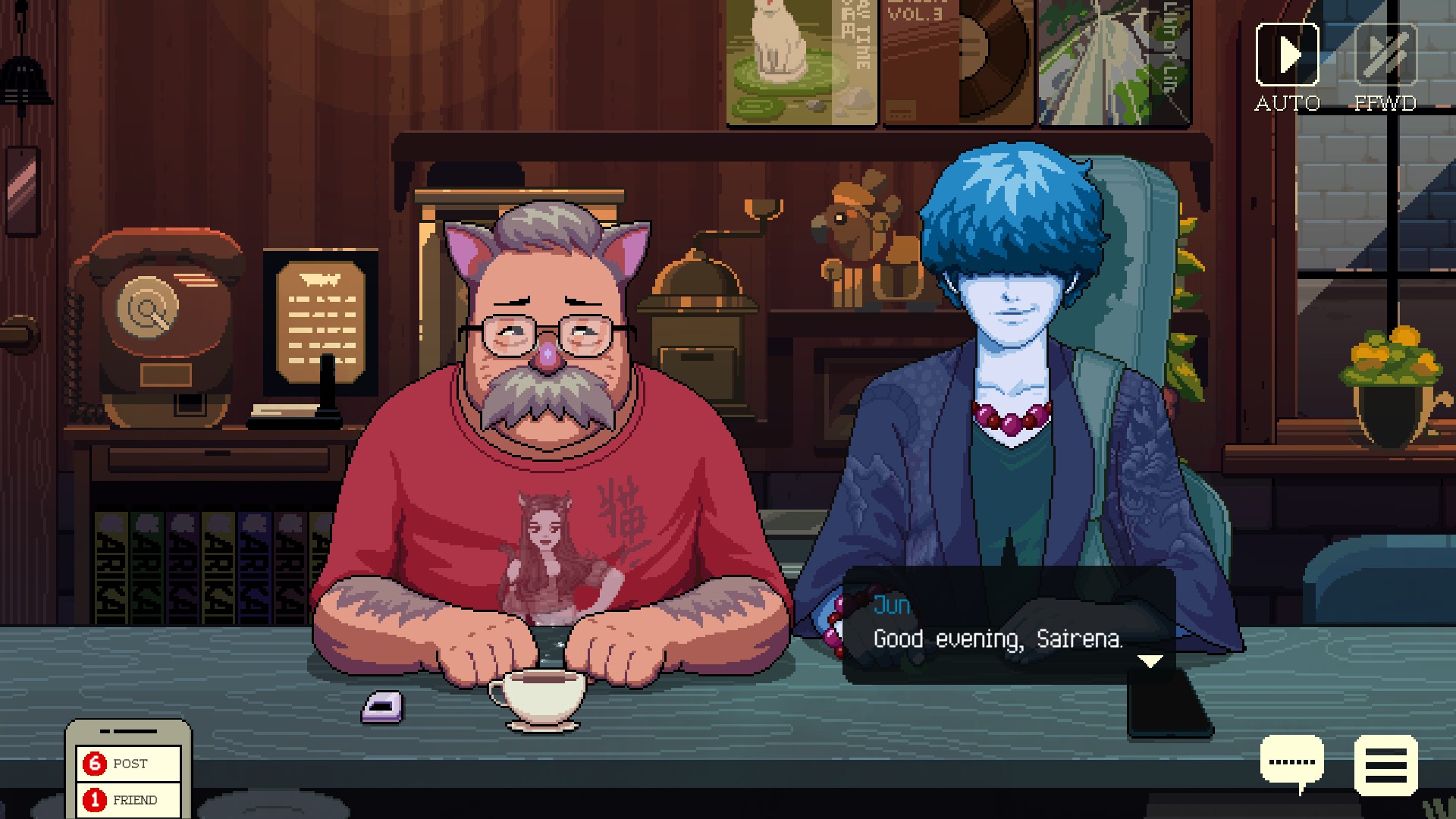
Soon after, we’re introduced to Jun, a musician who is struggling with the fallout from a poorly received album. His storyline touches on self-doubt, criticism, and creative burnout. As someone who creates content myself, I found these themes particularly interesting. The pressure of putting creative work into the world and receiving negative feedback is something many artists can understand.
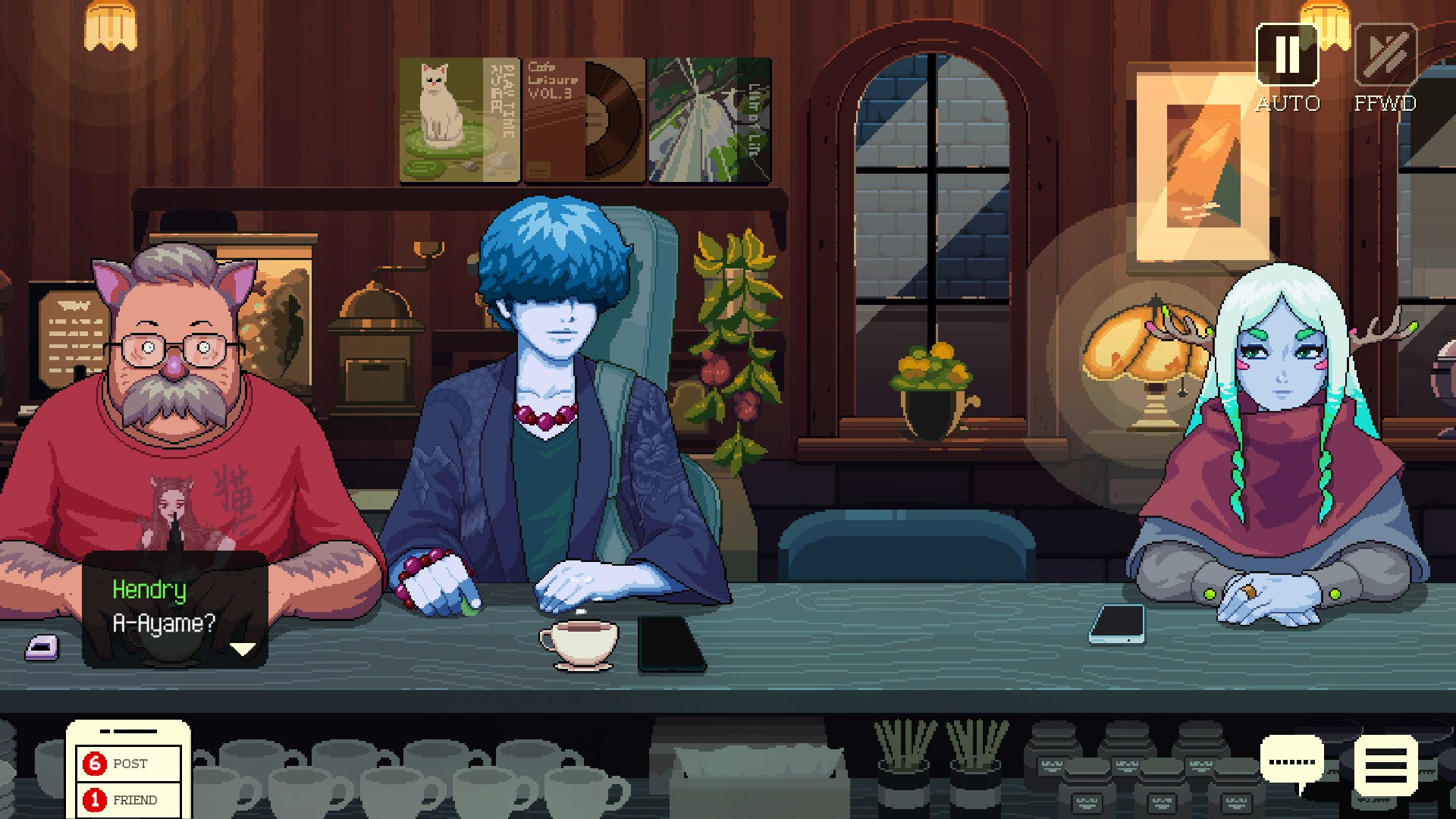
Of course, this wouldn’t be Coffee Talk without a touch of the supernatural. The appearance of Ayame, a mischievous ghost, adds humor and charm to the story while reinforcing the game’s focus on yokai and spiritual folklore. Her introduction was one of the more memorable moments from the opening section and left me curious to learn more about her role in the story.
Gameplay remains familiar to returning players. The drink-making system is back, allowing players to create beverages based on customer requests. I did experience some initial confusion regarding the recipe system. At first, I wasn’t entirely sure how the game was communicating the correct ingredients, but once I understood how the interface worked, the process became much smoother. It’s a small learning curve, but one worth mentioning for new players.
One feature I particularly appreciated was the auto-play option. Since visual novels involve a significant amount of reading, having the ability to let dialogue advance automatically creates a more relaxed experience. It almost feels like watching an animated series unfold. I did notice a few moments where the auto-play appeared to stop unexpectedly and required additional input, though I’m not yet sure if this was intentional or simply an isolated issue.
Visually, Coffee Talk Tokyo may be the strongest-looking game in the series so far. While the previous titles embraced a more pixel-art aesthetic, this entry feels cleaner and sharper. Character portraits are expressive, backgrounds are detailed, and the overall presentation feels modern without losing the cozy atmosphere that defines Coffee Talk.
After spending time with the opening chapter, my biggest takeaway is that Coffee Talk Tokyo successfully preserves the heart of the series while giving it a fresh identity. The move to Tokyo, the inclusion of yokai folklore, the improved visuals, and the engaging cast all help the game stand on its own while still feeling unmistakably like Coffee Talk.
The world feels welcoming, the characters are already showing signs of depth, and the café continues to serve as the perfect backdrop for conversations about life, creativity, personal struggles, and connection. Between the stronger visual presentation, expanded setting, and familiar drink-making gameplay, Coffee Talk Tokyo has done an excellent job of drawing me back into this universe.
I don’t really believe every game needs a score attached to it. What matters more is whether a game is worth your time, and based on what I’ve played so far, Coffee Talk Tokyo is definitely worth checking out. It’s cozy, welcoming, visually beautiful, and has already introduced several characters whose stories I’m interested in following. If you enjoyed the previous Coffee Talk games or you’re looking for a relaxing visual novel with a unique setting, this is one that should be on your radar.
While I’m still early in my journey through Coffee Talk Tokyo, the opening hours have left me eager to see what comes next. The series has always excelled at creating memorable conversations and meaningful character moments, and so far this newest entry appears to be continuing that tradition while carving out its own identity in the neon-lit streets of Tokyo.