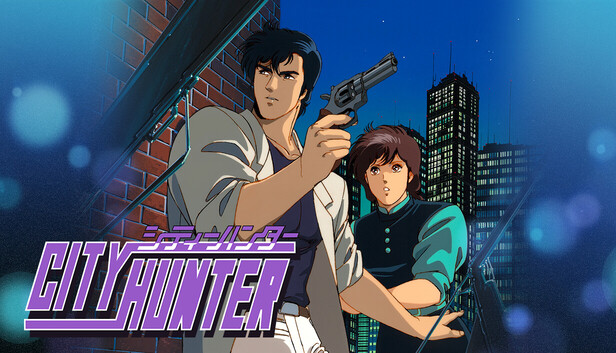
Developer: SUNSOFT, Red Art Games
Publisher: SUNSOFT, Clouded Leopard Entertainment
Genre: Action, Platformer, anime
Price: $24.99
Release Date: Feb 25, 2026
Where to buy: Steam, Switch
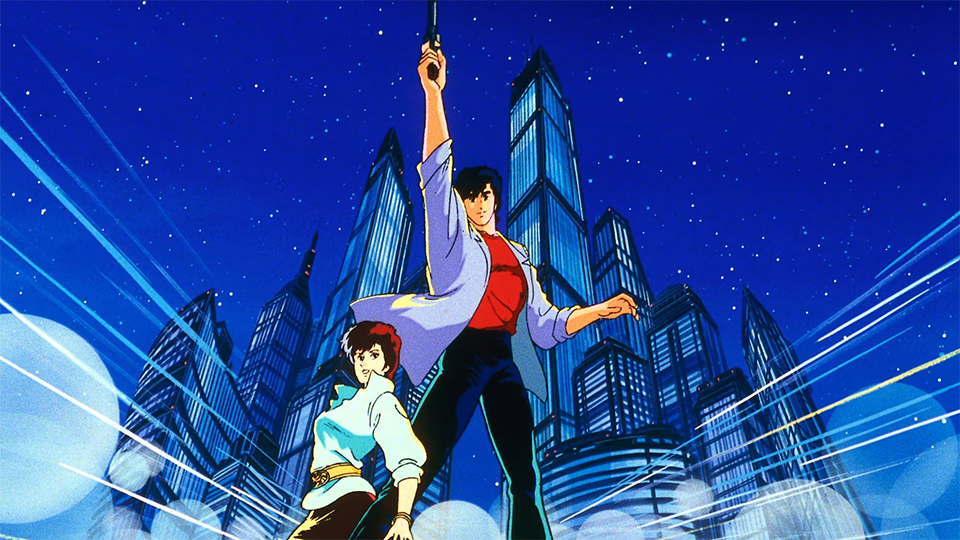
The 2026 re-release of City Hunter, a 1990 PC Engine classic, offers a fascinating look at the “sweeper” Ryo Saeba’s first digital outing. Long confined to Japanese hardware, this official translation by Sunsoft and Red Art Games brings the hard-boiled action of Shinjuku to modern consoles. While the game serves as a significant piece of preservation for anime historians and retro collectors, it ultimately struggles to escape the shadow of its own dated design. It is a title that relies heavily on its license to carry an experience that often feels as thin as a single-ply manga page.
A Loyal Translation of Tone

The most striking aspect of this remaster is its presentation, which successfully captures the aesthetic of the original Tsukasa Hojo series. From the iconic “Get Wild” theme song playing in the menus to the punchy, vibrant pixel art, the game looks and sounds like a high-end 8-bit production. The opening cutscenes are particularly impressive, showcasing the fluid animation that was the PC Engine’s hallmark. This release goes a step further by including an “Enhanced Mode,” which fixes vintage technical bugs and stabilizes the frame rate, ensuring that Ryo’s signature Colt Python shots feel as crisp as modern hardware allows.
Navigating the Maze
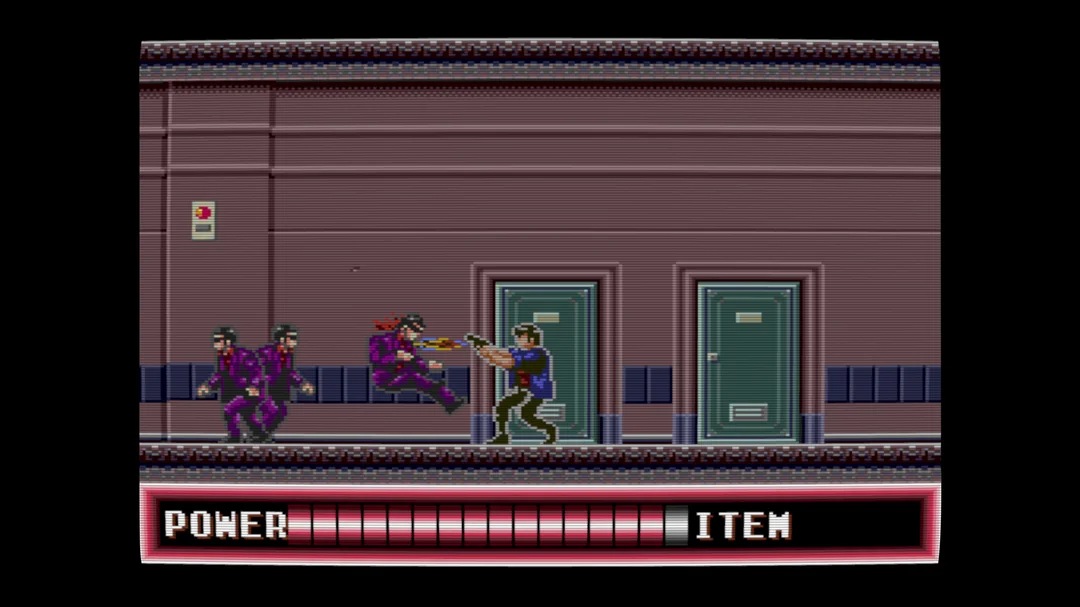
Despite the visual polish, the core gameplay loop is where the experience begins to fray. Each mission drops Ryo into sprawling, repetitive buildings filled with identical-looking doors and corridors. Progress often halts as the player is forced to engage in tedious backtracking to find specific NPCs or hidden keys. Without a modern map system, these levels quickly become disorienting mazes. While the run-and-gun combat is responsive, it lacks the tactical depth found in contemporaries like Rolling Thunder, leaving the player to wander aimlessly through hallways that offer very little environmental variety.
Modern Additions and Missed Marks
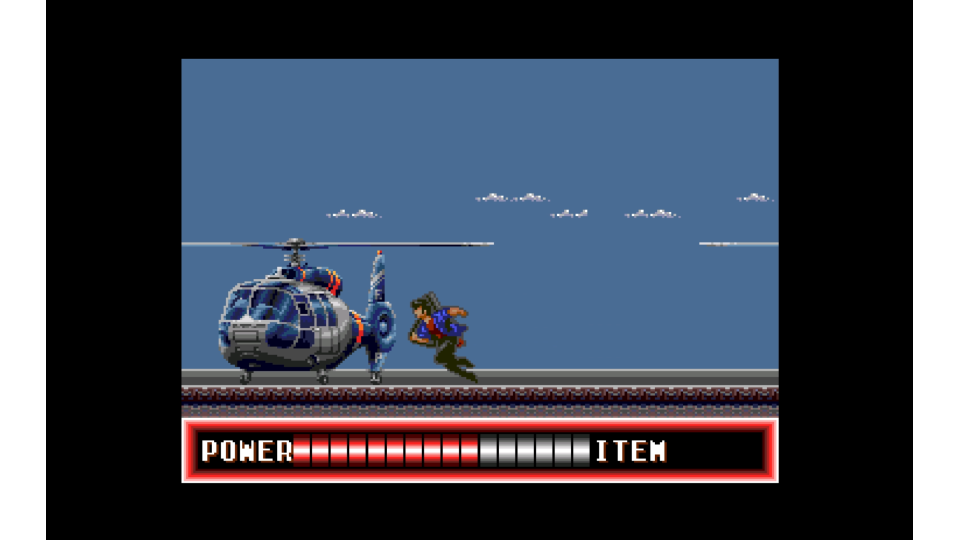
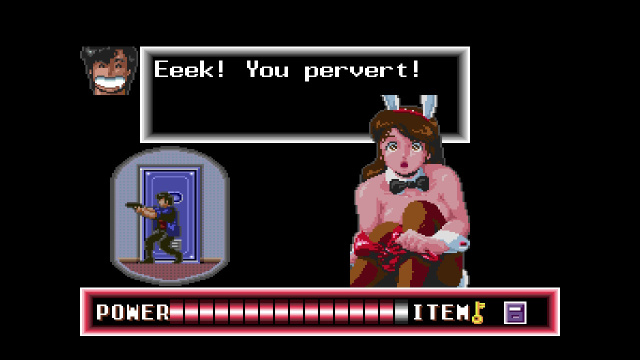
Red Art Games has attempted to pad the short two-hour runtime with a “Hard Mode” and various quality-of-life features like save states and rewinding. Hard Mode significantly alters enemy placement and behavior, offering a genuine challenge for those who have memorized the original layout. However, these additions cannot mask the fact that the game lacks the characteristic wit and variety of the anime. Most of Ryo’s personality is stripped away in favor of flat dialogue, and the infamous “pervert” humor is reduced to a single health-recovery mechanic involving unsuspecting women—a gag that feels more like a dated relic than a charming homage.
The Verdict on Shinjuku’s Finest
Ultimately, City Hunter is a game that exists for the fans and the completionists. It is a faithful, high-quality restoration of a mediocre licensed title that was never meant to be a masterpiece. The historical value of having an official English translation is undeniable, and for those who grew up writing “XYZ” on the Shinjuku chalkboard, the nostalgia may be worth the price of admission. For the average gamer, however, the repetitive level design and shallow mechanics make it difficult to recommend as anything more than a brief curiosity in the history of anime adaptations.