
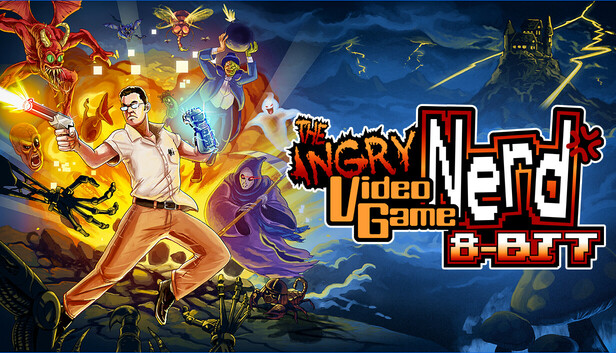
Developer: Retroware, Programancer, Mega Cat Studios
Publisher: Retroware
Genre: Platformer, Side-scroller
Price: $19.99
Release Date: Oct 23rd, 2025
Where to buy: Steam, Xbox, PSN, Switch,
This essay provides a detailed look into the action-platformer Angry Video Game Nerd 8-Bit, developed by Retroware, Programancer, and Mega Cat Studios, specifically focusing on its mechanics and design as an authentic 8-bit title.
Gameplay and Structure
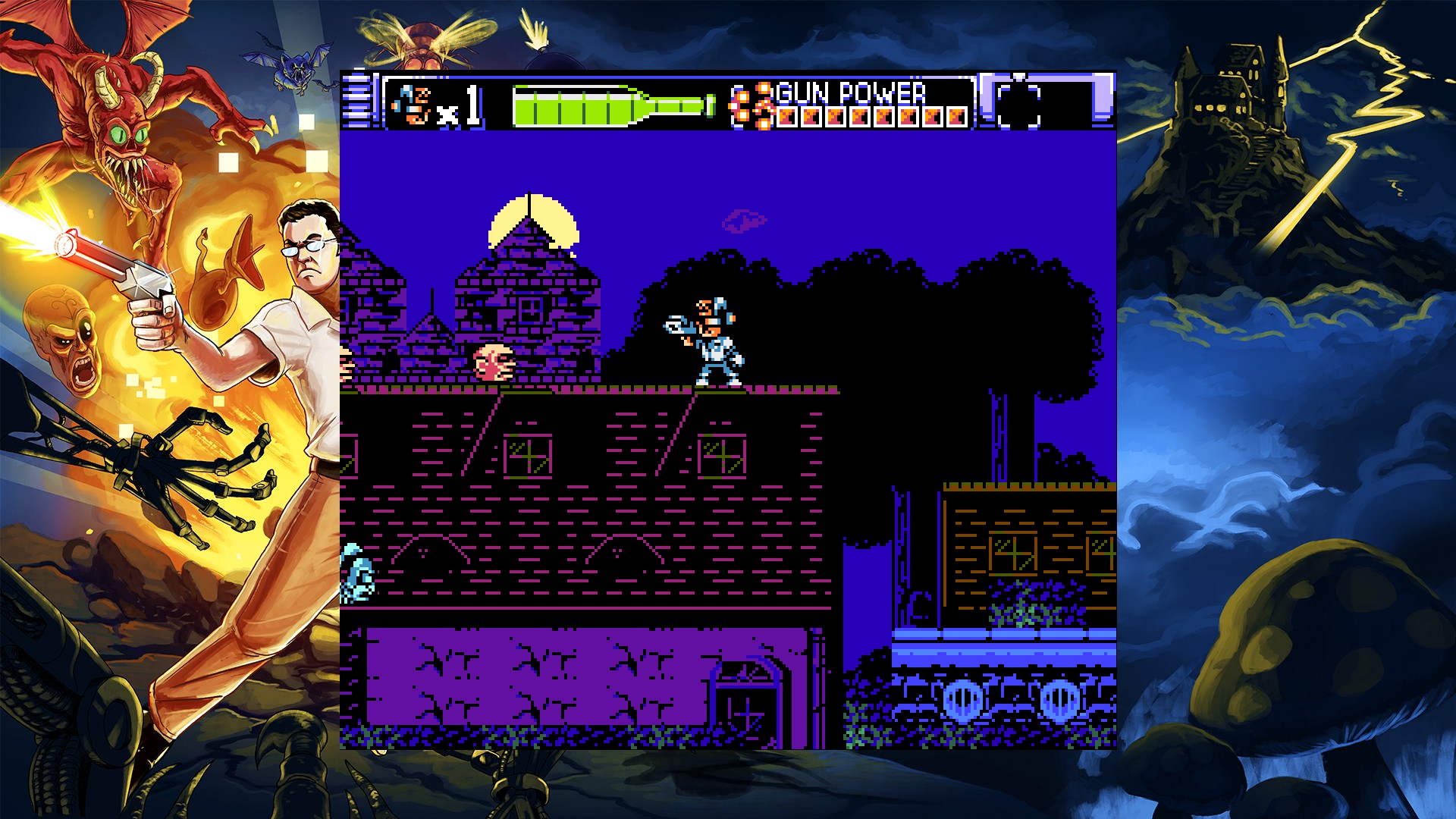
The core gameplay of Angry Video Game Nerd 8-Bit is a side-scrolling action platformer heavily modeled after the Nintendo Entertainment System (NES) classics, particularly the structure of the Mega Man series. Players control The Nerd, utilizing core actions: jumping, sliding, and firing the NES Zapper as a main weapon. The game follows a non-linear structure, presenting a stage select screen where initial levels can be tackled in any order before proceeding to the final areas. Difficulty is adjustable, offering multiple settings for varying player skill levels. True to its retro inspiration, the game features a password system on the NES version (with modern ports utilizing continues) to resume progress. The game also includes specific accessibility features like a dedicated button for sub-weapons on modern consoles.
Weaponry and Core Mechanics
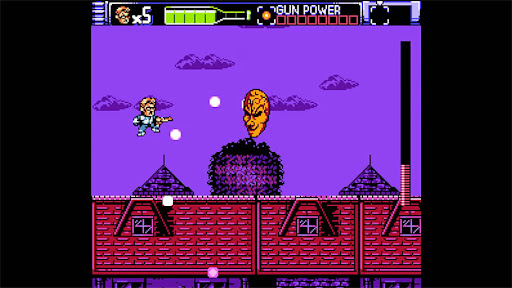
The Nerd’s primary weapon is the NES Zapper, which can be incrementally upgraded. Collecting power-up tokens increases the weapon’s firepower and alters its shot pattern, progressing from a standard shot to a stronger spread shot or multi-shot configuration. A central mechanic is the consequence of taking damage: a hit causes The Nerd to drop one power-up token, which must be quickly collected before it disappears. This creates an immediate risk/reward dynamic in combat. Sub-weapons, often referred to as “smart bombs” or throwable items, are also available, including items like the F-Bomb (a screen-clearing attack), bottles, and the Middle Finger. The game includes the Golden Shit Pickle power-up, which appears after multiple deaths in a stage to provide temporary aid and increase survivability.
Audiovisual Design and Music
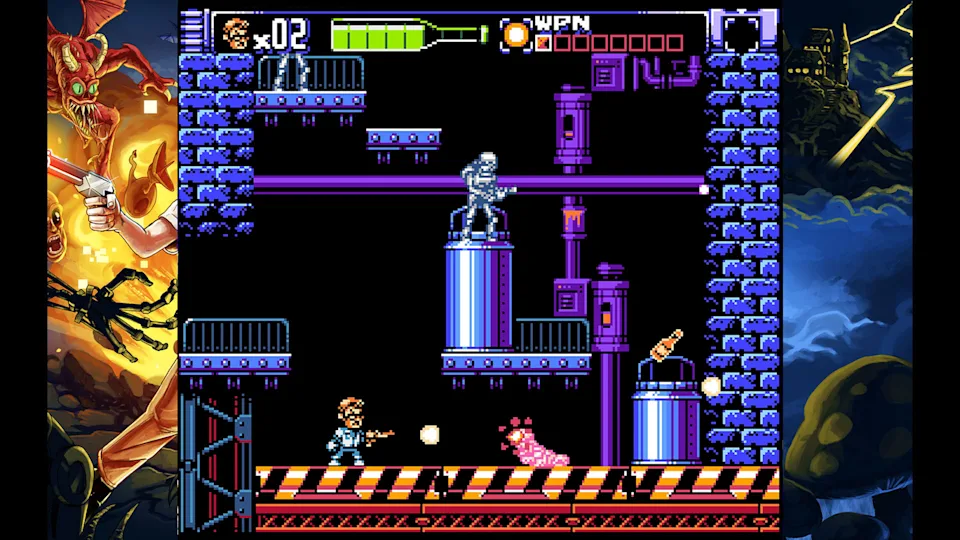
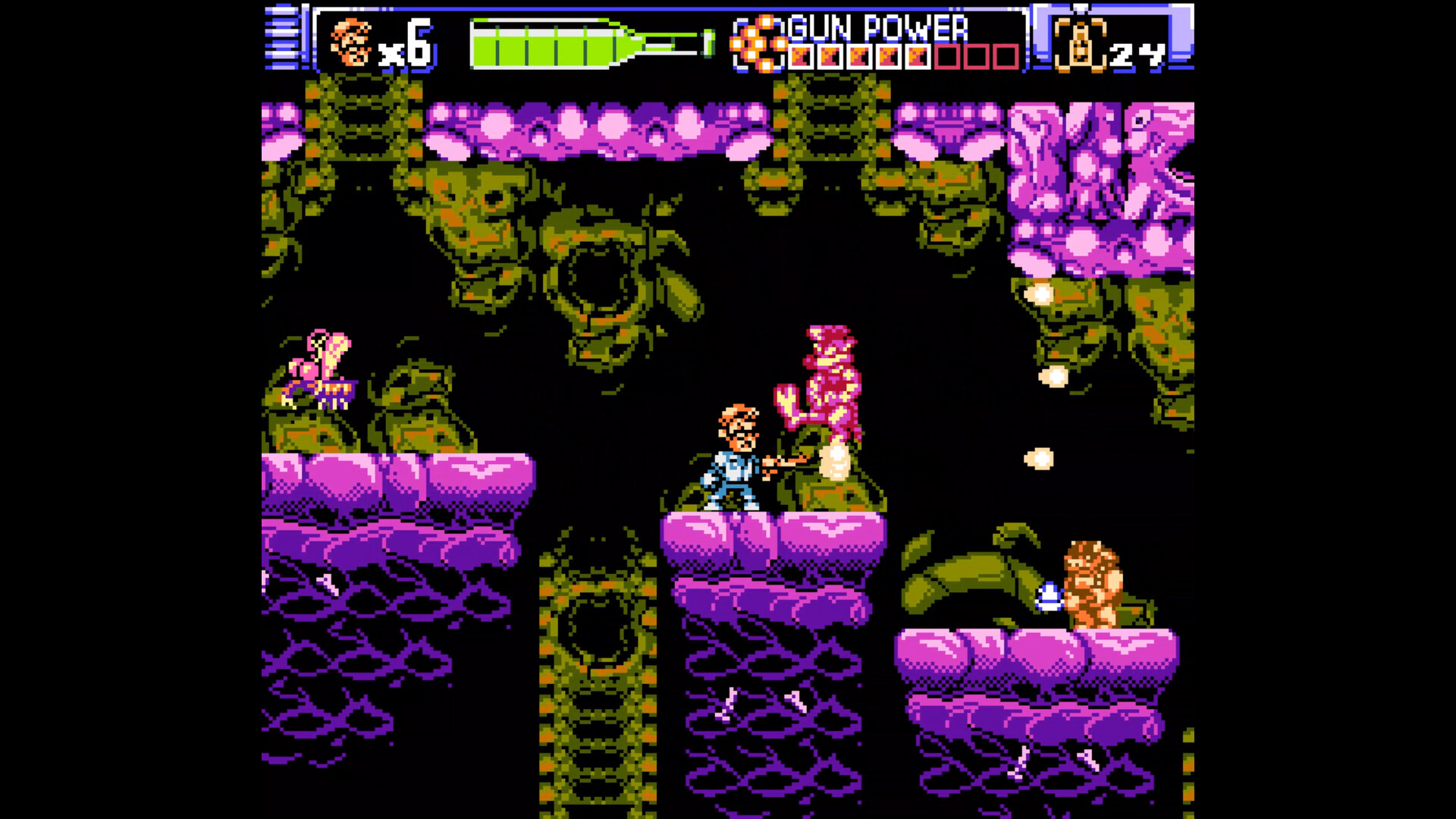
The game’s aesthetic adheres strictly to the 8-bit visual and technical limitations of the NES hardware, utilizing a limited color palette and pixel art for sprites and environments. The enemy design features zombies, mechanical skeletons, and ghoulish reapers, all rendered in a grotesque yet authentic 8-bit style. The music is a key component, consisting of an entirely chiptune soundtrack produced to emulate the sounds of the NES’s sound chip. The audio also incorporates compressed, digitized voice clips of The Nerd’s profanity (such as yelling “ASS!” upon dying), a technical feat for an 8-bit game, maintaining the character’s persona within the platform’s constraints.
Level Theming and Content
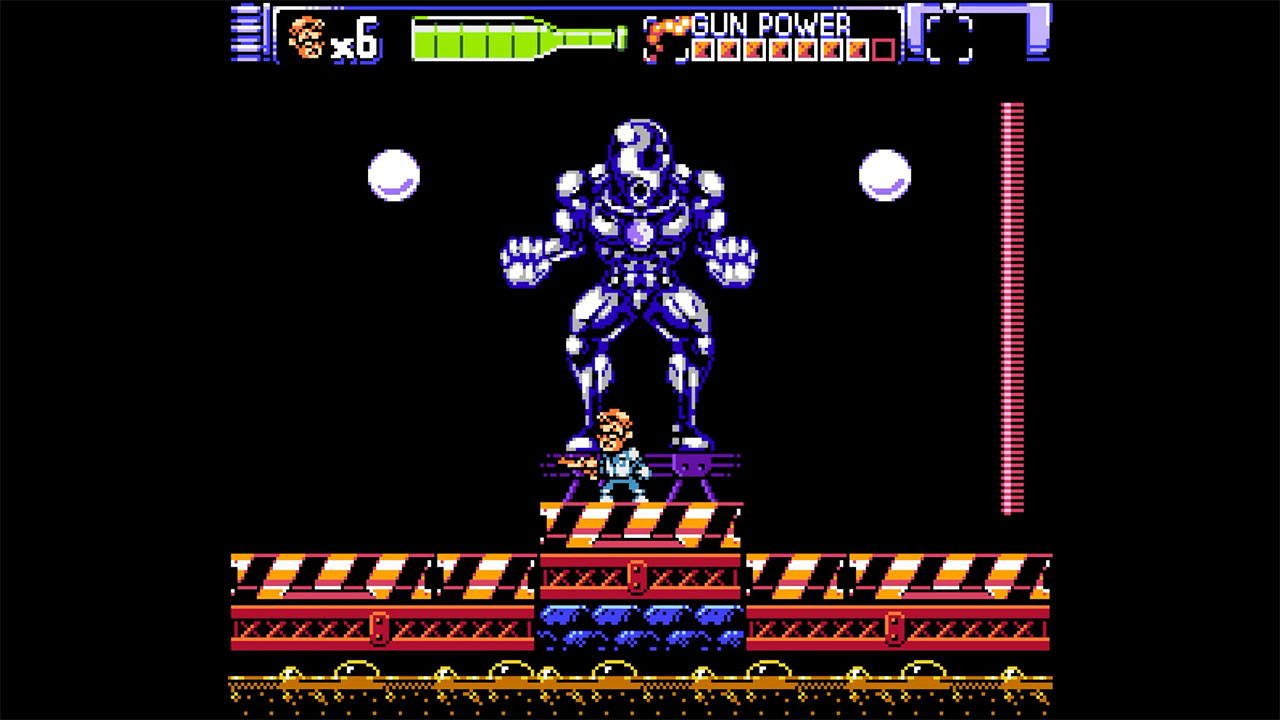
The game’s levels and bosses are inspired by and reference specific episodes, reviews, and characters from the Angry Video Game Nerd universe. Each stage is designed around the concept of a “bad game” or a key villain. The six initial boss levels include stages themed around games like:
- Pepsiman (Boss: Speziman)
- Fester’s Quest (Boss: Festerdrome, a mashup of Uncle Fester and the Technodrome)
- Dr. Jekyll and Mr. Hyde (incorporating its unique game mechanics)
- The Atari 2600 game E.T. (Boss: T.P.)
- Top Gun (Boss: F-14 Tomcat)
The overarching antagonist is Super Mecha Death Christ 2000 B.C. Version 4.0 Beta, who corrupts all of gaming, necessitating The Nerd’s adventure to save the world. The game also utilizes live-action cutscenes (Full Motion Video) to present the story and context, framing the 8-bit gameplay as a new episode of the series.
Specific Technical Details
The development was a collaborative effort involving Mega Cat Studios (known for physical NES releases) and Programancer, ensuring technical accuracy for the NES platform. The stages feature platforming challenges, varying enemy patterns, and some sections include environmental gimmicks like forced scrolling. The overall experience is designed to be a blend of modern design sensibilities applied to genuine NES hardware limitations. Completing the main stages unlocks additional features, such as a Boss Rush mode.
Angry Video Game Nerd 8-Bit is a successful experiment in targeted nostalgia, delivering a true-to-form 8-bit action platformer that feels like a newly discovered gem from the NES era. It serves as both a high-quality retro homage and a hilarious, profanity-laced extension of the popular web series.
The Good: Authentic Retro Design Meets Modern Polish
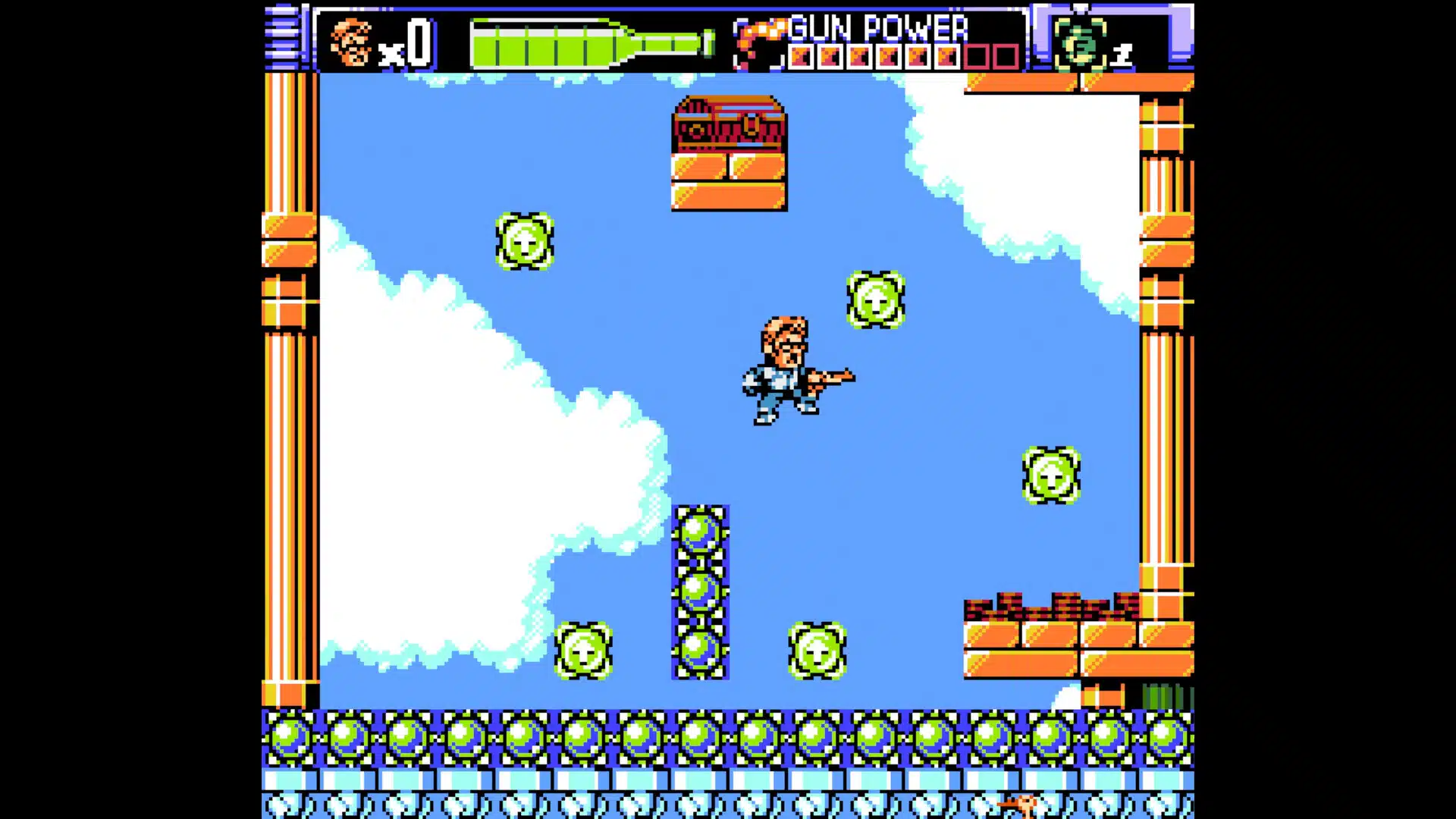
The game’s greatest strength is its authentic NES aesthetic. Developed with the platform’s technical constraints in mind, the visuals feature a classic color palette, detailed pixel art, and a fantastic chiptune soundtrack. The music is catchy and energetic, and the inclusion of bitcrushed voice clips (The Nerd yelling “ASS!”) is a humorous detail that ties the game directly to the source material.
Gameplay is heavily influenced by the non-linear structure of the Mega Man series. The NES Zapper mechanic is clever: collecting power-ups increases its strength and shot pattern, but taking a hit makes you drop a token, forcing a risk/reward choice reminiscent of the challenges in old-school games. Controls are generally tight and responsive, making the difficult platforming feel fair, especially when compared to the notoriously broken games The Nerd reviews.
For fans of the series, the content is a goldmine. Each level and boss is a direct reference to infamous episodes and villains, from the Festerdrome to the level mechanics of Dr. Jekyll and Mr. Hyde. The game’s opening and closing Full Motion Video (FMV) cutscenes perfectly frame the action as a new, over-the-top installment of the show.
The Bad: Short Length and Targeted Appeal
The game is relatively short, clocking in around a few hours for a first playthrough. While this is typical of a genuine NES-era title, modern players may find the overall content brief, though the multiple difficulty options and Boss Rush mode add some replay value.
While the difficulty is generally “tough-but-fair,” there are still occasional moments—like tricky jumps or instantly respawning enemies—that feel designed to evoke genuine Nerd rage, which may frustrate players who are not prepared for old-school platforming demands.
Finally, while the core gameplay is solid, much of the game’s humor, level design, and enemy placement relies heavily on knowledge of AVGN lore. Players unfamiliar with the web series may miss many of the jokes and references, diminishing the overall experience.
Final Verdict
Angry Video Game Nerd 8-Bit succeeds completely in its mission: to create a high-quality, authentic NES-style game that perfectly captures the look, feel, and crude humor of the AVGN series. It’s an easy recommendation for two groups: fans of the Angry Video Game Nerd who will appreciate every reference, and fans of classic 8-bit action platformers looking for a challenging, well-designed experience.
The developers masterfully blended the nostalgia of the past with just enough modern polish and quality-of-life features (like difficulty options and modern controls) to prevent the game from truly sucking ass.