
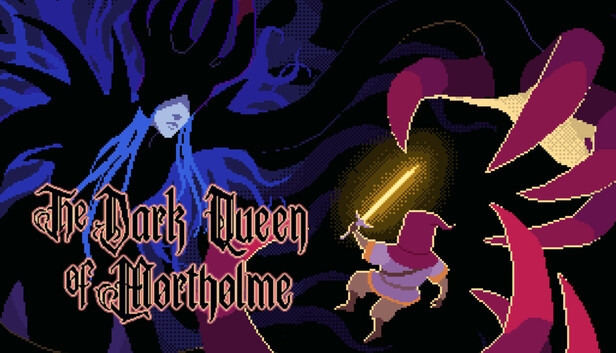
Developer: Mosu
Publisher: Monster Theater
Genre: Story, Visual Novel, Action
Price: $5.99
Release Date: Aug 15th, 2025
Where to buy: Steam
“The Dark Queen of Mortholme” is not a game you play; it’s a game that plays with you. Billed as an “anti-game” by its developer, Mosu, this short-form experience subverts the core tenets of the action RPG genre to deliver a surprisingly philosophical and emotionally resonant narrative. By placing the player in the role of the final boss—the titular Dark Queen—it cleverly inverts the hero’s journey and forces a profound reflection on themes of persistence, change, and existential dread.
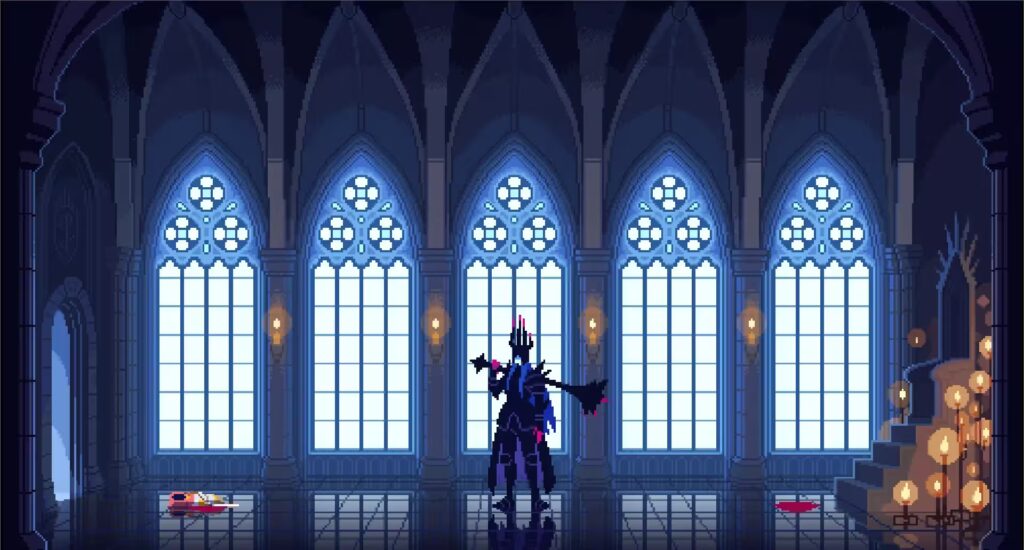
The premise is brilliant in its simplicity. You are the Dark Queen, an all-powerful, unrivaled being in your domain. Your routine, however, is interrupted by a persistent hero who, despite being easily and repeatedly crushed, returns with each defeat, growing stronger and more adept. The game’s structure is a loop: you defeat the hero, a brief dialogue exchange occurs, and they return for another round. This cycle is the heart of the experience, mirroring the familiar grind of a Souls-like game, but with a crucial twist: you are the one being relentlessly studied and overcome.
In a traditional game, the player’s progression is a source of triumph. We level up, acquire new gear, and master new skills. “The Dark Queen of Mortholme” turns this on its head. As the Queen, you are static. You have a fixed set of moves, an unchanging throne room, and an existence defined by repetition. It is the hero who evolves, and this is where the game’s brilliance shines. Watching your once-feeble opponent dodge your attacks, land precise strikes, and arrive with better equipment is deeply unsettling. The power fantasy of being the boss quickly gives way to a creeping sense of vulnerability. This frustration is, by design, the point. It is the existential crisis of a god-like being realizing that they are little more than a challenge to be conquered.
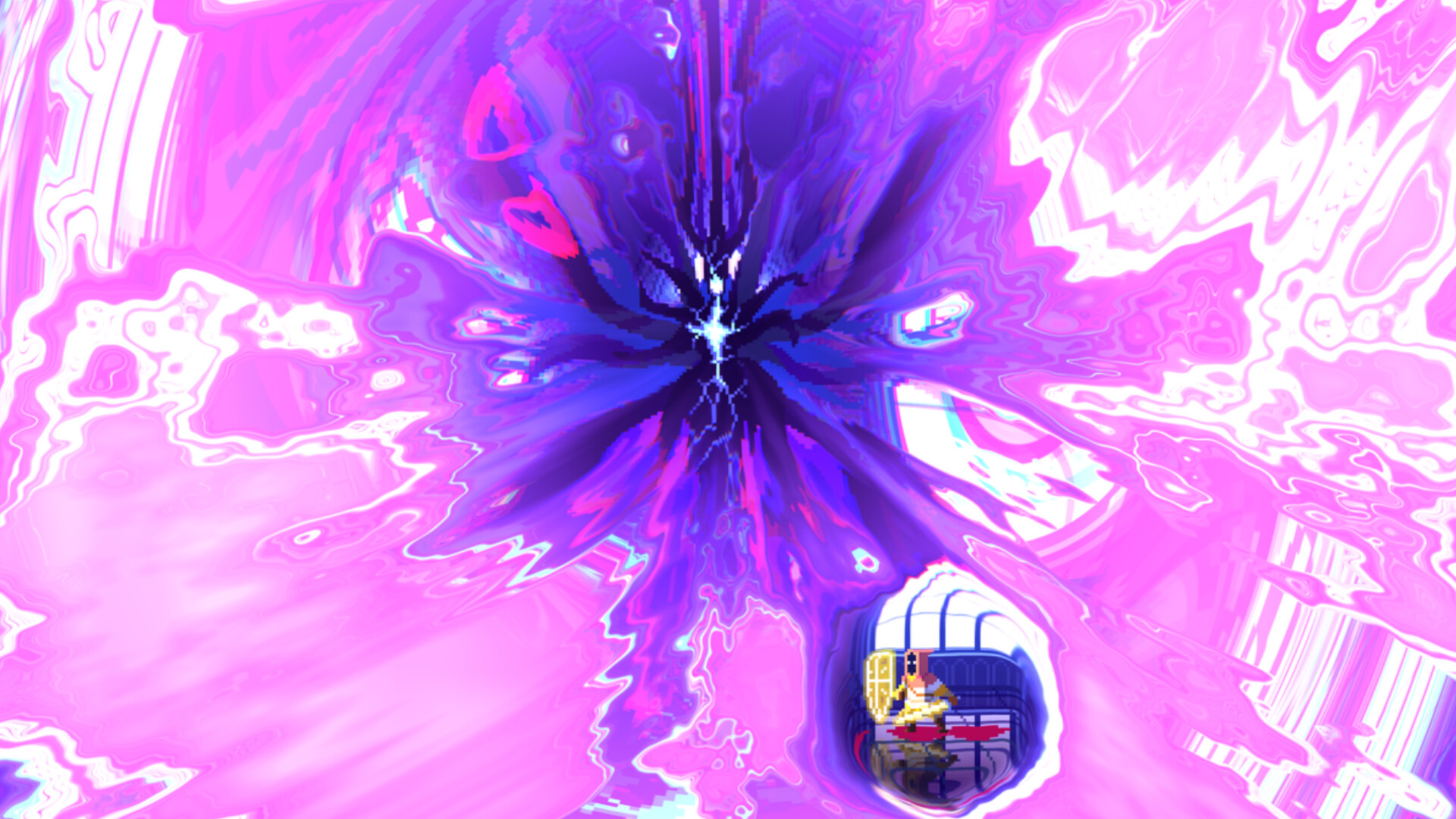
The game’s narrative is its most compelling feature. The conversations between the Dark Queen and the hero are a masterclass in concise, impactful storytelling. The Queen’s dialogue evolves from haughty disdain to a mixture of curiosity, exasperation, and, ultimately, a melancholic understanding. These moments of dialogue, shaped by the player’s choices, explore the motivations behind both characters. The hero’s unwavering optimism and desire for growth stand in stark contrast to the Queen’s unchanging, almost nihilistic, existence. It’s a dialogue on the nature of purpose: does a life without change have any meaning? Is it better to be a hero on a journey, even if it leads to an inevitable end, than a sovereign trapped in an eternal, static state?
Visually, “The Dark Queen of Mortholme” presents a stunning example of pixel art. The throne room is atmospheric and detailed, with subtle animations that bring the scene to life. The character designs are effective, with the imposing and ornate figure of the Queen set against the progressively more formidable appearance of the hero. The audio, from the dramatic score to the satisfying sound effects of combat, complements the tone perfectly.
While “The Dark Queen of Mortholme” is a short experience, completed in under an hour, its impact far exceeds its length. It is not a game for those seeking a deep, skill-based challenge. Instead, it is an interactive piece of art that uses the language of video games to explore universal themes. It is a testament to the power of indie development, proving that a simple, focused concept, executed with creative vision, can deliver a more thought-provoking and memorable experience than many a sprawling, big-budget title. “The Dark Queen of Mortholme” is not just an entertaining short; it’s a powerful reminder that sometimes, the most interesting stories are told from the other side of the screen.