
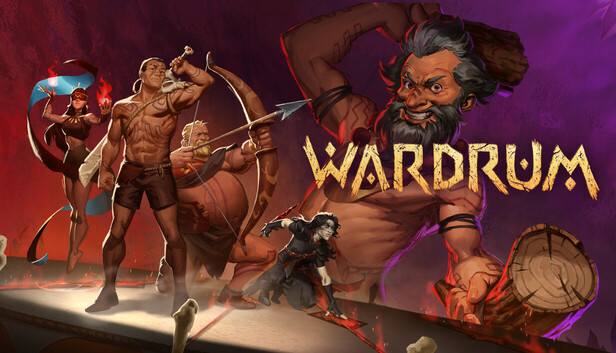
Developer: Mopeful Games
Publisher: Team17
Genre: Strategy, Turn-Based Tactics, Turn-Based Combat, Rhythm, Roguelite, RPG
Price: $19,99
Release Date: May 7th, 2026
Where to buy: Steam
Introduction
In the vast landscape of independent video games, developers constantly strive to merge disparate genres to create entirely fresh interactive experiences. Wardrum, developed by Mopeful Games and published by Team17, stands as a fascinating testament to this creative ambition by fusing grid-based tactical strategy, rogue-lite progression, and precise rhythm mechanics. Set in a dark fantasy realm plagued by a corrupting “off-beat magic,” the title tasks players with leading a tribal warband to restore cosmic harmony. By requiring players to execute strategic combat actions in perfect synchronization with a primal drumbeat, the game builds an innovative framework that challenges both the intellect and the reflexes. Ultimately, Wardrum presents an incredibly inventive core gameplay loop that achieves mechanical brilliance, even though its overall execution suffers from structural repetition and steep pacing issues.
The Innovative Harmony of Tactics and Rhythm
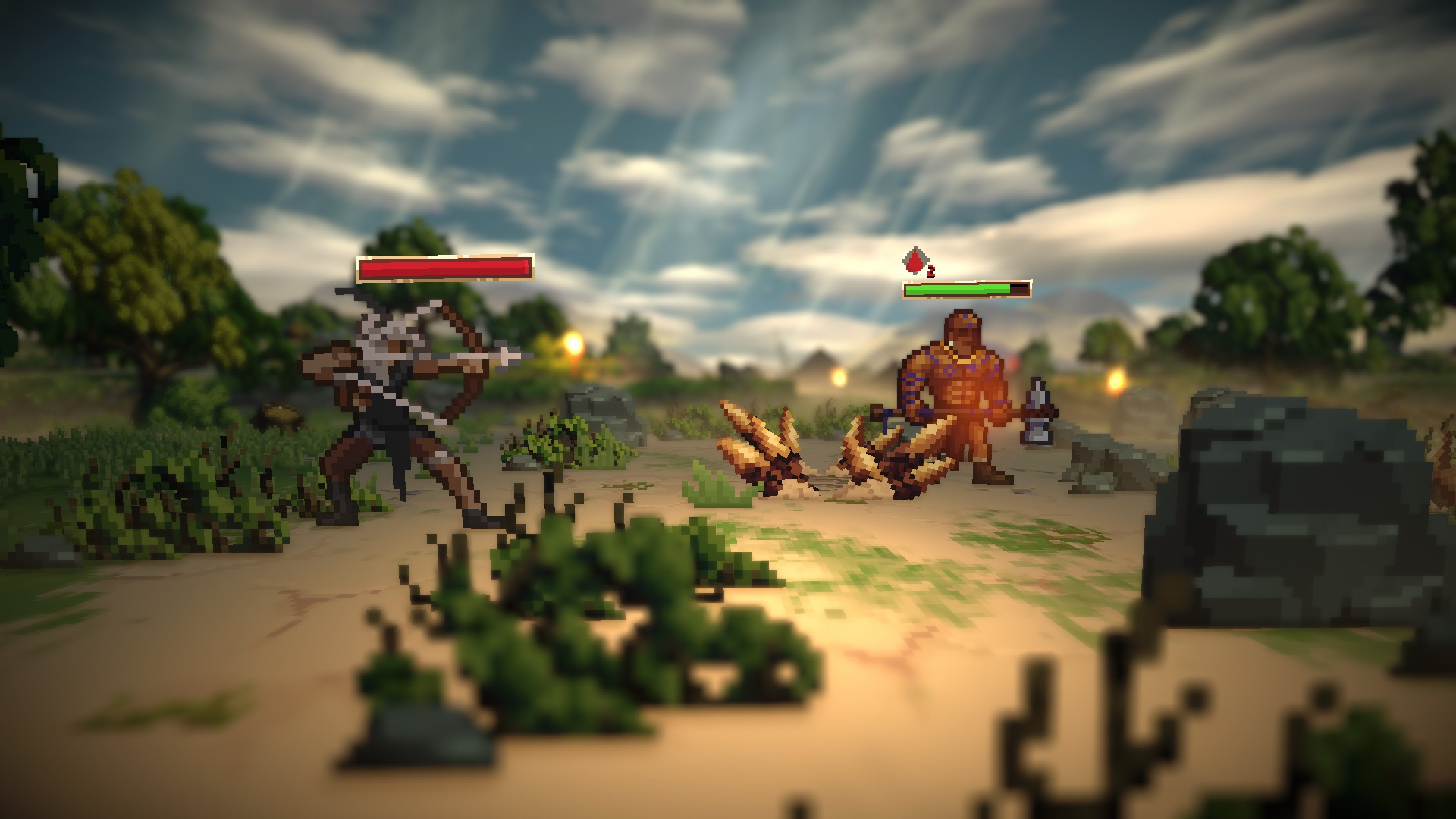
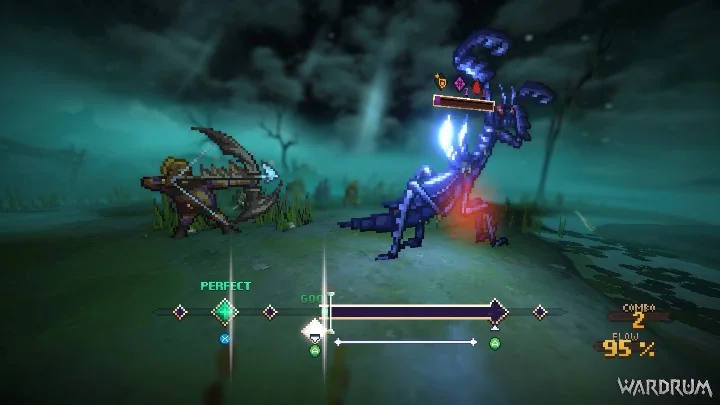
The foundational strength of Wardrum lies in its highly original combat design, which successfully bridges the methodical thinking of tactical RPGs with the high-energy demands of music games. Players maneuver a squad of five distinct units—such as the support-oriented Wardrummer, heavy melee fighters, and ranged specialists—across a grid-based battlefield. Once a tactical positioning decision is finalized, the game seamlessly transitions into its rhythm phase, demanding that players execute weapon-specific button prompts to the beat of a tribal drum to maximize damage and accuracy. For instance, firing a bow requires holding and releasing inputs to mimic a string tension pull, while dual daggers demand rapid-fire, rhythmic button presses. This clever amalgamation ensures that success depends equally on long-term spatial positioning and short-term physical execution, offering a completely fresh subversion of traditional turn-based combat.
Deep Dynamic Mechanics and Customization
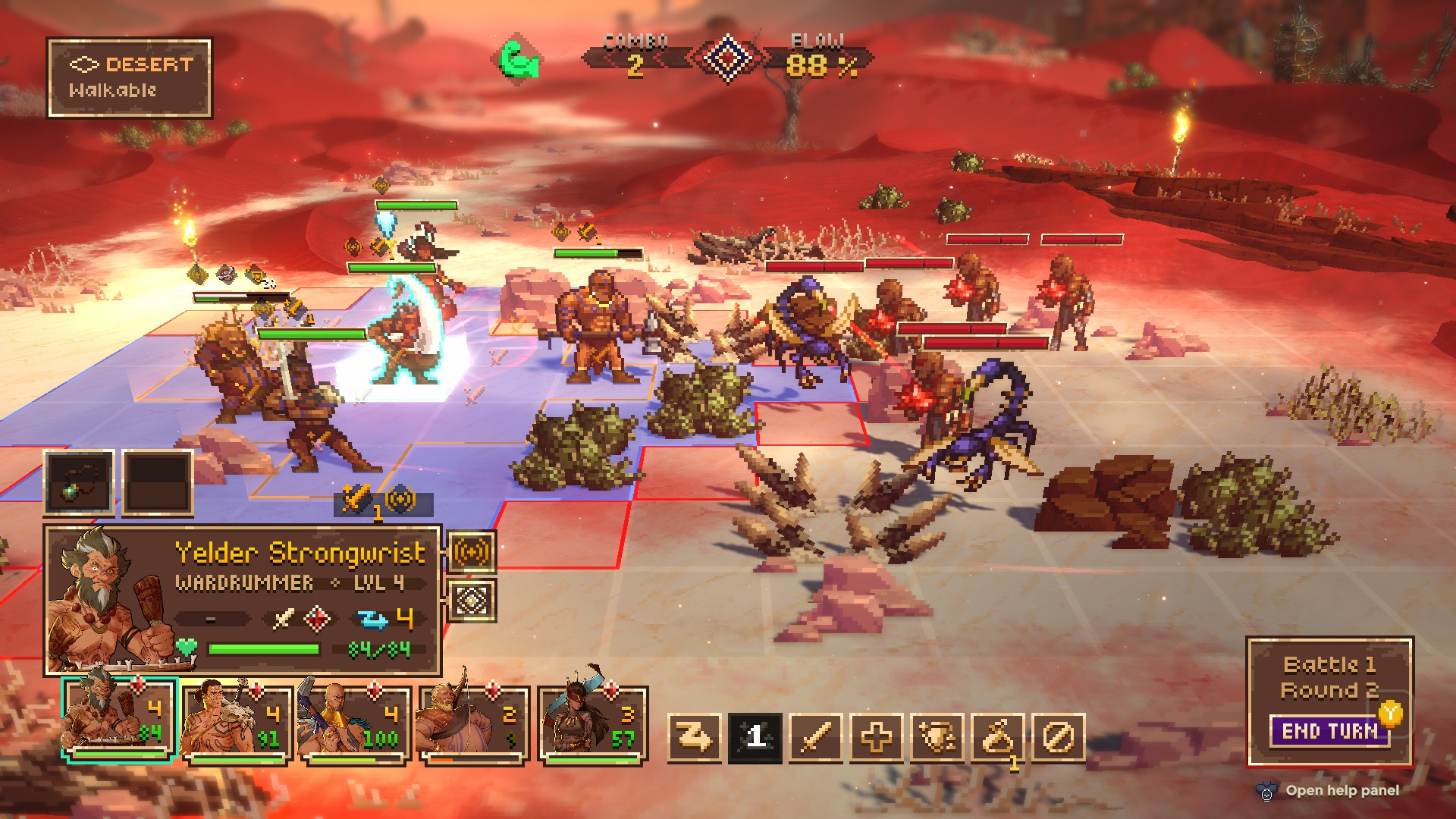
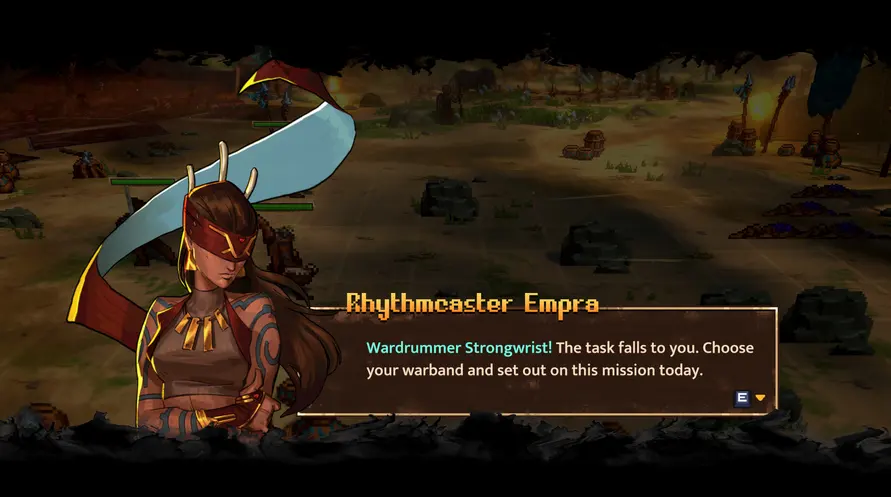
Beyond its baseline rhythm structure, the title incorporates a dense layer of systemic depth through character customization, status effects, and environmental hazards. As players guide characters like the eccentric warband leader, Yelder Strongwrist, through branching paths, they accumulate Rhythm Essence to spend on meta-progression at the Shrine of Growth. Furthermore, the game features a deep forge system allowing players to craft custom abilities by combining colored stones to dictate range, attack types, and cooldowns. Combat is further complicated by a dynamic day-and-night cycle that introduces battle modifiers and wild predators, alongside a punishing array of rhythm-disrupting status effects. Afflictions like Confusion randomize the required button inputs on the fly, while Blindness visually obscures the rhythmic timeline, forcing players to rely entirely on auditory cues and elevating the tactical stakes during high-level encounters.
Structural Pacing and Repetition Flaws
Despite the conceptual brilliance of its mechanics, Wardrum struggles significantly with structural fatigue and uneven pacing over its fifteen-to-twenty-five-hour runtime. The core issue is that the foundational background drumbeat remains largely static across various zones, causing the auditory experience to shift from mesmerizing to monotonous during extended play sessions. Additionally, because enemies do not abide by the same rhythm limitations as the player, combat encounters frequently drag on far longer than necessary, transforming potentially exciting boss fights into tedious tests of endurance. The branching map structure offers minimal narrative exploration, and the repetitive rotation of enemy types and random text events within each biome causes the game to stretch its innovative premise far too thin. What begins as a thrilling, fast-paced dance of steel and percussion gradually bogs down into a grinding chore due to overstretched content and sudden, punishing spikes in difficulty.
Conclusion
Wardrum is a remarkably bold and creative experiment that injects genuine innovation into the tactical rogue-lite genre. By demanding that players balance complex spatial formations with strict auditory execution, Mopeful Games has crafted a mechanically distinct experience that rewards focus and rhythm. However, the brilliance of this central design is ultimately diluted by systemic flaws, including an over-reliance on repetitive grinding, monotonous audio design, and bloated encounter lengths. While it may test the patience of mainstream players or strategy purists due to its artificial length and harsh difficulty curve, Wardrum remains a highly commendable achievement for indie enthusiasts. It serves as a striking reminder that the boundaries of traditional game genres are meant to be broken, even if the resulting path is occasionally out of step.