Developer: Brain Seal Ltd
Publisher: Brain Seal Ltd
Genre: RPG, Turn-based Combat
Price: $4.99
Release Date: Jan 21, 2015, February 2026,
Where to buy: Steam, Switch, PSN, Xbox
Visual Identity & Atmosphere
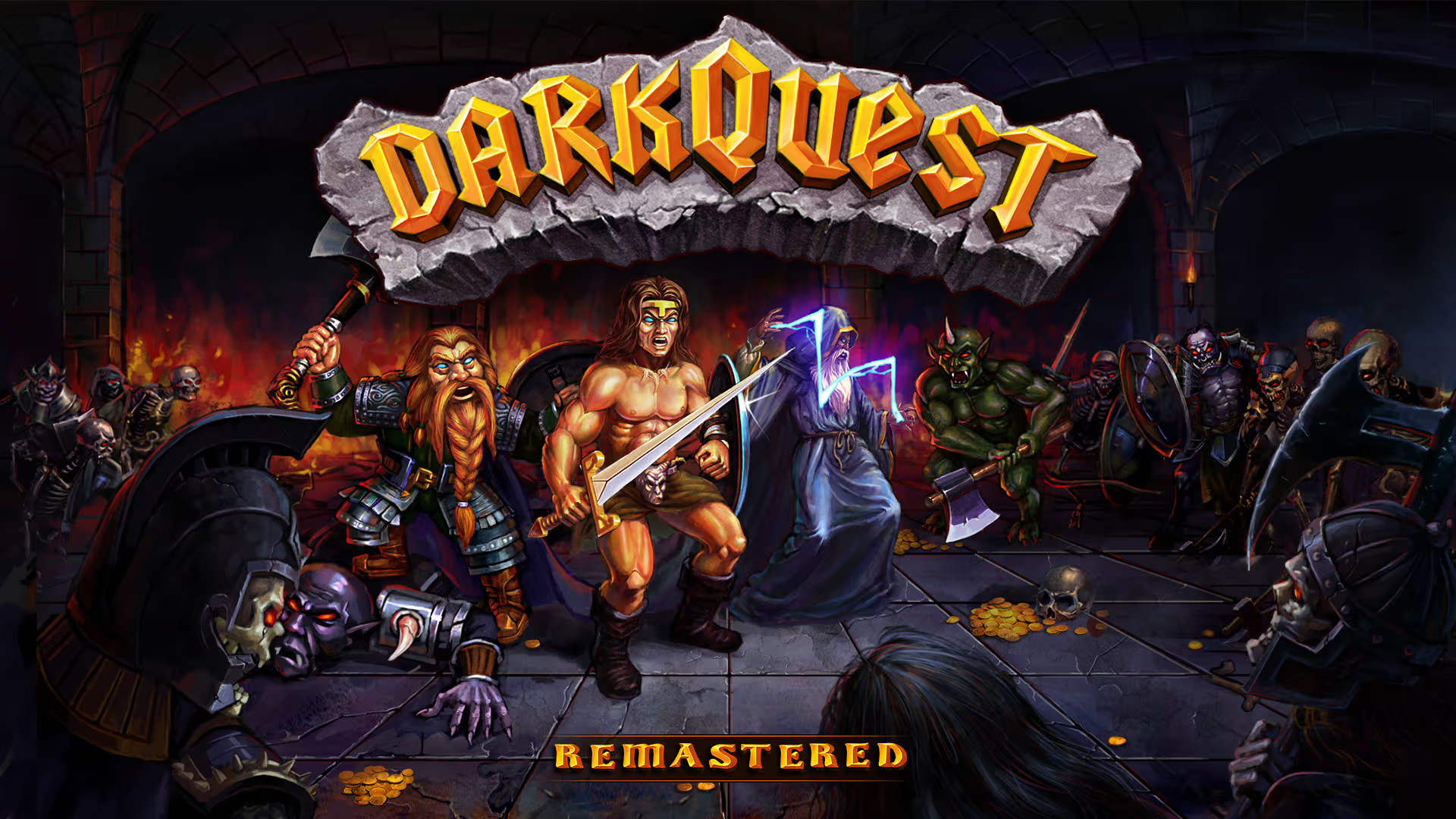
The Remastered edition undergoes a significant transformation, moving away from the flat, 2D aesthetic of its predecessor to embrace a fully realized 3D tabletop world. The most striking element is how the game mimics the physical presence of a board game; the heroes and monsters aren’t just “characters,” they are digital miniatures with painted textures and static-but-expressive poses. This choice creates a “diorama” effect that makes every dungeon room feel like a handcrafted set piece.
The lighting system has been completely overhauled to support this new depth. Shadows creep across the grid as your party moves, and the glow from a wizard’s staff or a wall-mounted torch casts realistic flickers on the surrounding stone. This atmospheric upgrade is crucial because it bridges the gap between a simple mobile port and a proper PC/Console experience. It feels “dank” in a way that respects the dark fantasy genre without losing the clean readability required for a tactical game. Furthermore, the UI maintains a classic “parchment and ink” style that frames the action perfectly, ensuring that even when the screen is crowded with skeletons and goblins, you never lose track of your party’s status.
Core Tactical Gameplay
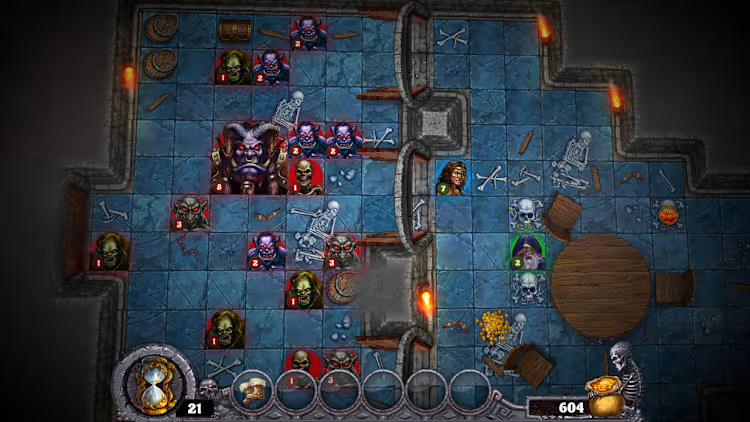
At its heart, Dark Quest is a love letter to HeroQuest. The movement is strictly grid-based, which forces you to treat every encounter like a puzzle. You aren’t just clicking on enemies to attack; you are managing “zones of control” and line-of-sight. If you position your Barbarian in a narrow doorway, he acts as a literal tank, preventing enemies from reaching your fragile healers. This spatial awareness is the primary skill the game demands, and it remains satisfying throughout the campaign.
The “Skull of Fate” is the game’s most iconic—and polarizing—mechanic. It acts as the digital dungeon master, throwing random events or dice-roll modifiers at the player. This introduces a layer of “controlled chaos” where even the best-laid plans can be derailed by a poor roll. While some modern strategy fans prefer deterministic outcomes (like Into the Breach), this game leans into the gambling thrill of tabletop gaming. You have to decide when to use your limited hero abilities to “guarantee” a hit and when to save them, knowing that a single miss could lead to a chain reaction of disaster.
The Remaster’s Evolution

This version is more than a simple resolution bump; it is a fundamental re-engineering of the game’s flow. Built on the modern Dark Quest 4 engine, the Remastered edition benefits from years of iterative polish. The animations are significantly snappier—where the original felt a bit floaty, actions here have “weight.” When the Barbarian swings his axe, there is a perceptible impact that makes the combat feel more visceral than typical grid-based indies.
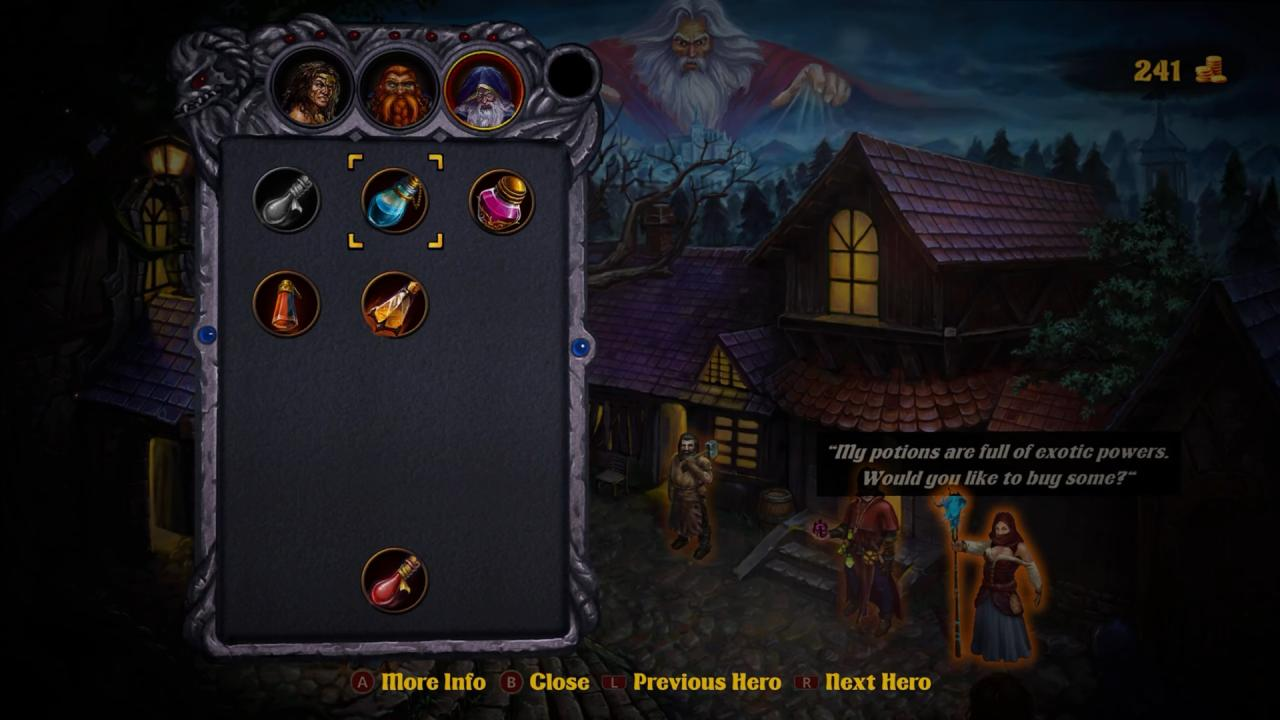
Balance has also been a major focus of this release. The original version was known for “brick wall” difficulty spikes that could end a run before it truly began. The Remaster smooths these edges, introducing a more logical progression of enemy types and better-distributed loot. It also fixes the “clunkiness” of the original menu system. Navigating the village—where you buy potions, upgrade gear, and hire new heroes—is now a seamless part of the loop rather than a chore. For those playing on consoles, the mapping of the cursor to the analog sticks feels natural, successfully translating a mouse-heavy genre to the gamepad.
Major Successes & High Points
The inclusion of local co-op is the game’s “secret weapon.” Tactical RPGs are usually solitary affairs, but by allowing friends to take over specific heroes, the game transforms into a social experience. Sitting on a couch and arguing over who gets to drink the last healing potion or who should scout the next trapped hallway perfectly replicates the “tabletop night” energy that the developers clearly intended to capture.
The pacing is another triumph. Many modern RPGs demand hundreds of hours, but Dark Quest respects your time. Each quest is a bite-sized adventure that can be completed in a single sitting. This makes the “one more turn” loop incredibly addictive. You finish a dungeon, return to town with your gold, buy a single upgrade, and immediately want to see how that upgrade performs in the next area. This tight feedback loop is supported by a diverse roster of 10 heroes, ranging from the Grave Digger to the Liche, ensuring that you can constantly experiment with different party compositions to keep the combat fresh.
Areas for Improvement
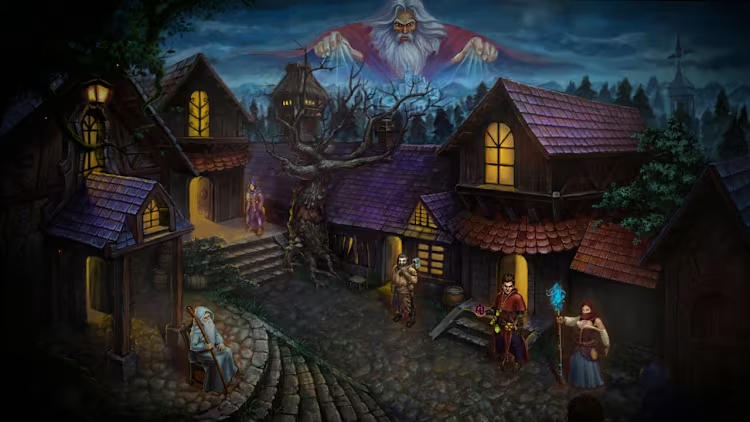
Despite its charms, the game’s greatest strength—its simplicity—is also its primary limitation. The narrative is almost non-existent; you are given a brief setup about an evil sorcerer, and from there, it is purely a mechanical journey. Players who need a deep story, character arcs, or moral choices will find the experience hollow. It is a “mechanics-first” game, and if you aren’t in love with the combat loop, there isn’t much else to hold your attention.
Additionally, the reliance on RNG (Random Number Generation) can lead to moments of genuine frustration. While the game provides tools to mitigate luck, there will inevitably be runs where the dice simply refuse to cooperate, leading to a party wipe that feels unearned. The variety of environments also plateaus in the late game; while the layouts change, you will find yourself seeing the same stone walls and floor tiles for hours on end. For a “Remastered” title, some players might have hoped for more brand-new content or additional biomes to explore, rather than just a refined version of the existing quest line.
Ultimately, Dark Quest: Remastered is a focused, unapologetic tribute to the golden age of tabletop gaming. It doesn’t try to compete with the sprawling narratives or complex skill trees of modern triple-A RPGs; instead, it excels by capturing the specific tension of a dice roll and the tactical satisfaction of a well-placed miniature. By trading pixel sprites for a polished 3D aesthetic and smoothing out the frustrations of the original release, Brain Seal has created the definitive version of their vision—one that feels as much like a physical hobby as it does a digital game.
If you value tight mechanical loops, couch co-op camaraderie, and the “pick-up-and-play” nature of a board game night, this remaster is an easy recommendation. It serves as a reminder that sometimes, the most rewarding adventures don’t need hundreds of hours of dialogue—they just need a dark corridor, a reliable party, and a bit of luck with the dice. Whether you are a veteran of the original or a newcomer looking for a digital dungeon crawl, this is a refined, atmospheric journey that honors its roots while standing firm on modern platforms.